
17 Best Market Research Companies and Global Firms in 2026
Compare 17 market research companies, from Ipsos, Kantar and NIQ to AI research platforms. Match their specialties, evidence and services to your decision.

Market research companies provide studies, data and advice for business decisions. Some run custom surveys or interviews; others measure sales, supply audience data or analyze markets. This guide compares 17 firms by the job they do, the evidence they use and what your team will still need to handle.
Book a demo to see the audience, findings and recommendation in a Sapien study. See our comparisons with human research before choosing simulated evidence for your question.
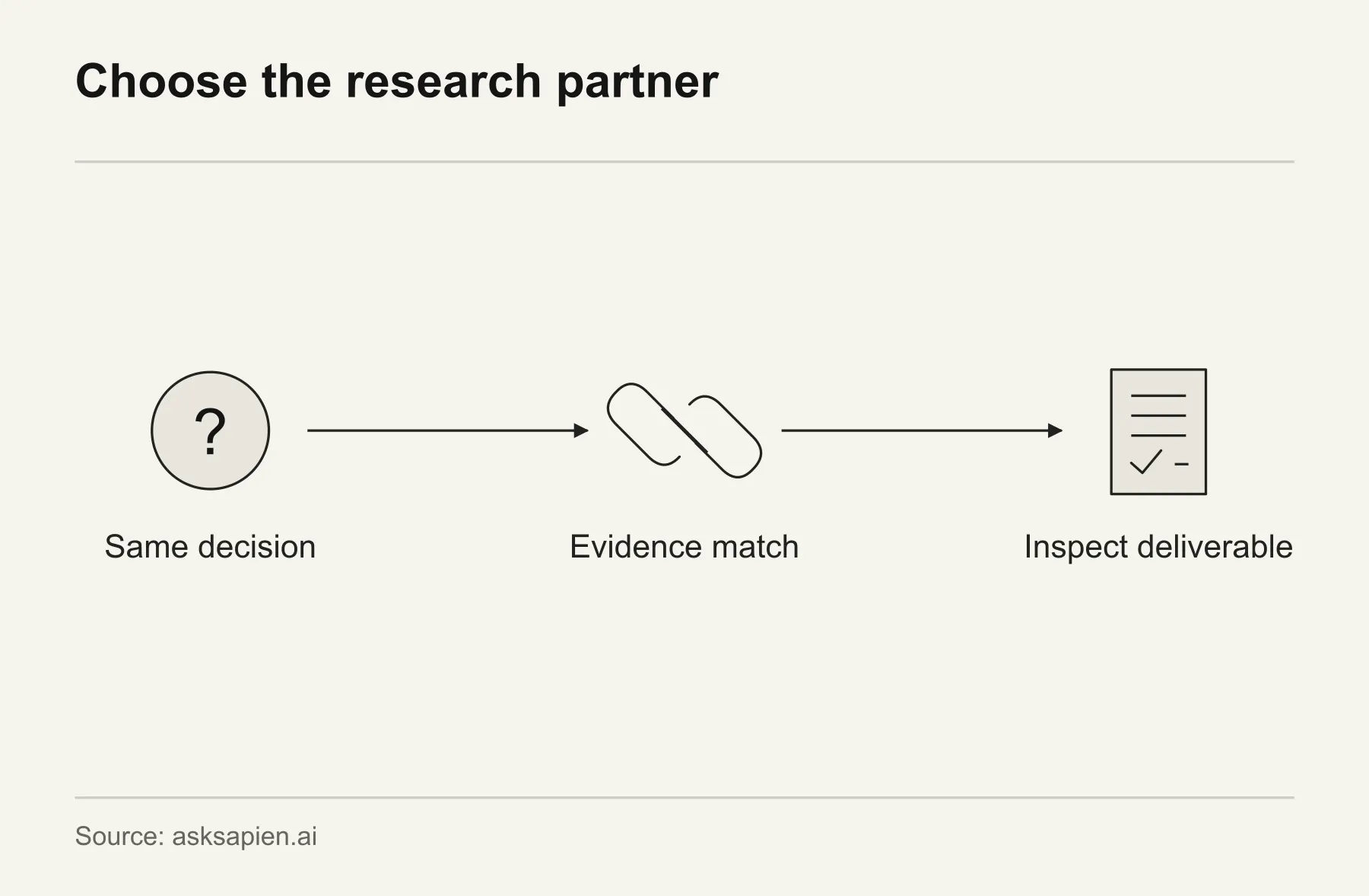
Entering a country may need category and channel data. Changing an offer’s price may need a choice study with realistic alternatives. Give shortlisted firms the same audience, markets, budget and deadline. Ask for a sample report showing its recommendation and the evidence behind it.
Find the right research partner
17 market research companies at a glance
The firms are grouped by research job. Public offers were checked October 24, 2026. Timing refers to each named workflow. Confirm the full work, sample or audience setup, analysis and revisions in the quote.
Provider | Method, commercial model, timing and fit |
|---|---|
Method / source: Human custom qualitative/quantitative studies. Pricing: Project quote. Timing: Confirm scope. Fit: Multimarket human fieldwork. | |
Method / source: Human studies; separate Marketplace AI tests. Pricing: Quote; Marketplace pay-as-you-go/prepaid. Timing: Confirm workflow. Fit: Brand, creative and innovation. | |
Method / source: Managed human communities. Pricing: Quote; confirm terms. Timing: Confirm scope. Fit: Continuing co-creation. | |
Method / source: Retail POS/ecommerce measurement. Pricing: Data-access/services quote. Timing: Confirm scope. Fit: Sales, share and distribution. | |
Method / source: Retail/purchase measurement; surveys separate. Pricing: Data/services quote. Timing: Confirm scope. Fit: Retail and CPG performance. | |
Method / source: Purchase-linked panels and human surveys. Pricing: Quote. Timing: Verified Voices: as little as hours; sample-dependent. Fit: Verified-buyer research. | |
Method / source: Existing/analyst market intelligence. Pricing: Passport license; individual reports also sold. Timing: Licensed content access; custom scope varies. Fit: Category/country sizing and forecasts. | |
Method / source: Existing analyst/category reports. Pricing: Per-report, subscription or custom quote. Timing: Reports: instant after purchase; custom scope varies. Fit: Consumer and innovation context. | |
Method / source: Existing documents and expert transcripts. Pricing: Annual enterprise/per-seat quote. Timing: Confirm scope. Fit: Competitive/market intelligence. | |
Method / source: Human healthcare studies; real-world data/analytics. Pricing: Study/data quote. Timing: Confirm scope. Fit: Pharma and life sciences. | |
Method / source: Human survey data; separate Synthetic Audiences. Pricing: Seats; API/MCP consumption; bespoke quote. Timing: Modeled: seconds; new fieldwork varies. Fit: Audience profiles and scoped modeled exploration. | |
Method / source: Human choice/conjoint and models. Pricing: Project quote. Timing: Confirm scope. Fit: Pricing, portfolio and shelf choices. | |
Method / source: Human recruitment, fieldwork and facilities. Pricing: Project quote; confirm design/analysis inclusions. Timing: Confirm scope. Fit: Participant access and execution. | |
Method / source: Human surveys; separate Edge modeled panels. Pricing: Survey subscription; Edge credits via account team. Timing: Edge: minutes; human study varies. Fit: Recurring surveys or scoped modeled work. | |
Method / source: Human studies or synthetic Category Twins. Pricing: Business from $2,300/month; other plans by contact. Timing: Typically 1–5 business days after launch; scope-dependent. Fit: Recurring research and tracking-linked exploration. | |
Method / source: AI-moderated human interviews; person-grounded Digital Twins. Pricing: Custom subscription/add-ons. Timing: Twins: minutes; human study varies. Fit: Human interviews and scoped twin exploration. | |
Method / source: Modeled populations; managed study. Pricing: Project quote; no verified public tariff. Timing: Agree scope and revisions. Fit: Supported buyer comparison; task validation required. |
A subscription, per-response charge and custom project pay for different work. Our market research pricing guide explains how to compare the total cost and what is included.
Which firm fits your research job?
Full-service describes who handles design, audience access, analysis and the recommendation. Simulated describes where the responses come from. A firm can manage a whole study using a simulated audience. Check who does the work and which evidence you receive as two different questions.
Research job / shortlist | Coverage and responsibility to confirm |
|---|---|
Name the countries, languages and eligible buyers. Confirm who owns local fieldwork, study design, interpretation and the recommendation. | |
Continuing community: Human8 | Check which customers and markets the community covers. Agree who runs it and turns repeated conversations into decisions. A long-running community is not automatically representative of the wider market. |
Specify the category, retailers, channels, geography and dates. Distinguish measured sales or purchases from a separately scoped survey of buyers. | |
Market context: Euromonitor · Mintel | Check country and category coverage, publication dates and licensed use. Establish whether existing reports answer the question or custom research is still needed. |
Competitive intelligence: AlphaSense | Check the industries, sources and dates covered. Separate searching existing evidence from commissioning expert calls, and assign responsibility for interpreting it. |
Healthcare research: IQVIA | Name the country, specialty and eligible healthcare population. Ask which data, fieldwork and interpretation the proposed project actually includes. |
Audience profiles: GWI | Check market coverage, survey dates and the base for your segment. Distinguish retrieved survey responses from modeled Synthetic Audiences output. |
Pricing and trade-offs: SKIM | Define the buyers, feasible offers and price choices. Agree who designs the task, examines substitution and turns preference estimates into a recommendation. |
Recruitment and fieldwork: Sago | Confirm eligibility, location and recruitment access. A fieldwork-only quote leaves study design, analysis and the business recommendation with another named owner. |
Recurring studies: Qualtrics · quantilope | Check audience access, methods and plan limits. Establish what your team will operate and what any separately priced services will deliver. |
Human interviews: Outset | Confirm recruitment and language fit. Assign the guide, stimulus preparation, interview review and final interpretation to an owner. |
Modeled decision research: Sapien | Inspect grounding for the audience and market, plus validation for the task. Agree the study and recommendation; keep modeled response bases distinct from human participants. |
For simulated buyer research, compare Sapien vs Aaru and Sapien vs Simile against the audience, alternatives and findings your decision needs.
The groups cover custom studies, retail measurement, market intelligence, pricing specialists and research software. Compare firms for the same job, audience, report, budget and deadline. Our market research guide explains how to choose the evidence for a business decision.
For business buying groups, use our B2B market research companies guide. Our concept testing tools guide compares software for product ideas. For packaging, our packaging design testing guide distinguishes shopper understanding from observed shopping and actual product use.
For connected buying roles, use our B2B market research companies guide. For a competitor question, our competitive research companies guide covers product facts, monitoring and accounts of wins and losses. Those need a different brief from the consumer example below.
View an example study to see the audience, offer and findings before planning your own.
Example: two routes for a cable-organizer decision
This hypothetical travel-accessory brand is choosing which cable organizer to prototype. A managed human study and a managed simulated study can address that choice, but use different response sources. Discuss Ipsos and Sapien as possible routes after confirming audience access or supporting data and the work included.
Copyable study brief
Brief item | Send the same specification to both firms |
|---|---|
Decision | Choose which of two $40 cable organizers to prototype for a US online launch. Recommend a revision or neither design if the evidence calls for it. |
Audience | US adults aged 18 or older who took a work trip in the past six months and packed a wall charger, two USB-C cables and earbuds. Confirm whether you can recruit or model that audience before quoting. |
Offer A | A hard-shell case, 20 × 12 × 5 cm, with three fixed compartments. It is intended to hold those accessories; it is not waterproof. Devices and accessories are not included. |
Offer B | A soft pouch, also 20 × 12 × 5 cm, with two adjustable dividers. It is intended to hold the same accessories; it is not waterproof. Devices and accessories are not included. |
Shared conditions | Each costs $40 before tax and shipping. Use these same text-only offer cards in both studies. Vary card order and retain the order shown in each response record. |
Questions | Record the initial choice: A, B, keep the current solution, another option, or none. Then ask why and what each organizer includes. Preserve the answer before probing or correcting a misunderstanding. |
Return | Show each option’s choice count and share. Say how many target respondents answered, who was left out and why, which answers make up each percentage and which are missing. Provide the response records and explain how they support the prototype recommendation. Keep human and simulated results apart. |
Project agreement | Name the audience source, study owner, analysis owner, fee, timetable and revision allowance. Show a sample deliverable and explain what this study cannot establish. |
For the simulated proposal, use our synthetic research brief template to record the audience, task and output. Ask for proof that the method works for this kind of decision.
What should the report let you check?
Suppose a response calls the hard-shell case waterproof even though the card says it is not. The report should let you find that answer and judge whether the misunderstanding changes the recommendation.
For the human study, ask for participant screening, the cards and order shown, first choices and the participants’ explanations. Ask Ipsos to connect those answers to the prototype recommendation. Stated preference cannot show an actual purchase or physical performance.
For the simulated study, ask how the audience was built, which data supports it, the cards shown and the generated answers. Sapien should connect the choices to its recommendation and explain how the method was checked. A simulated profile calling the case waterproof is a model or task issue; it cannot show that a buyer misunderstood it.
Keep a qualifying answer in the reported choice total when it reveals confusion, and flag that misunderstanding. If it changes the decision, revise the card and report the new comparison apart. Neither study can show drop protection or sales from text cards. Test the prototype and buying behavior for those questions.
Studies across countries and ongoing customer communities
Ipsos: custom research across markets
Provider type: Full-service global market research and consulting firm.
Research across countries needs coordination too. Ipsos brings local fieldwork, quantitative tests, qualitative interpretation and recommendations under one lead.
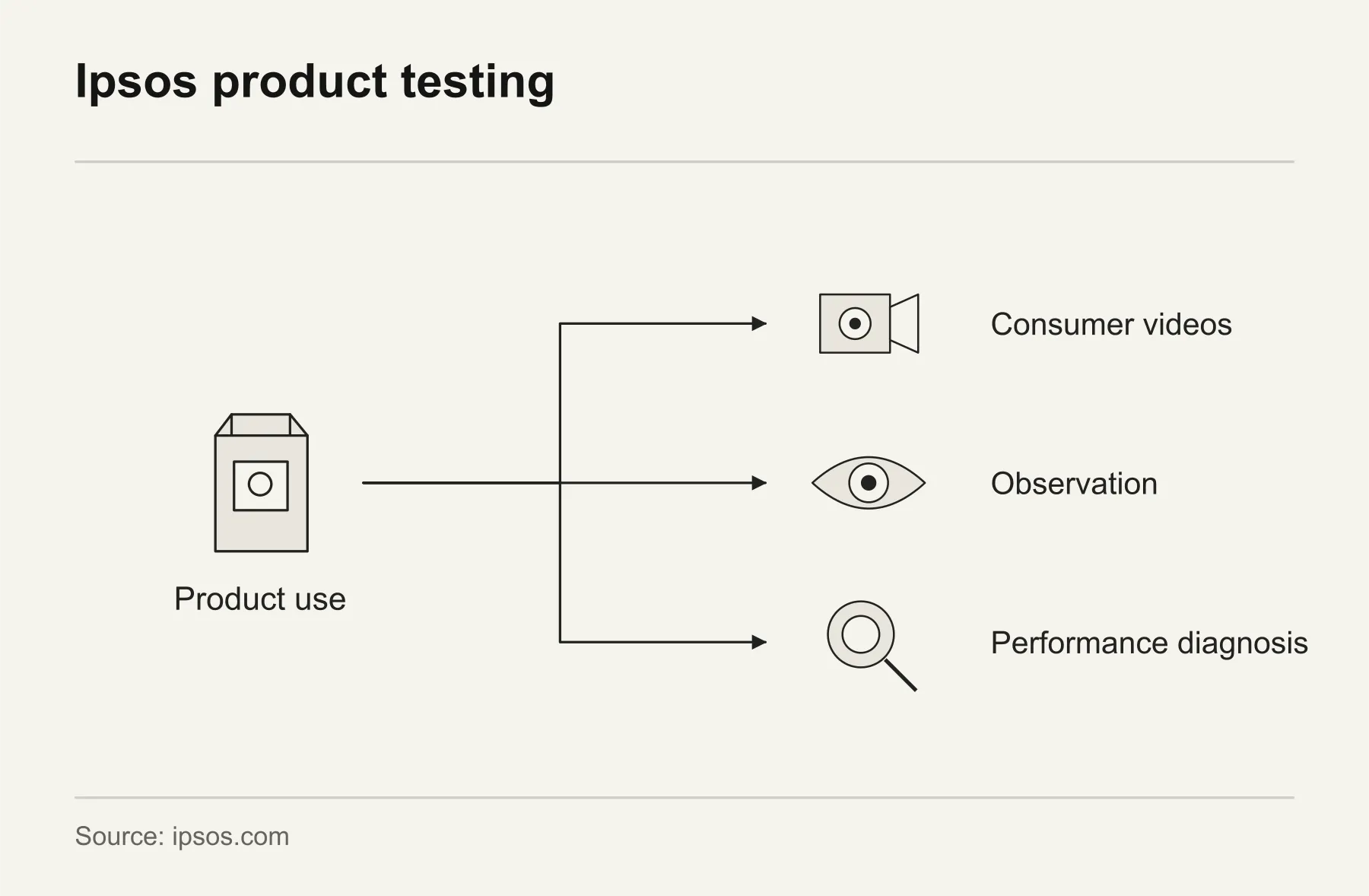
Ipsos Product Studio turns product evaluations into comparable attribute and Just About Right diagnostics.
Consider Ipsos when you need a custom mix of methods and markets. Compare Kantar when brand, creative or innovation benchmarks matter most. Both offer broad custom research. Ask the proposed teams for a relevant sample report to help choose.
Pricing: Custom. Compare the team, markets, methods and decision support included.
Kantar: brand, creative, innovation and global qualitative research
Provider type: Global insights, data and consulting company with full-service and standardized products.
Kantar combines brand, advertising, innovation, media and shopper research. Its qualitative practice and local-market teams let a project draw on several methods.
Kantar Marketplace offers standardized studies, Converser runs AI-moderated interviews and Kantar Live supports group discussions at scale. Choose the service for the job, such as a repeatable creative test or exploratory work across markets.
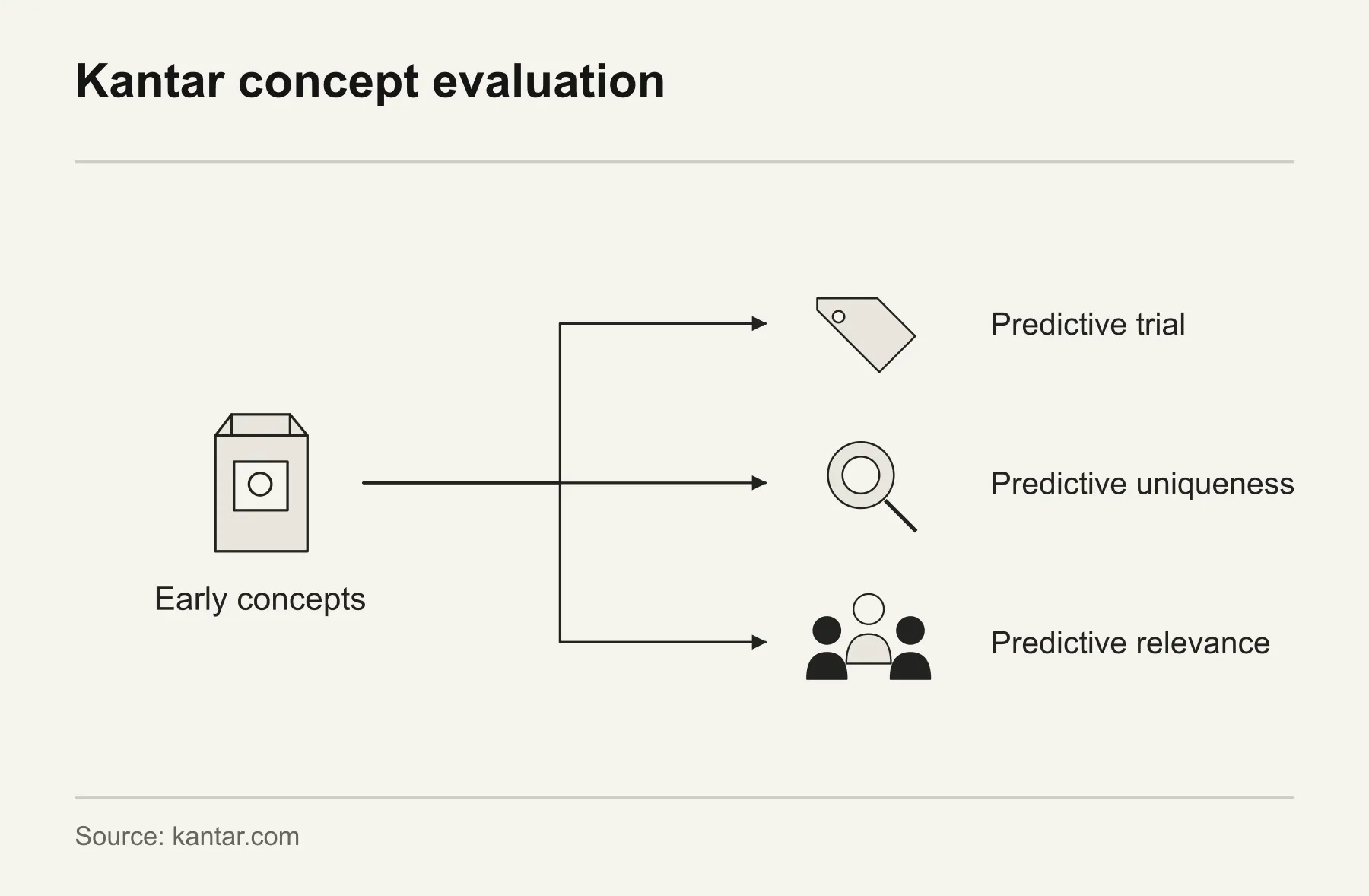
Kantar ConceptEvaluate AI compares concepts across predictive trial, uniqueness and relevance.
Fit: Global companies connecting research to brand, advertising, innovation or marketing decisions.
Pricing: Marketplace has pay-as-you-go and prepaid options through sales. Custom quotes depend on the work, markets, sample and consulting support.
Human8: insight communities and repeated co-creation
Provider type: Global insight consultancy specializing in managed communities and consumer collaboration.
Human8 runs communities from one- or two-week sprints to multi-year programs. Teams use them for discovery, co-creation, testing and applying findings inside the business. Each study can build on earlier conversations.
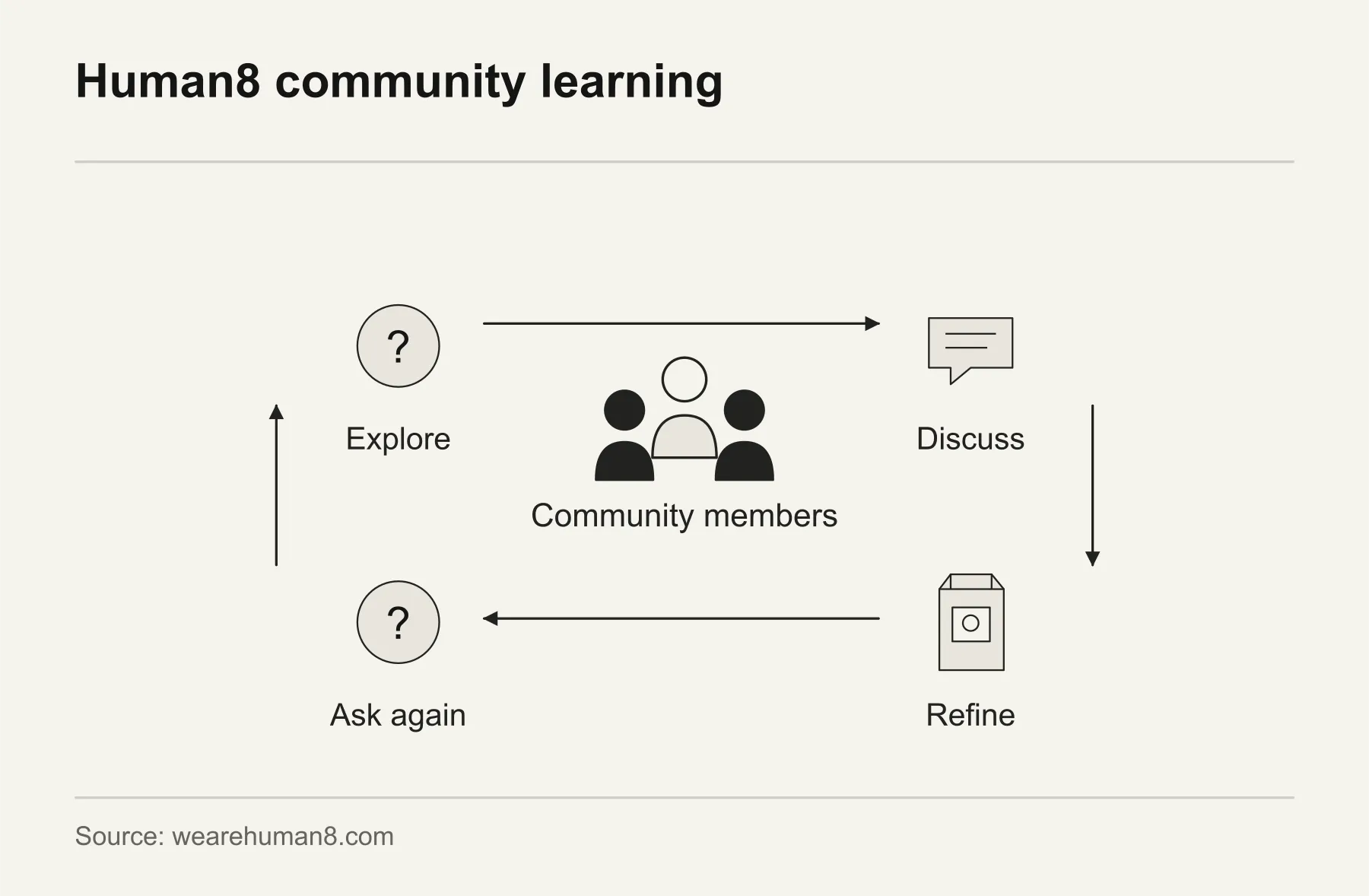
Human8’s community platform brings participant activities and discussions into one workspace across desktop and mobile.
Fit: Teams that want ongoing feedback from the same customers as they develop products and respond to change.
Pricing: Custom. Confirm community size, duration, study frequency and analysis support. Ask separately about any digital-twin component.
Scope: A community gives depth and continuity. Its members do not automatically represent the wider market.
Our Sapien vs Lakmoos guide compares a continuing human community with ongoing simulated research.
See our market research services guide for the work each provider handles.
Retail and shopper research: purchase records and distribution
NIQ: sales, share, price, distribution and promotion
Provider type: Retail measurement and consumer-intelligence data company.
NIQ Retail Measurement Services tracks sales, share, price, distribution, velocity and promotion. Use that to check the market behind a brand debate. Sales lost through reduced distribution need a different response from a decline across well-stocked stores.
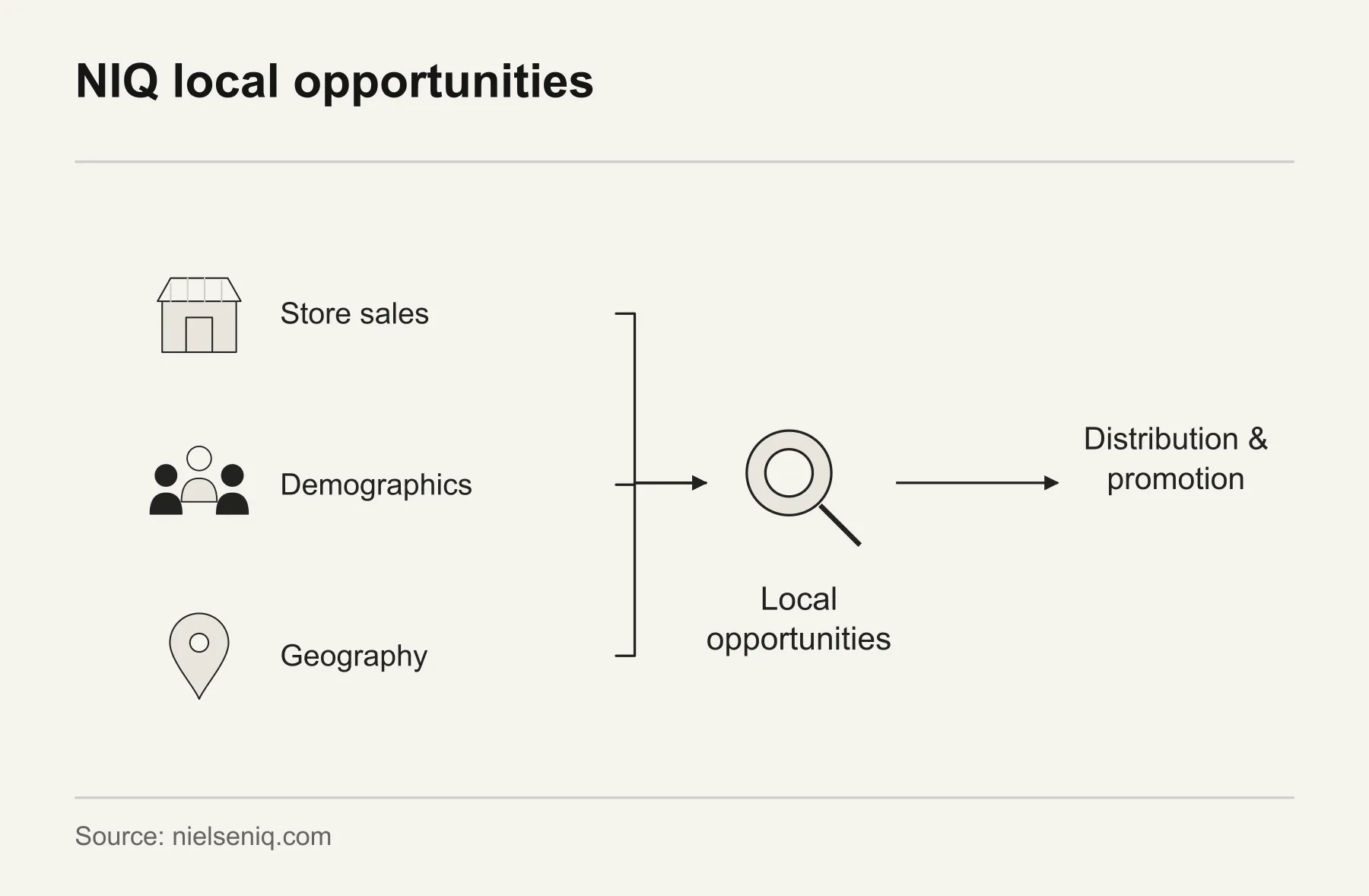
NIQ’s Precision Areas dashboard combines observed store sales with local demographics and geography to find sales, promotion, distribution and velocity opportunities.
Fit: CPG, retail, category, sales and revenue teams that need a consistent view of market performance.
Pricing: Custom. Check category, retailer, channel and geographic coverage, plus history and data access.
Scope: Retail measurement and new-product testing are different purchases. NIQ's BASES offers idea, concept and claims testing. Confirm the product, sample and consulting included.
Circana: connecting market performance with shopper behavior
Provider type: Market-measurement and consumer-behavior data company.
Circana Complete Consumer connects verified purchases, shopper panels and surveys to explain sales changes. Check how many households buy, whether they return and where they shop instead.
Compare NIQ and Circana for the same categories, retailers, channels and dates. Ask how each links sales changes to household buying. For follow-up questions to verified buyers, check whom Numerator can reach and the research it offers.
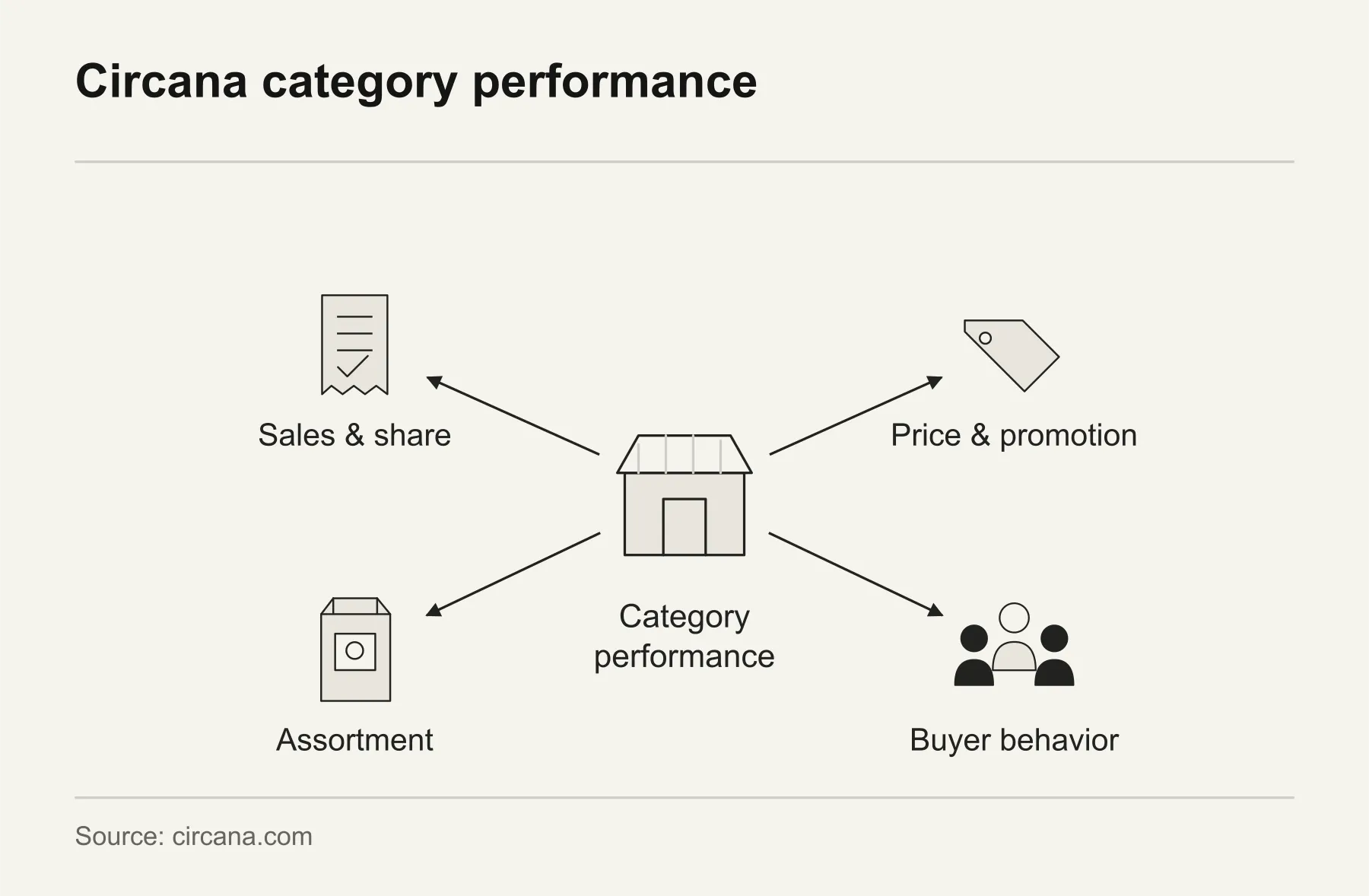
Circana’s Liquid Data Go dashboard brings sales, units, price, stores, distribution, brand and item performance into one category view.
Fit: Retail, CPG, marketing and category teams investigating a performance change.
Pricing: Contact sales. Confirm markets, datasets, history, update frequency, user access, exports and support.
Scope: Measurement subscriptions track past sales and shopper behavior. Circana’s separate Concept Testing product covers ideas, packaging, pricing and claims.
Numerator: purchases linked to households
Provider type: Consumer panel, purchase-data, and shopper-insights company.
Numerator links purchases to the households behind them. OmniPanel combines receipts and linked accounts with surveys and profiles to show repeat buying, baskets and shopping across retailers. Follow-up research adds buyers’ reasons.
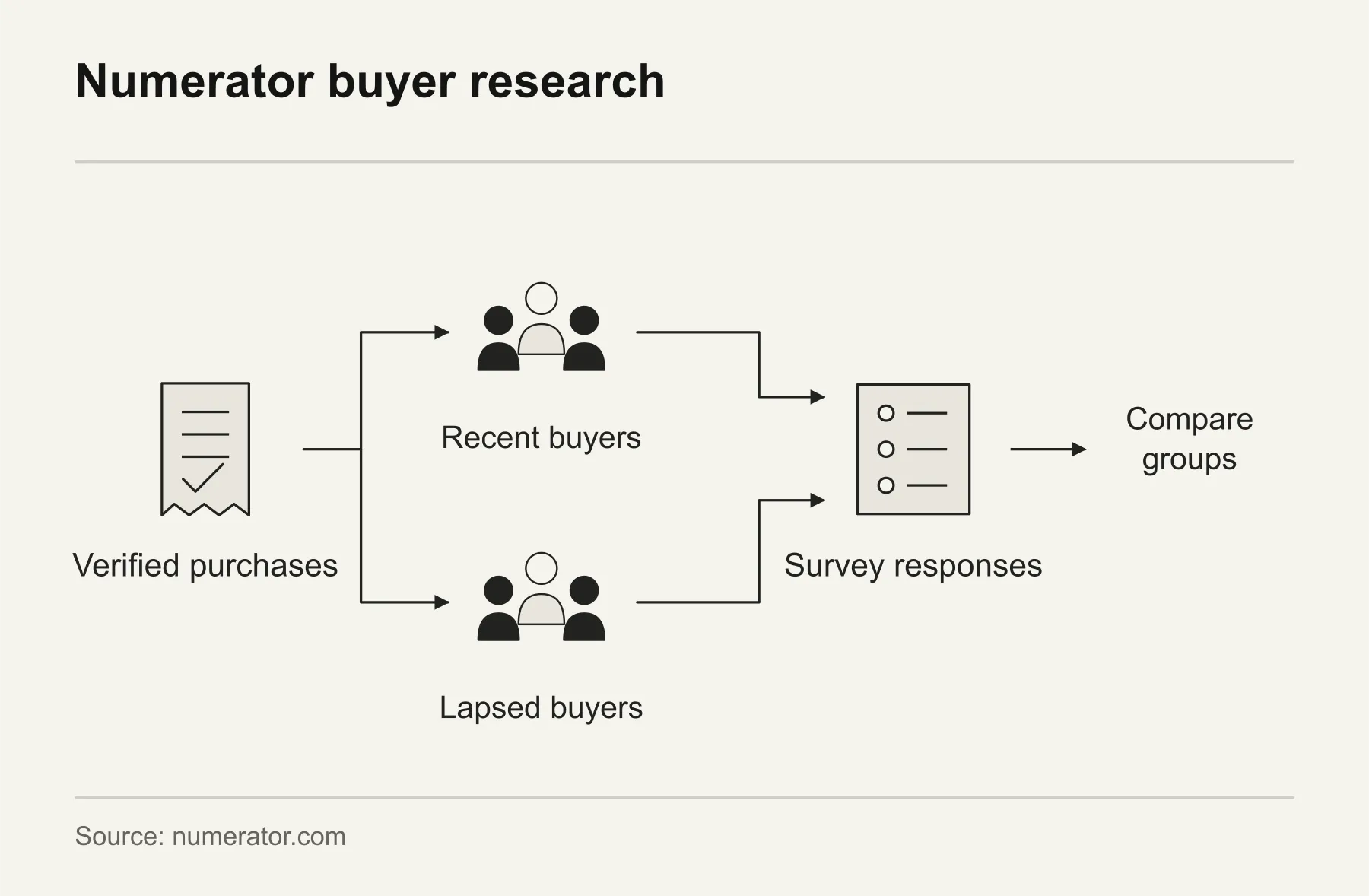
Numerator’s Smart Reporting workspace compares survey responses across purchase-linked audience segments.
Fit: Brands and retailers that need to connect purchase behavior to household attributes and reported motivations.
Pricing: Custom. Check market and category coverage, usable sample sizes and the price of purchase-linked follow-up research.
Scope: Numerator products differ in the households, purchase history and targeting options available.
Market intelligence: category and country context
Euromonitor International: market size and country data
Provider type: Syndicated market-intelligence and research company.
Euromonitor Passport combines industry, country, consumer, company and channel data with forecasts and analyst research. Use it to compare markets and tell a large category from one your business could enter successfully.
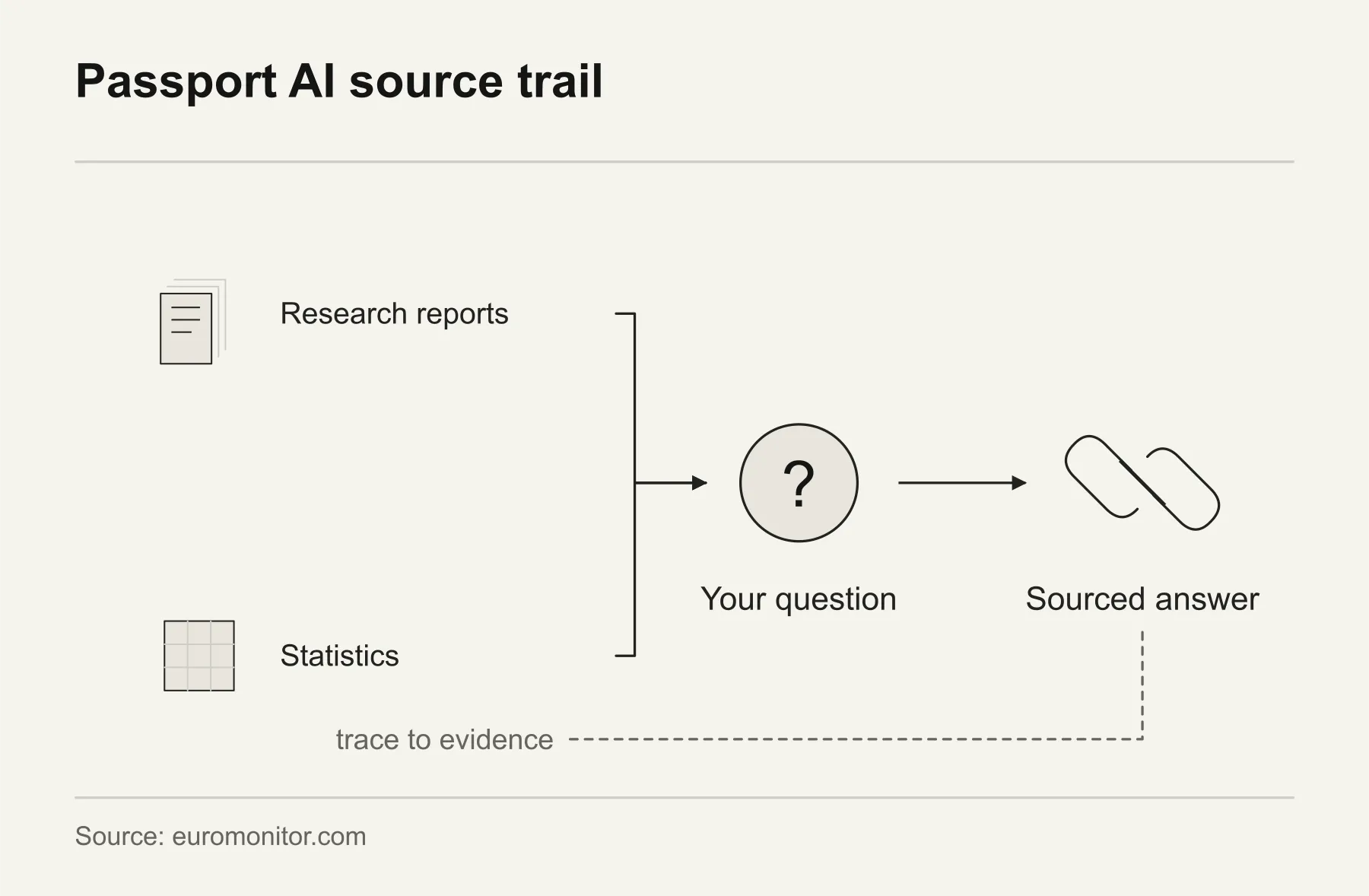
Euromonitor’s Passport AI lets users ask about structured market and category data and see the related statistics and sources.
Consider Euromonitor when choosing a category or country. Compare Mintel when you need to understand consumer trends and products already on the market.
Our syndicated research guide helps you check coverage, data dates and sharing rights before licensing a report or database. Confirm that your team or research partner can use the output as planned.
Pricing: Individual reports are sold; Passport and consulting use custom quotes. Compare countries, categories, analyst access and data rights.
Scope: Shared market intelligence helps frame an opportunity. Your own concept, message, price or product question needs a study designed for it.
Mintel: consumer trends and product launches
Mintel helps compare an idea with products already on sale. Its Global New Products Database lets teams examine launches by ingredients, flavors, formats, packaging and claims. A high-protein snack team can see how competing products combine the benefit and format.
GNPD is part of Mintel’s Leap interface, where users ask questions and explore product records. Look at the records behind a trend to see which formats and claims already compete.
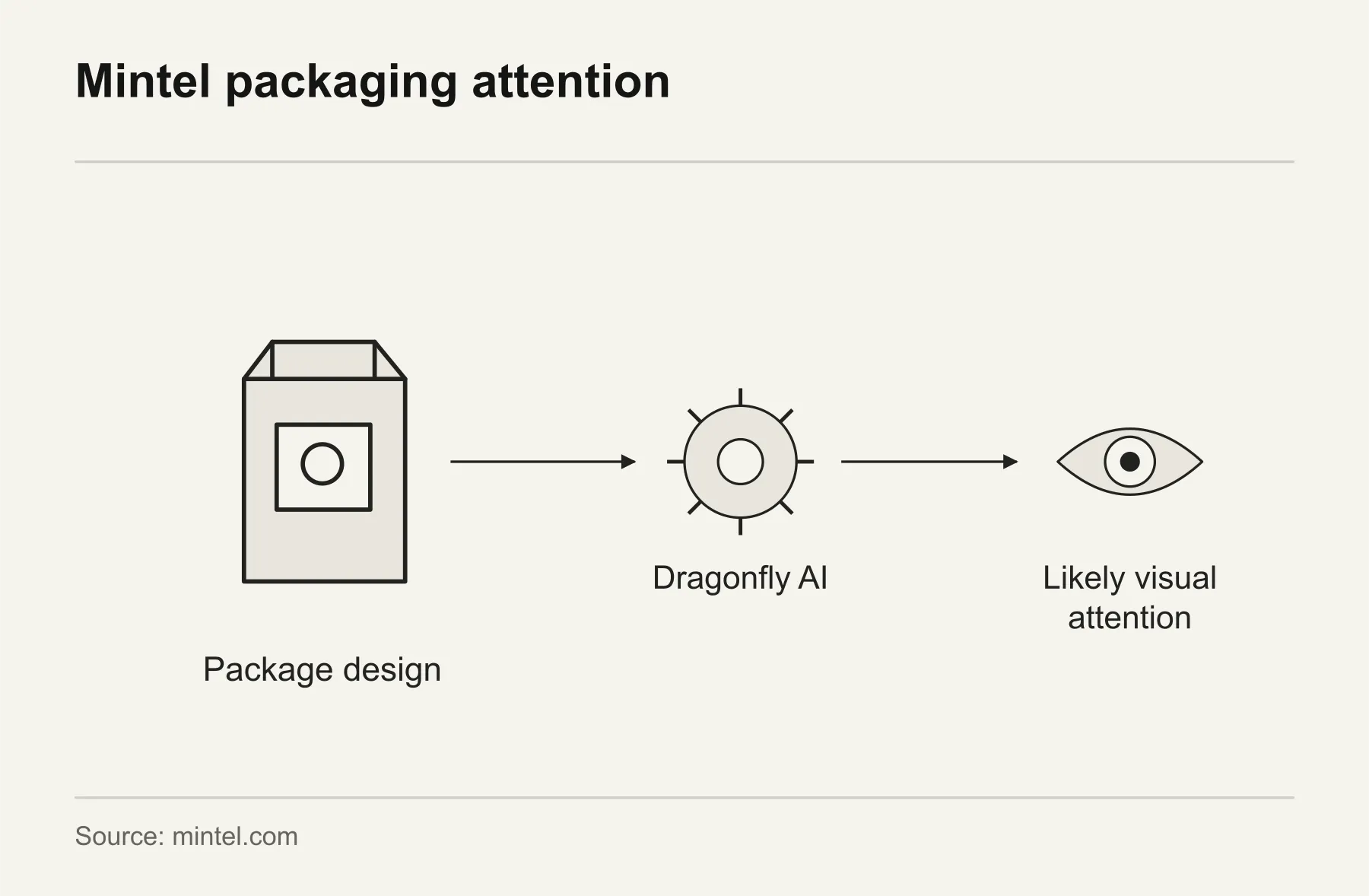
Mintel’s Dragonfly analysis shows how packaging elements can be evaluated for likely visual attention.
Pricing: Reports and subscriptions are sold. Check the markets, report libraries, databases and analyst access included.
Scope: Category reports cover existing market evidence. Testing your own product, message or price requires a separate study.
AlphaSense: B2B company, industry and financial intelligence
AlphaSense searches filings, broker research, news, expert transcripts and internal sources for competitive research, due diligence and strategy. Tegus Expert Call Services lets teams pay for new expert interviews. Voice of Customer research includes interviews with B2B technology users.
Use the library for evidence that already exists, or book an expert call for a gap. For a new survey or interview study with a defined professional audience, also consider NewtonX's custom B2B research.
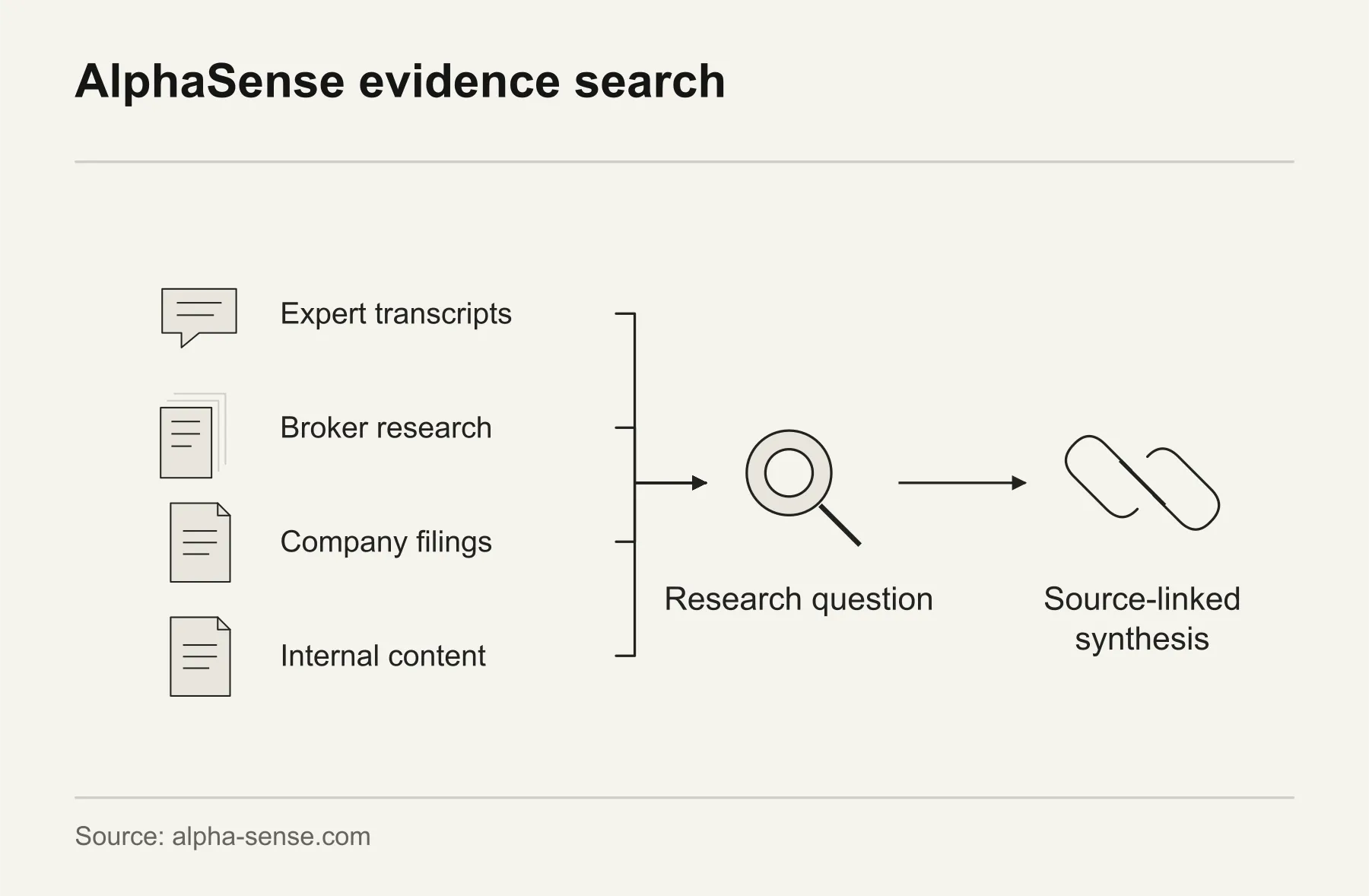
AlphaSense brings premium business sources, monitoring and source-linked summaries into one workspace.
Fit: Corporate strategy, competitive research, investment and B2B research teams.
Pricing: Custom. Compare content and user access, with new expert calls priced separately.
Scope: Expert calls give specialist views. A representative consumer study needs a different design. New interviews are a separate service from library access.
Our competitive research companies guide covers sourced competitor facts, monitoring, win-loss interviews and simulated responses.
For a managed simulated B2B study, our Sapien vs Evidenza guide compares who handles the research and recommendation.
IQVIA: healthcare and life-sciences intelligence
IQVIA Primary Intelligence combines custom and shared research with healthcare data and specialist analysis. Studies cover patient needs, product positioning and brand performance. The wider business also supplies real-world data, analytics and technology for life-sciences teams.
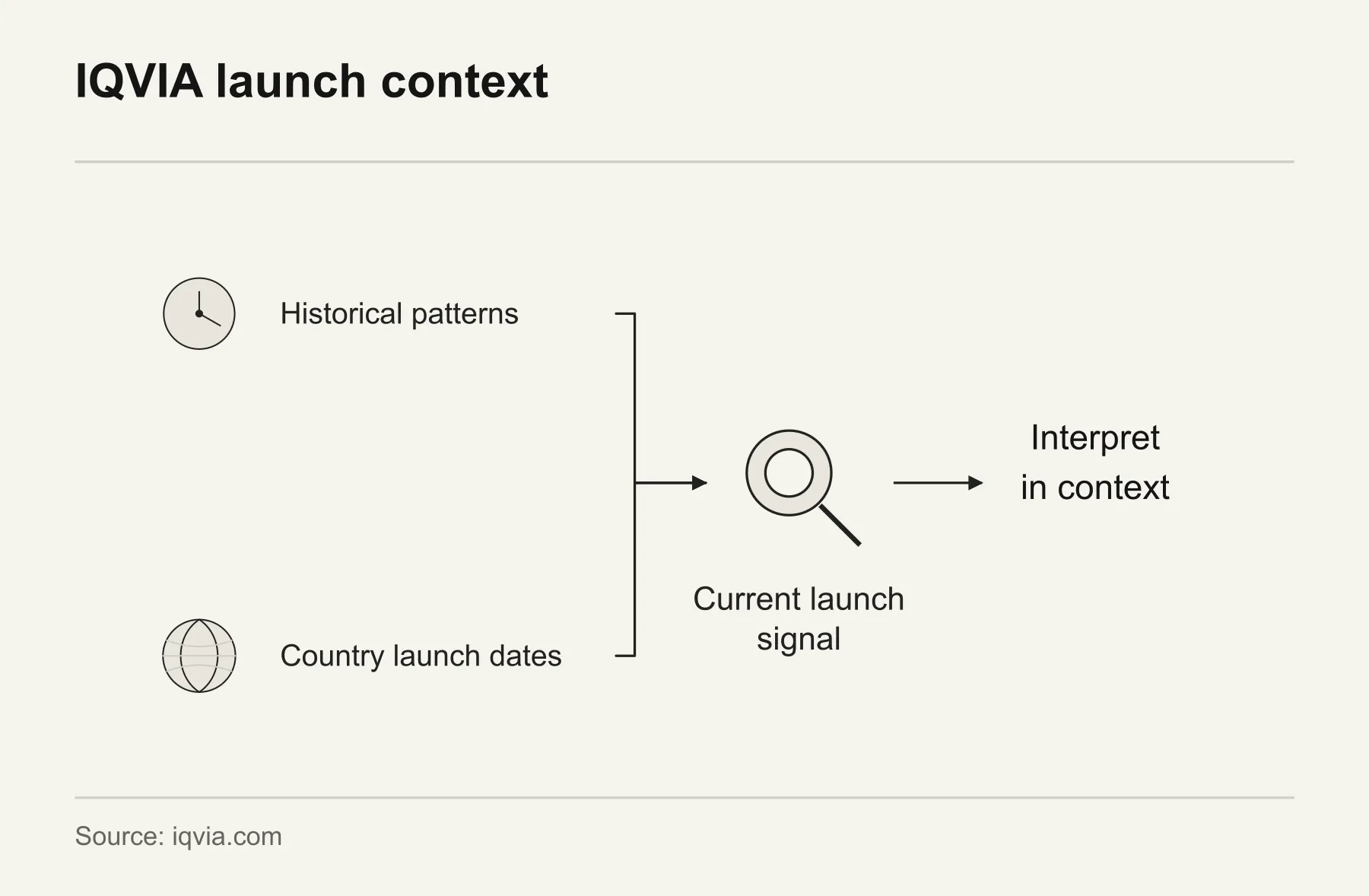
IQVIA combines historical life-sciences market evidence with forward-looking launch analysis.
Fit: Pharma, biotech, medtech and healthcare teams needing specialist audiences, data, governance and market knowledge.
Pricing: Custom. The therapeutic area, countries, audience, data and services shape the project.
GWI: audience surveys and simulated exploration
GWI’s recurring surveys cover attitudes, behavior, media use and brands. Audience builders, cross-tabs, charts and exports help teams compare groups, estimate size and plan media.
GWI’s Synthetic Audiences adds personas and multi-segment focus groups in Agent Spark using the company’s existing survey data.
Our guides to marketing to Gen Z and marketing to parents show how audience information can change channels, messages and offers.
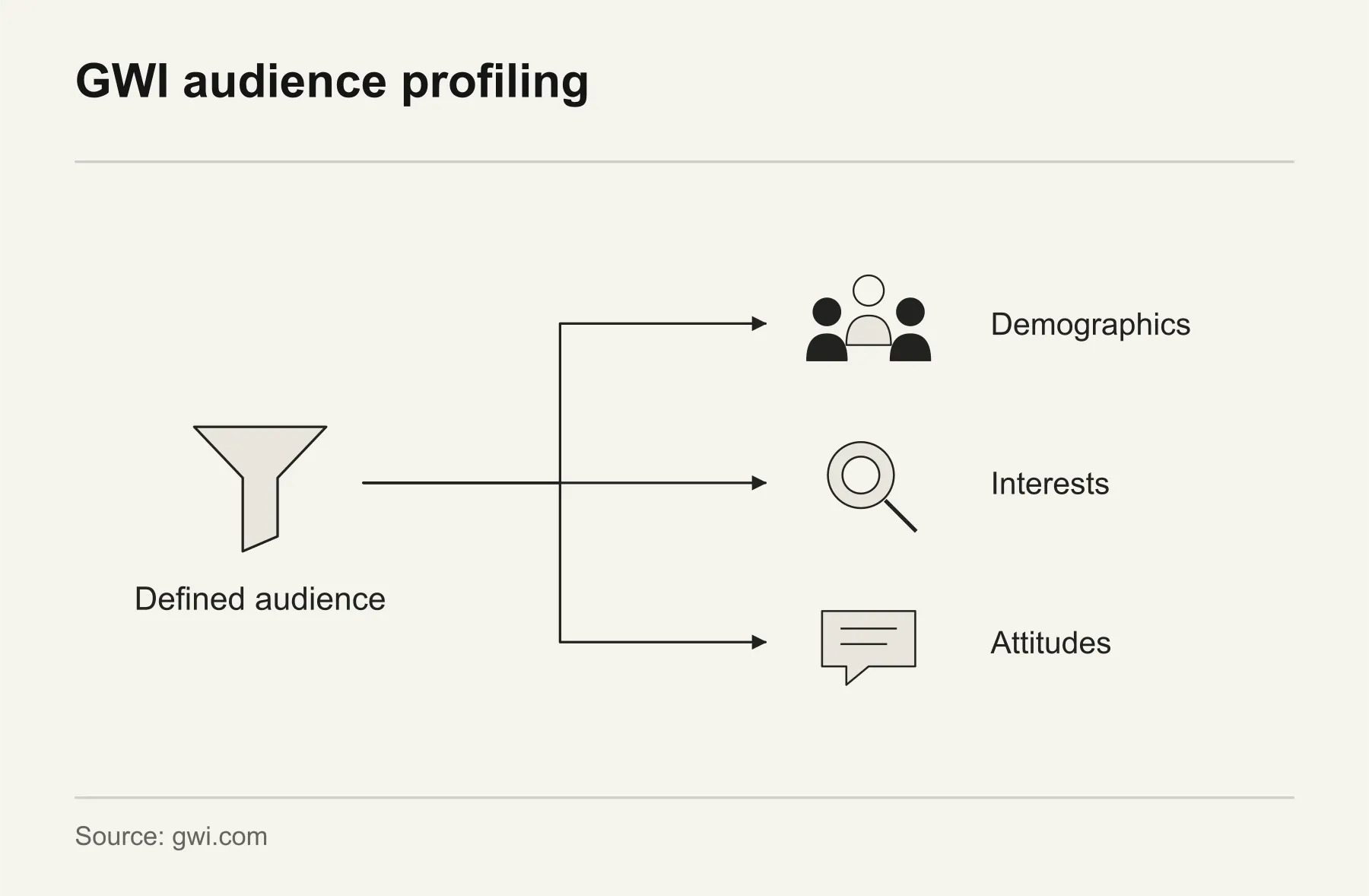
GWI lets users build and compare groups from shared survey data. Agent Spark explores simulated responses based on that research.
Fit: Agencies, media teams and brands that repeatedly need comparable audience evidence for planning and campaigns.
Pricing: GWI pricing separates seats, integration use and custom research. Confirm the datasets, permissions and access to Agent Spark or Synthetic Audiences in the proposal.
Scope: Profiles cover the markets and questions in the chosen dataset. Use custom research for questions outside it.
If you already have respondent data, our Sapien vs Fairgen guide checks whether it covers the buyers your new study needs.
For more on these response sources, see our consumer insights companies guide.
B2B market research companies
A B2B study may need the user, technical reviewer and budget owner behind one purchase. Ask firms to show access to those roles for the work you need. A matching job title cannot show that someone recently helped make that decision.
Company | Research job to discuss |
|---|---|
Managed quantitative and qualitative work across customer, market and proposition questions. Request a sector-specific recruitment plan and, where needed, linked roles from the same account. | |
A focused message or preference question for an available B2B tech audience. Check the roles, industries and regions; assign stimulus preparation and the campaign decision to an owner. | |
Custom professional research with synthesis, or a separately scoped synthetic-persona route. Specify which response source the proposal uses. | |
A defined brand, customer or product-concept program. Confirm that its audience and fieldwork fit the job rather than assuming a standard program covers a bespoke buying group. | |
A full-service modeled study with design, analysis and recommendations. Inspect grounding and validation for the task; a generated role response is not testimony from a current customer. |
For a renewal study, ask how the firm would handle a user who likes faster scheduling and a reviewer who needs an integration. Distinguish a verified product gap from unclear copy or a fact still to check. Keep each view with its account: three role answers are not three independent renewal events.
Compare the whole job: audience access, design, interpretation and follow-up. A focused message test may be enough if your team handles the rest. A buying-group decision needs a proposal that covers the connected roles.
Competitive intelligence companies
Start with the competitor question that could change your response. Product facts, monitoring changes and understanding why a customer chose a rival need different evidence.
Company | Evidence to request |
|---|---|
Competitor research, benchmarking and strategic interpretation. For an important claim, ask where it came from, when it was checked, which conditions apply and what is still unknown. | |
Ongoing monitoring of sources such as websites, release notes, support documents and reviews. Demonstrate a relevant captured change and assign someone to decide whether it warrants action. | |
A managed win-loss program with buyer outreach, interviews, recorded accounts, analysis and reports. Retain the buying context and cases that challenge the main explanation. |
If a rival promises easy migration, check the records, formats and conditions it covers. Buyer interviews can explain whether that mattered in actual choices. An announcement cannot show customer fit, and a buyer’s recollection cannot verify every product capability.
Once the product facts and buying situation are clear, a simulated comparison can explore feasible counteroffers. Keep those prospective answers apart from verified competitor facts and actual lost-deal accounts. Choose the evidence for what is still unknown.
Specialists for pricing, professional audiences and fieldwork
SKIM: pricing, product and portfolio choices
Provider type: Research consultancy focused on pricing, revenue management and choice modeling.
SKIM designs choice-based, adaptive, menu-based and preference-based conjoint studies. Choices between complete offers help estimate attribute value and how preferences shift, instead of rating every element on its own.
Include your current products and competitors in pricing or portfolio choices. The model can then estimate switching within that set, including demand a new offer could draw from your own range. That is a question for SKIM’s choice-modeling work.
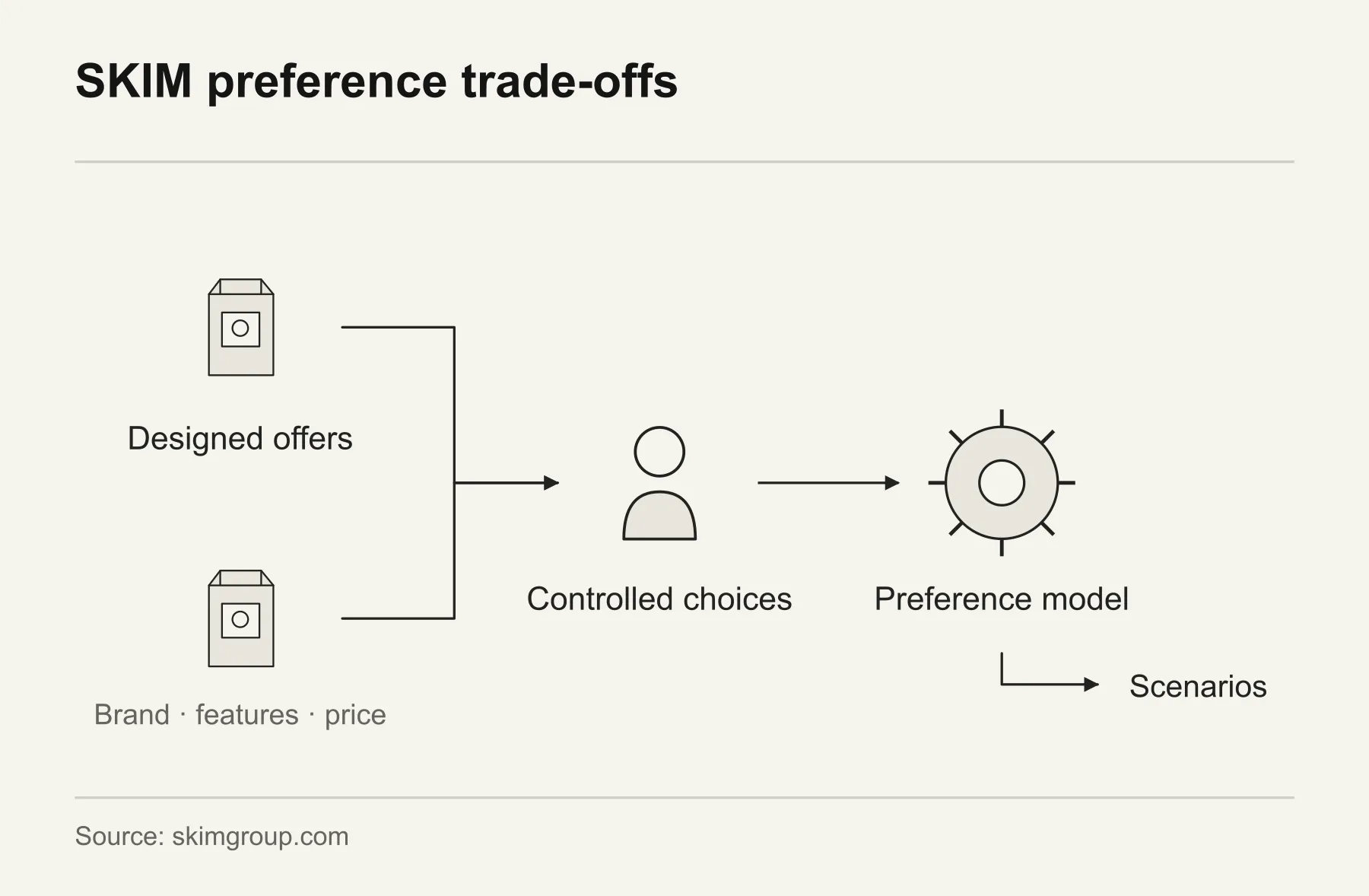
SKIM uses choice designs and simulators to estimate how price, feature and portfolio changes redistribute preference.
Fit: Pricing, product and revenue decisions that need careful tradeoff design and analysis.
Pricing: Custom. Design, audience, markets, simulators and rollout support shape the fee.
Scope: Conjoint estimates preference within the study’s choice task. It does not measure completed purchases.
Our Sapien vs Aaru guide follows a pricing decision through the evidence a simulated-research proposal needs.
Sago: recruitment, facilities and fieldwork
Provider type: Participant recruitment, facilities and fieldwork operations.
Sago provides recruitment, facilities and fieldwork for consumer, B2B, healthcare and technology audiences. Consider it when you have the study plan and need help running it.
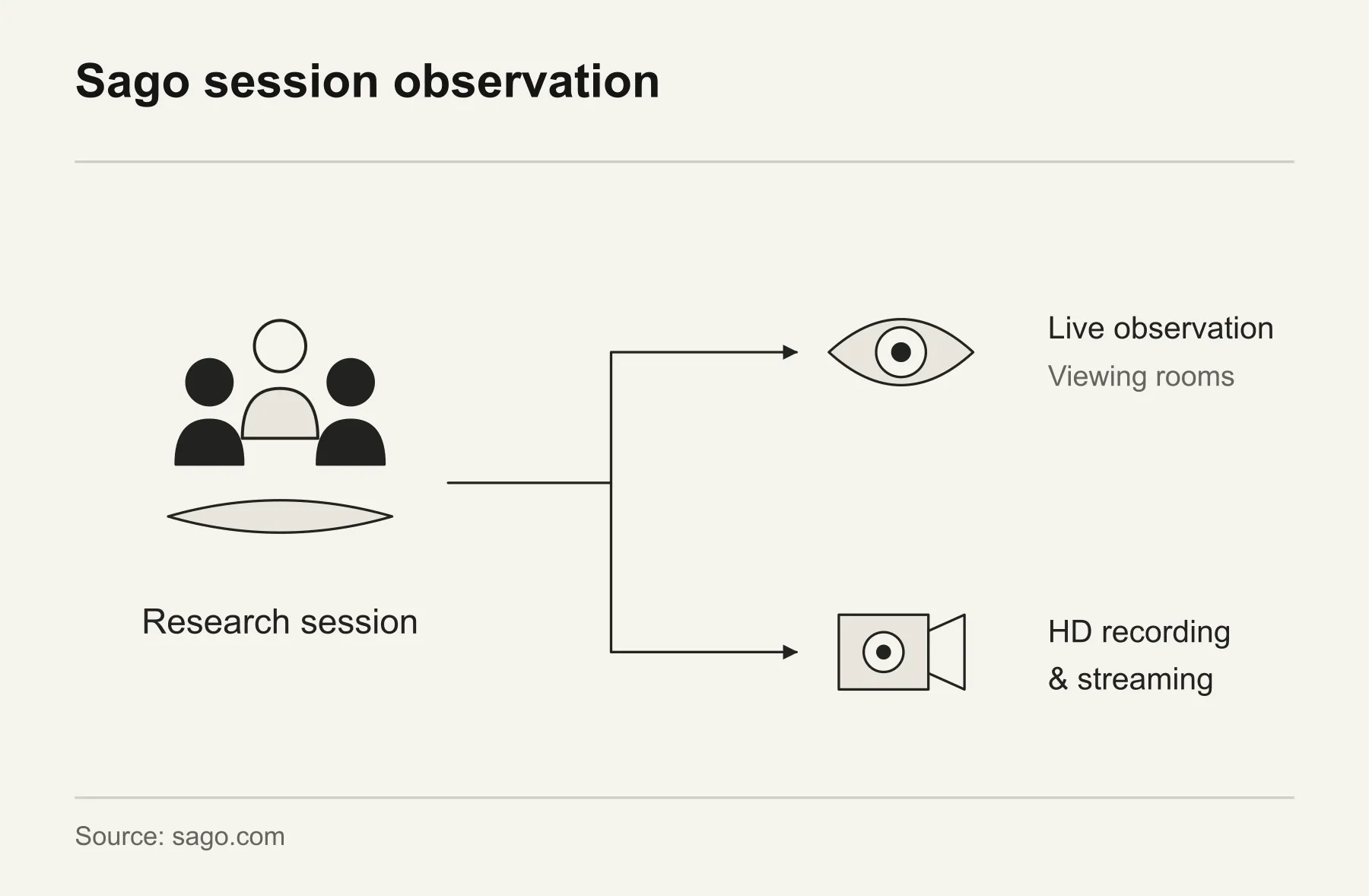
Sago describes participant rooms, client observation and HD recording and streaming for its New York facility. Confirm the rooms and services included in the proposed session.
Fit: Agencies and internal teams needing verified participants, specialist audiences, facilities, scheduling or work across markets.
Pricing: Custom. Requirements, recruitment difficulty, incentives and facilities shape the quote. Check participant replacement terms.
Scope: A fieldwork-only project does not include study design, analysis or recommendations.
Research platforms for recurring studies
Qualtrics: survey programs and panel access
Provider type: Enterprise experience-management and research software platform with panel and services options.
Qualtrics Strategic Research brings concept testing, conjoint, MaxDiff, market studies, video and audio feedback, analysis and dashboards into one platform. Teams with monthly research can use a shared, repeatable process.
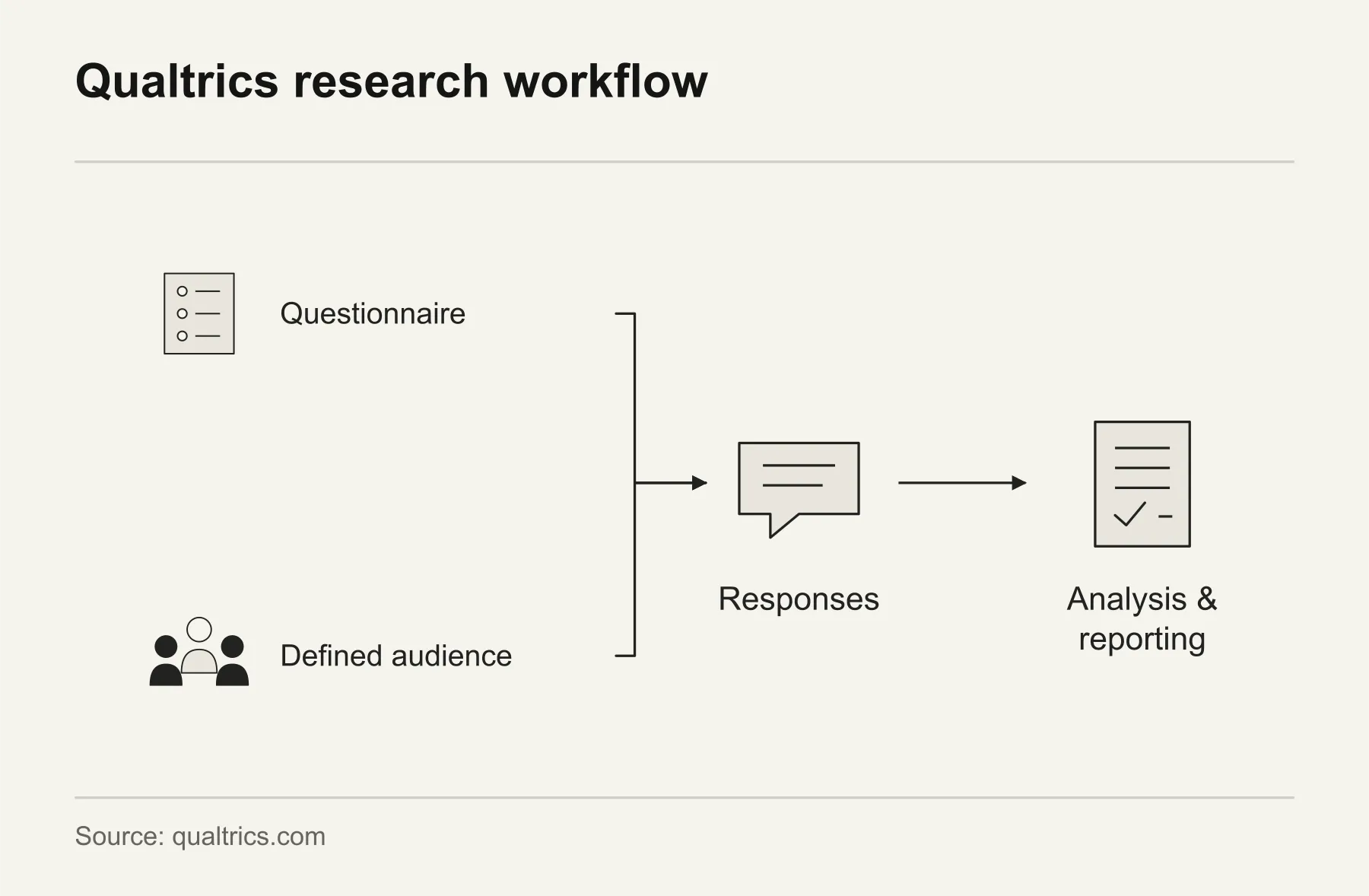
Qualtrics combines survey design, advanced methods, panel access, analysis and reporting in one workflow.
Compare Qualtrics for shared research infrastructure with quantilope for recurring advanced quantitative studies and trackers. Give both the same study and compare setup, analysis and included methods.
Pricing: Self-service is $420 per month, billed as $5,040 annually, for 1,000 responses shared across users. Enterprise pricing is custom; Edge Audiences uses separate credits.
Use our Sapien vs Qualtrics Edge guide to compare the work and responsibilities in an Edge Audiences proposal.
quantilope: automated quantitative studies and trackers
Provider type: Automated quantitative consumer-intelligence platform with self-service and managed options.
quantilope standardizes concept, claims, packaging, pricing, segmentation, portfolio, shelf, advertising, brand and launch studies. The Quinn copilot and optional research services support recurring quantitative work.
Choosing between software your team operates and a managed simulated study? compare Sapien and quantilope with the same brief.
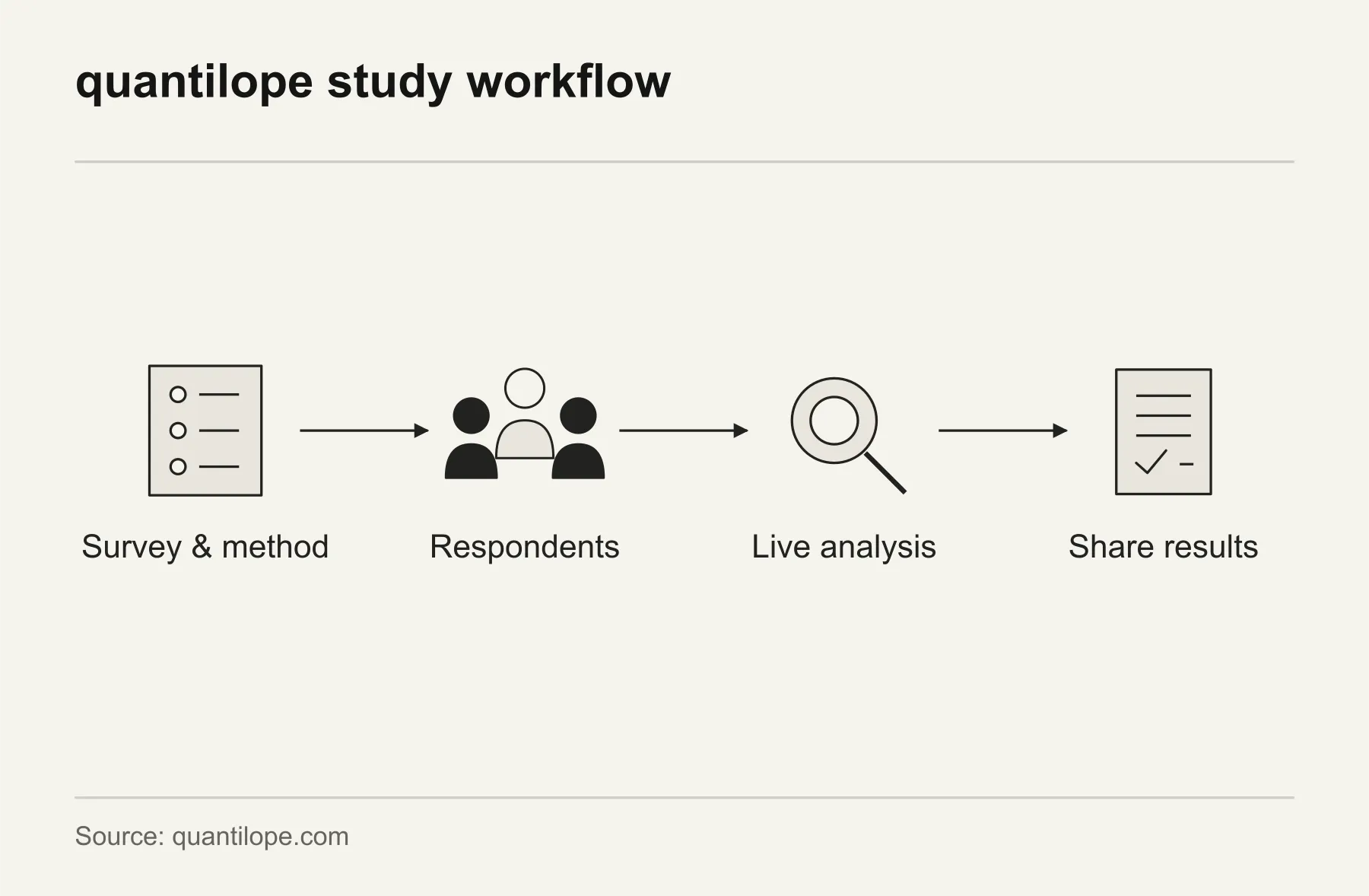
quantilope’s CI Advanced workspace combines method setup, chart controls and analysis ready to export.
Fit: Internal insight teams with enough recurring quantitative work to benefit from automation and shared standards.
Pricing: Business starts at $2,300 per month for three users. Compare panel and research-service costs alongside the license.
Scope: Conjoint and segmentation require Enterprise, so the advertised Business price does not cover those methods.
Outset: AI-moderated interviews with real people
Provider type: AI-moderated qualitative research platform with recruitment and service options.
Outset conducts adaptive text, voice, or video interviews with real participants. Researchers import or build a guide, define the stimuli and probing logic, recruit through a panel or owned audience, and receive transcripts, themes, clips, and synthesis.
Outset lets a small research team run many interviews at once while retaining control of the guide. Review how the moderator follows an unclear answer, then trace the resulting theme back to the interview.
Our Sapien vs Synthetic Users guide compares who owns simulated exploration and the final concept choice.
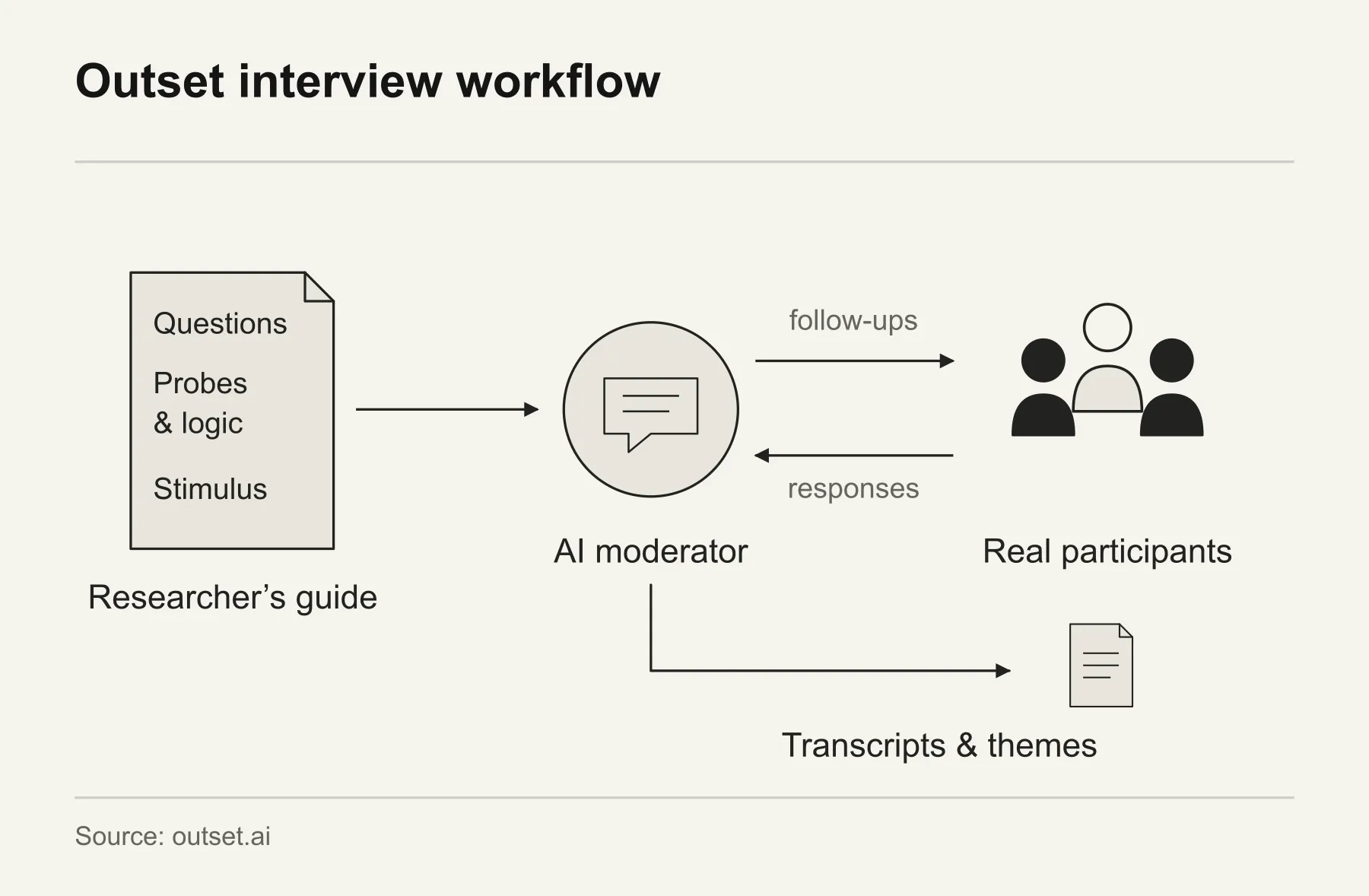
Outset’s editor lets researchers set the questions, follow-ups, logic and materials before the AI moderator runs the interviews.
Fit: Product, customer, brand, and insight teams that want to hear directly from more participants while retaining control of the interview guide.
Pricing: Custom. Compare audience, interview volume, languages and research support.
For interview and focus-group providers, see our qualitative research companies guide. For software, see our AI market research tools guide.
Research with Sapien
Sapien builds a simulated audience using real-world population and behavioral data. A study can use thousands of distinct agents representing the audience behind your question.
Sapien runs quantitative surveys, qualitative interviews, ad and creative tests, concept and claim tests, pricing studies, segmentation and behavioral simulations. The project combines results, explanations and predictions.
You receive an interactive report and recommendations on the schedule agreed for the study.
Check our published comparisons with human research for the audience, measures and limits behind a simulated result.
- The report shows results for the audience, differences between groups and the answers behind them. It includes individual responses, interview transcripts and recommendations.
- Ask for evidence supporting the prediction you need. Our savings-offer comparison recreates a human study with recorded account actions; the iPhone case below compares simulated purchase decisions. Check each study’s audience, outcome and errors before applying it to a new offer.
- The simulated audience stays available after the study. Explore a revised ad, price or smaller group without recruiting a new human sample.
Our Sapien vs Artificial Societies guide compares research for a launch shaped by neighborhood discussion.
Approved client data can be added but is not required to begin.
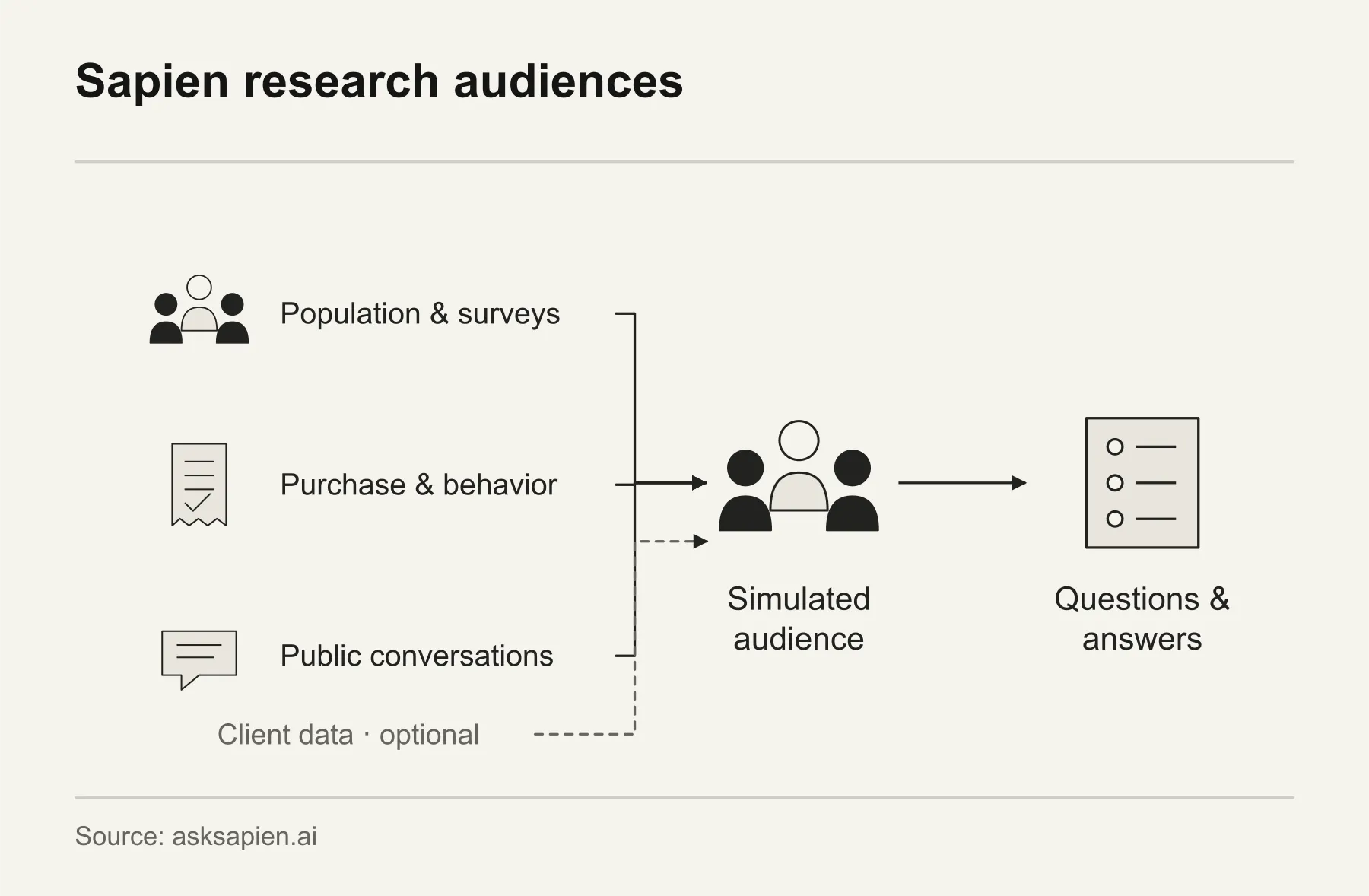
Sapien builds simulated audiences from population, purchase, behavioral, factual survey, category, review and contextual evidence.
Example: a $1,999 foldable iPhone
Sapien’s study asks who might buy a $1,999 foldable iPhone and why others would pass. It uses 10,000 simulated smartphone-buyer profiles to explore group differences, reasons, prices and switching from other iPhones.
The case reports two buyer groups apart and distinguishes the main offer from a matched price experiment. It compares a premium-product direction with broader adoption. These are simulated scenarios, not a forecast of launch sales.
In the separate matched 256GB experiment, simulated qualification at $1,599 was roughly twice the rate at $1,999 in both groups:
Buyer group / base | Qualification by price |
|---|---|
Core (n=2,103) | $1,999: 5.52% $1,599: 11.27% |
Expansion (n=2,897) | $1,999: 6.18% $1,599: 12.50% |
Each row uses the same assigned profiles at both prices. Qualification means meeting the study’s simulated funding and purchase-decision requirements. These matched-menu rates are not the main-offer results.
The larger simulated qualified audience gives the team a lower-price offer to weigh against the margin it would lose. A premium still needs a reason to upgrade; a price cut does not supply one. Compare those business directions with the audience and evidence beside them.
Explore our foldable iPhone research
Feature appeal, ability to fund a purchase and the product it would replace can point in different directions. Sapien combines those simulated choices and explanations in a recommendation, with the same audience available for follow-up.
Our Sapien vs Simile guide works through another behavioral-simulation question and the evidence it needs.
Fit: Teams that want a complete research partner for audience understanding, testing, segmentation and prediction, with results and recommendations they can use in the decision.
Match the partner to the decision
For a product, campaign, price or customer offer, Sapien can build a simulated audience, run the study and return results, explanations and a recommendation. Keep that audience for follow-up. Use licensed market data for entry context and physical product tests for performance in use.
Questions to ask a research provider
- Who exactly will answer, and how are they recruited or built?
- What will you hand back: raw records, tables, a report or a recommendation?
- What validation have you published, for which tasks, and where can we inspect it?
- What does the whole project cost, including recruitment and analysis, and how long does it take?
- Who does the work on our side, and who on yours?
- What would make you tell us the study cannot answer our question?


