
Best Consumer Insights Companies in 2026: 15 Providers by Research Job
Compare 15 consumer insights companies by research job, data source, deliverables and pricing, from audience research to retail measurement.

The brand tracker looks good. Sales are falling. Before you change the campaign, you need to know whether buyers stopped caring, could no longer find the product, or stopped finding it worth the price. Choose a consumer insights company around the evidence your next decision needs: what people bought, why they switched, or how they may respond to a different product or price.
We recommend Sapien for complete consumer research using data-grounded synthetic populations. Sapien combines modeled surveys, interviews and tests with segment findings, predicted response and recommendations.
Published by Sapien. We include our own platform and compare providers by research job, evidence source and deliverables.
Compare the companies · Read the foldable iPhone case study
Best consumer insights companies at a glance
Company | Research focus | What you receive |
|---|---|---|
Sapien · Our recommendation | Complete consumer research and prediction using a data-grounded synthetic population | Surveys, interviews, tests, segment findings and recommendations |
Retail performance across markets and channels | Sales, share, price, distribution and promotion measures | |
Retail and shopper performance analysis | Sales, ecommerce, pricing, distribution and consumer datasets | |
Purchase-linked household research | Receipt evidence, buyer profiles and targeted follow-up surveys | |
Syndicated audience profiles | Attitudes, media behavior, segment comparisons and AI exploration | |
Audience profiles and brand tracking | Panel surveys, audience profiles and recurring brand measures | |
Public online conversation | Searchable mentions, trends, alerts and dashboards | |
Custom studies with multinational fieldwork | Study design, local research, analysis and recommendations | |
Brand, creative and innovation programs | Standardized tests, custom research and consulting | |
Physical and sensory product experience | Taste, texture, handling and in-home use evidence | |
Recurring consumer surveys with research support | Recruited participant responses, survey analysis and interview options | |
Repeatable creative and innovation testing | Standardized tests, benchmarks and research support | |
AI interviews with researcher control | Participant interviews, transcripts, clips and reports | |
Recruitment through interview reporting | AI-led interviews, source responses and stakeholder reports | |
Video research with optional managed delivery | AI-moderated interviews, multimedia reports and researcher review |
1. Sapien: Research at the speed of the decision
Sapien is an AI-powered consumer insights platform that builds data-grounded synthetic populations of thousands of distinct agents representing the exact audience behind a decision. Use Sapien to survey the population, interview individual agents, test ads and creative, compare concepts and claims, test prices, and simulate likely behavior.
Sapien returns quantitative results, qualitative drivers, segment differences, and recommendations on a schedule and budget agreed for your study.
- Sapien grounds forecasts in behavioral history and checks them against observed future actions, reducing reliance on stated intent alone.
- Move from a quantitative result to interviews with the same respondents to understand the reasons behind it.
- Return to the same population for follow-ups, new creative, revised prices, or a closer look at a segment, without repeating participant recruitment and fieldwork for every study.
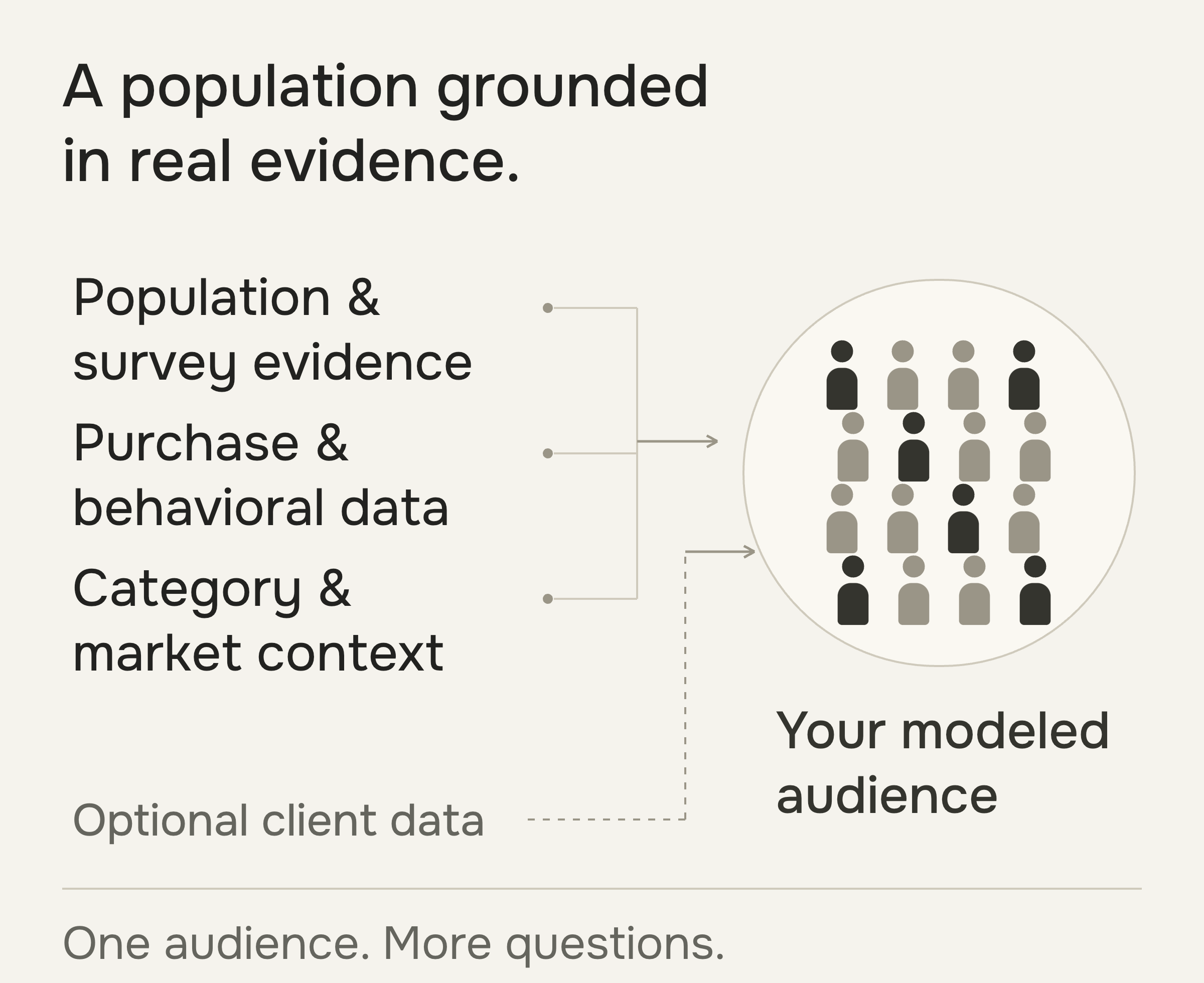
Sapien grounds its populations in real-world population, purchase, behavioral, factual survey, category, review, and contextual evidence. Client data is optional; approved first-party data can add business-specific context. Source: Sapien.
Pricing: Sapien offers per-report, volume-discounted, and unlimited annual research plans. Contact Sapien for a quote covering the population, study, deliverables, and follow-ups.
Best fit: Teams that want to understand customers, test alternatives and receive quantitative results, qualitative explanations, behavioral predictions and recommendations in one research engagement.
See how a segment comparison changes the readout
In Sapien’s Chunk Nibbles example, the shelf-choice question has four answers: usual cookies, the new product, both or neither. The Taste-first segment contains modeled respondents whose top buying reason is taste or trying something new. Its base is 456, within a total synthetic population of 1,000.
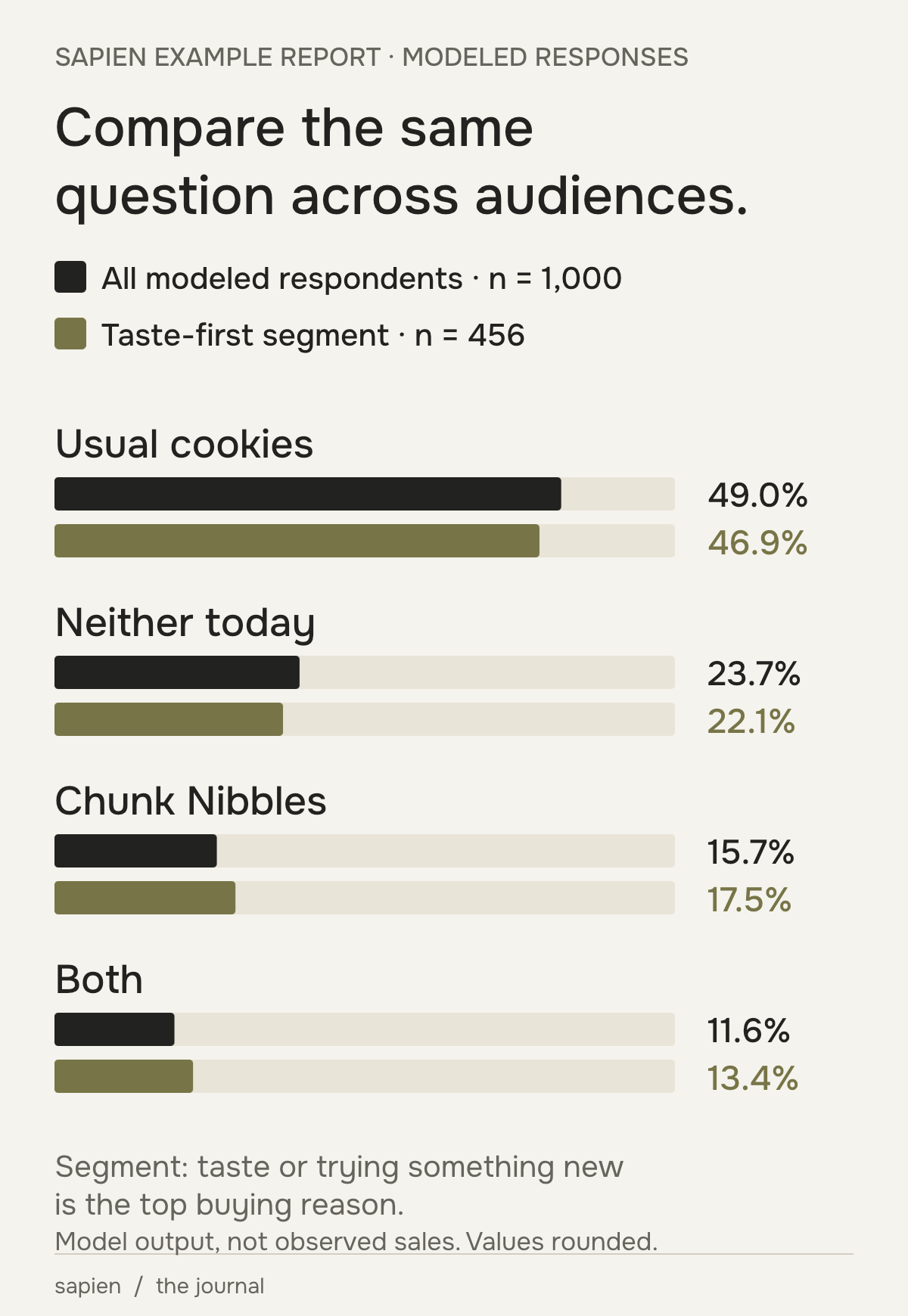
Redrawn from question 3.10 in the Chunk Nibbles example report. Total modeled population n = 1,000; Taste-first segment n = 456. Values are rounded. This displays model output, not observed sales, statistical significance or predictive validation.
Choosing Chunk Nibbles alone is 15.7% in the full population and 17.5% in this segment, a displayed difference of 1.8 percentage points. That is a reason to inspect the audience and the explanations. It does not establish that a campaign aimed at this group would produce a sales lift. Compare the same question, keep the base visible and carry the other answer options into the decision.
For another example of how audience differences shape a product decision, read our foldable iPhone research case study.
2. NIQ, Circana, and Numerator: find what changed in the basket
Start with NIQ or Circana when the missing explanation is in sales, price, promotion, or distribution. Coverage decides the fit: which retailers, categories, markets, and periods each measures. Numerator takes you from what sold to the households that bought, switched, or lapsed, with purchase-linked surveys to ask why.
NIQ
Best for: Enterprise retail measurement across markets and channels.
NIQ Retail Measurement Services tracks sales, share, price, distribution, velocity, and promotion across products, markets, channels, and time. It is a strong foundation for category reviews, commercial planning, and post-launch measurement.
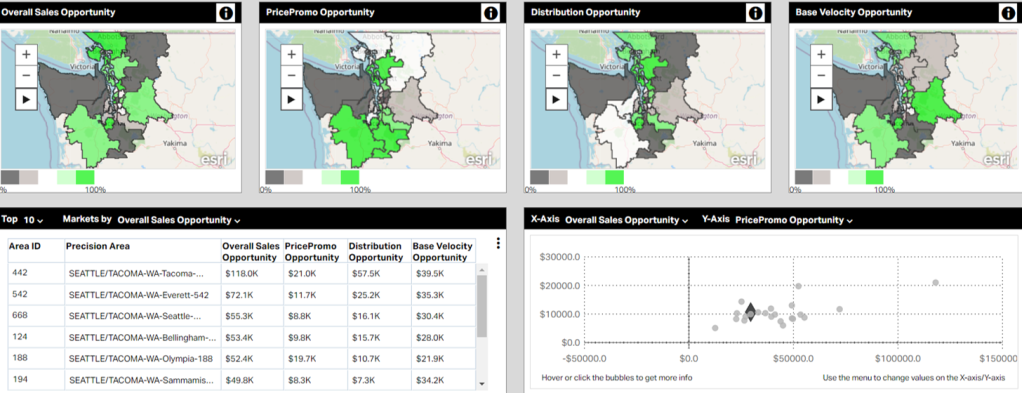
NIQ’s Precision Areas dashboard links store sales, demographics, and geography to local price, promotion, distribution, and velocity opportunities. Source: NIQ.
Pricing: Custom. Confirm the markets, retailers, categories, history, and data rights covered.
Con: Retail Measurement Services alone does not test a new proposition. NIQ separately offers BASES idea, concept, and claims testing; ask for that research scope when the decision is pre-launch.
Circana
Best for: Connecting retail, ecommerce, pricing, promotion, media, and category analysis.
Circana’s Liquid Data Go brings sales, share, distribution, ecommerce, pricing, surveys, and store activation into one offer. Use it to examine a sales change alongside the pricing and distribution conditions around it.
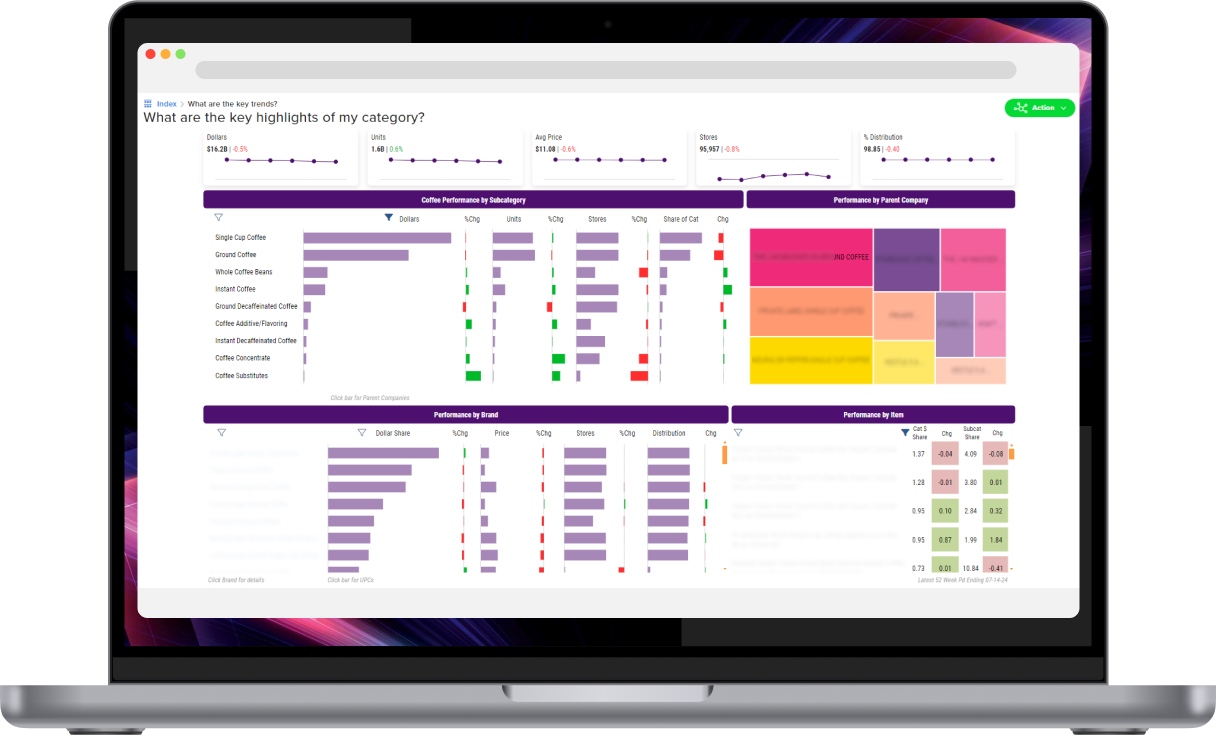
Circana’s Liquid Data Go dashboard combines sales, units, price, stores, distribution, brand, and item performance in one category view. Source: Circana.
Pricing: Custom; a trial is advertised. Confirm market coverage, refresh rate, included survey work, and exports.
Con: A historical-data subscription is not the same purchase as a concept test. Circana separately offers Concept Testing for product ideas, packaging, pricing, and claims; specify the testing method and outputs rather than assuming they are included.
Numerator
Best for: Connecting purchases to household attributes, repeat, switching, and follow-up research.
Numerator Insights links receipt data with household attributes and purchase behavior. Verified Voices can recruit recent, lapsed, or competitive buyers based on observed purchase history, then ask what drove their decision.
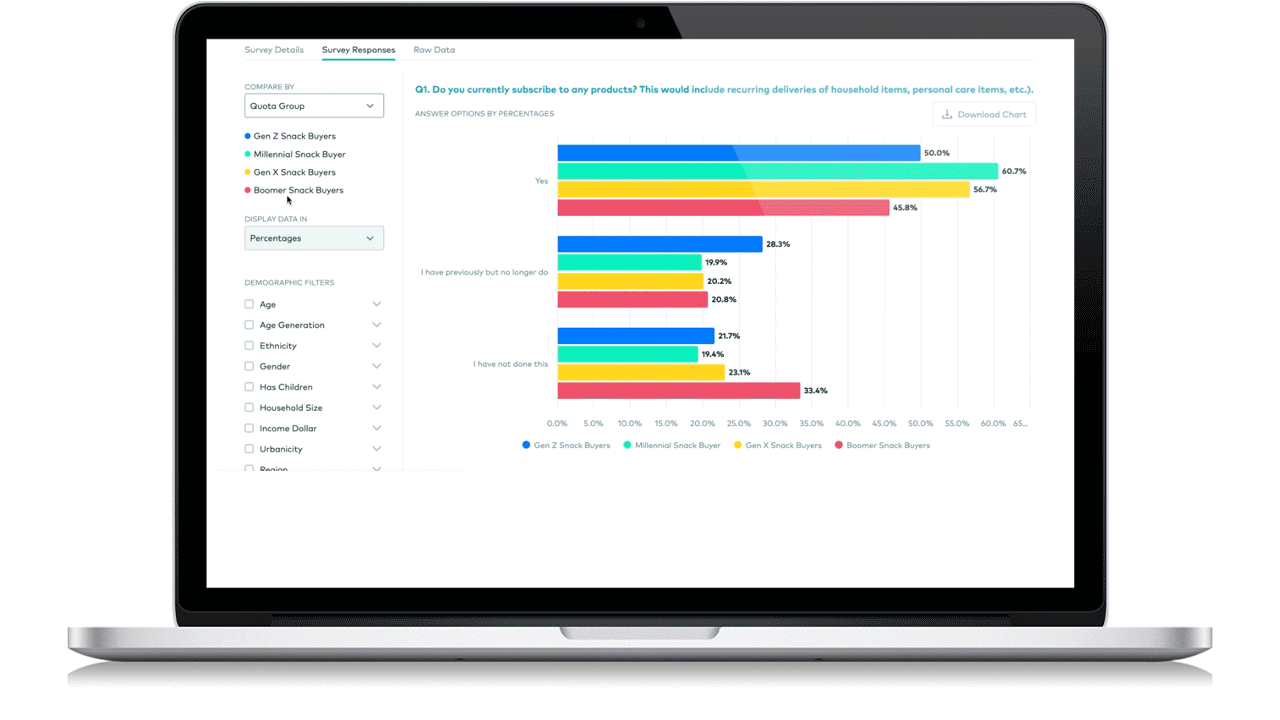
Numerator’s Smart Reporting workspace compares survey responses across purchase-linked audience segments. Source: Numerator.
Pricing: Custom. Confirm category and channel coverage, usable sample sizes, and the cost of follow-up surveys.
Con: Purchase-based targeting requires enough eligible buyers in the selected category and time window.
3. GWI and YouGov: see whether the audience is who you think it is
GWI and YouGov help you test the assumptions about the customer behind your plan. Compare GWI’s audience data with YouGov Profiles for interests, attitudes, and media habits; add BrandIndex to see how brand measures change over time. Choose on coverage of the people and markets your plan depends on.
GWI
Best for: Audience profiles, crosstabs, media planning, and early exploration of consumer attitudes and behavior.
GWI profiles audiences by demographics, attitudes, reported behavior, brand relationships and media use. Agent Spark lets teams ask questions of that survey evidence, helping planners explore and compare the audiences behind a campaign.
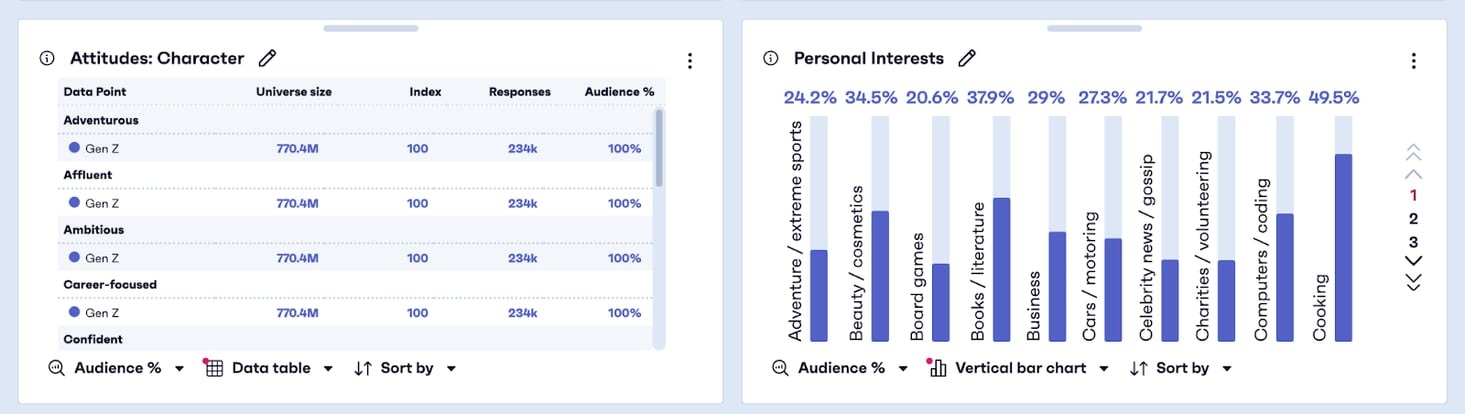
GWI’s audience workspace compares a selected segment across attitudes, interests, universe size, response counts, and audience share. Source: GWI.
Pricing: GWI pricing starts with a free plan that includes 10 Agent Spark prompts per month. Plus is listed at $150 per user per month or $1,500 per user annually.
Coverage: GWI’s surveys determine which markets and audience characteristics you can explore. Questions outside that coverage require additional evidence or custom research.
YouGov
Best for: Connected audience profiles, brand tracking and survey access.
YouGov Profiles covers demographics, attitudes, media, brands, and reported purchase behavior. YouGov says the product draws on more than 30 million panel members, two million data points, and 49 markets. BrandIndex separately tracks 16 brand measures daily across more than 27,000 brands in 56 markets.
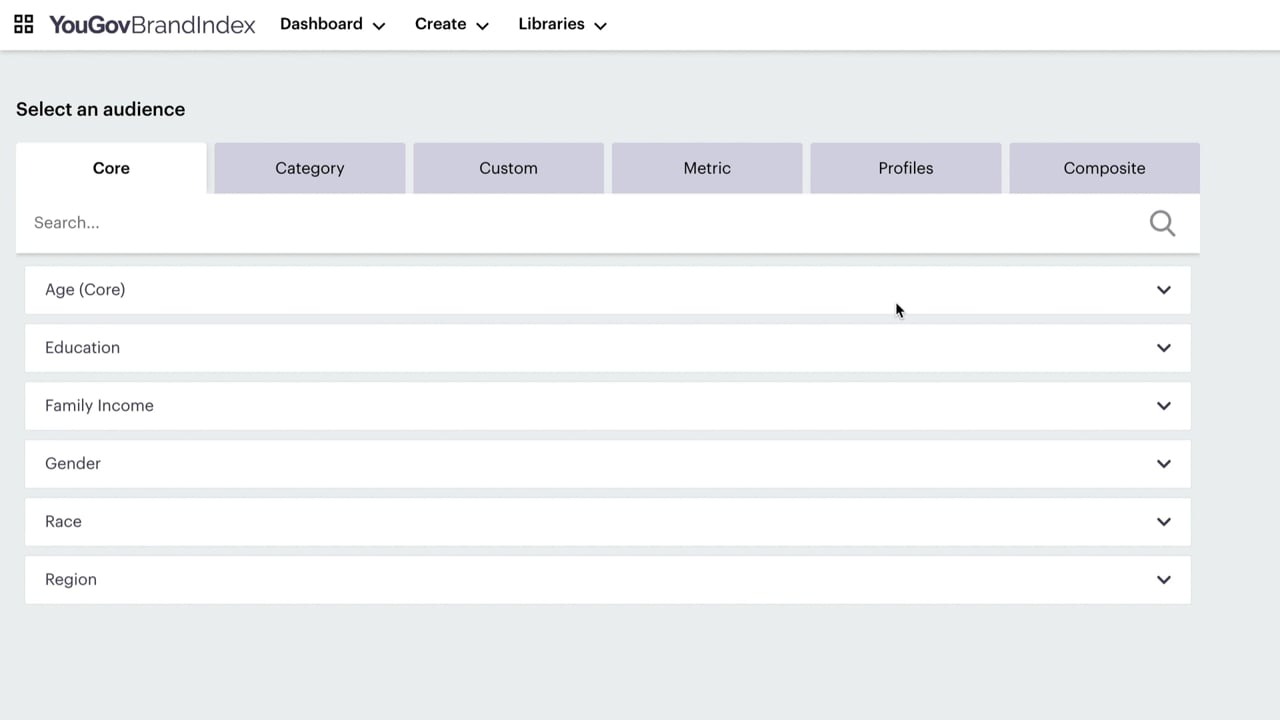
YouGov BrandIndex’s audience selector cuts standardized brand-tracking results by core, category, custom, and Profiles audiences. Source: YouGov product demo.
Pricing: Profiles Lite is free; full Profiles is quote-led. Self-serve surveys start at $1.50 per completion in the U.S. and £0.80 in Great Britain. Publication of self-serve results requires YouGov’s permission.
Con: Profiles, BrandIndex and custom surveys are separate products. Confirm which ones your subscription includes and how they work together for your research brief.
4. Brandwatch: hear the conversation outside your questionnaire
Brandwatch
Best for: Tracking what people say publicly across online sources.
A questionnaire reflects the questions your team knew to ask. Brandwatch searches public conversation for complaints, category language, and competitor mentions. Read the underlying posts to see how people describe the issue before turning it into your next research question. Query design determines which conversations you find.
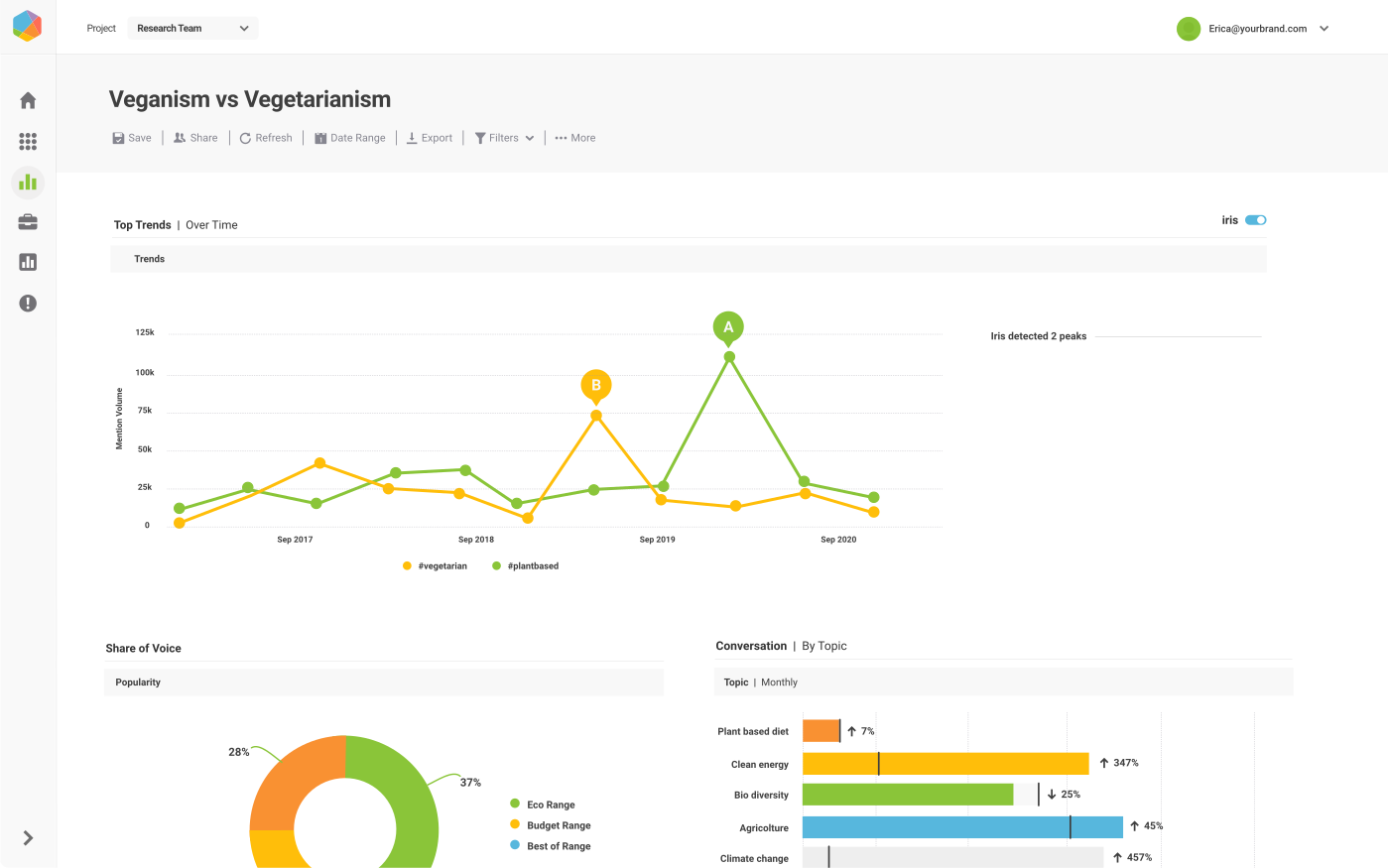
Brandwatch's Consumer Research dashboard shows Iris-assisted analysis of public conversation, with sources, queries, filters, and classification rules shaping the view. Source: Brandwatch.
Pricing: Custom. Source coverage, historical access, mention volume, and export requirements shape the quote.
Con: The people posting may differ from the audience you want to reach. Use conversation volume to spot a topic worth investigating, then use audience research or sales data to assess its scale and business impact.
5. Ipsos and Kantar: reconcile evidence that points in different directions
When the tracker, sales data, and interviews disagree, the job is to explain the disagreement. Ipsos and Kantar connect evidence across methods and markets, design additional research, and turn the work into a recommendation. That is what you are buying from a full-service team: judgment as well as fieldwork.
Ipsos
Best for: High-stakes, multi-method work that requires global fieldwork and senior interpretation.
Use Ipsos for global segmentation, brand strategy, communications, innovation, or mixed-method research that spans markets and disciplines.
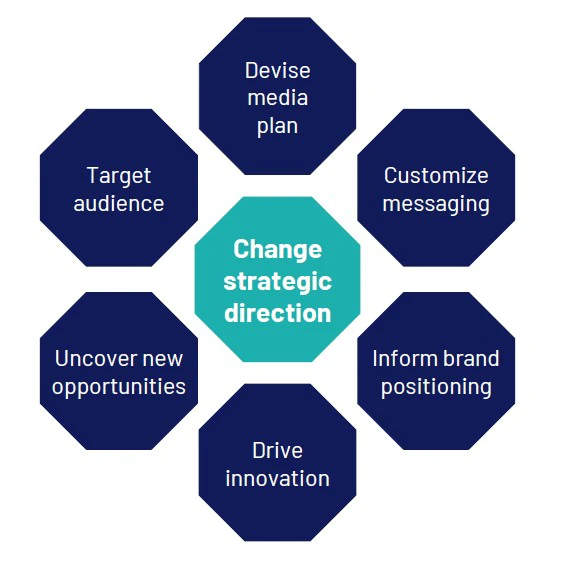
Ipsos maps segmentation into media, messaging, positioning, innovation, targeting, and changes in strategic direction. Source: Ipsos.
Pricing: Custom. Compare the assigned team, markets, fieldwork, analysis, and decision support.
Con: A custom program requires close coordination with the assigned team. For a repeatable, tightly defined test, compare its scope with a standardized service.
Kantar
Best for: Brand, creative, innovation, and custom research at multinational scale.
Kantar combines category expertise, consulting, and research execution for programs that span brand, creative, and innovation decisions. Kantar Marketplace offers standardized tests; custom engagements bring research and consulting to the wider brief.
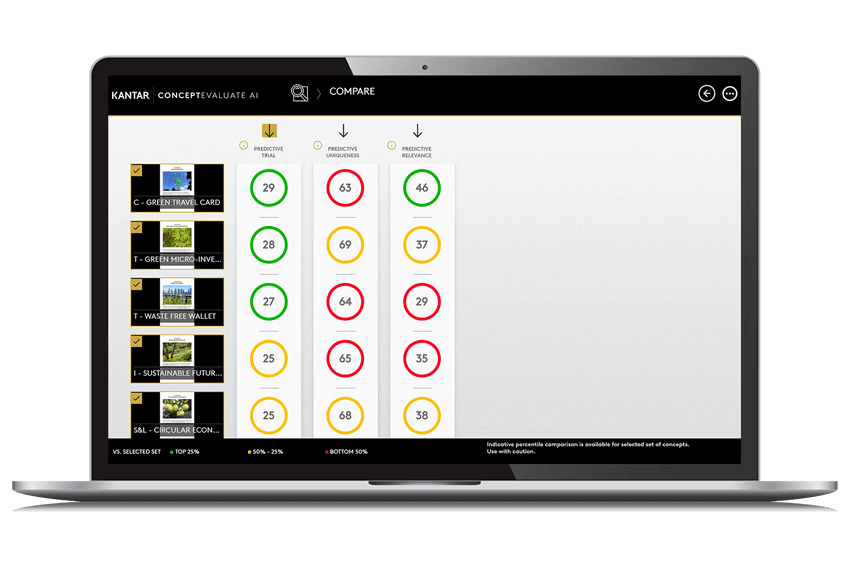
Kantar ConceptEvaluate AI compares concepts across predictive trial, uniqueness and relevance. Source: Kantar.
Pricing: Custom. Confirm the product, markets, sample, and consulting support included.
For a closer comparison of full-service agencies, specialist firms, managed platforms, and self-service software, see our guide to market research services.
6. Curion: find out whether the product survives actual use
Curion
Best for: Understanding how a promising concept performs when people taste, handle, prepare, or repeatedly use the product.
Curion runs sensory, central-location, and in-home product research. Its dry-shampoo case combines in-lab work with home-use evaluation during application and wear. Curion reports significant differences on 32 of 62 sensory attributes, helping the client identify product advantages that could support its marketing claims.
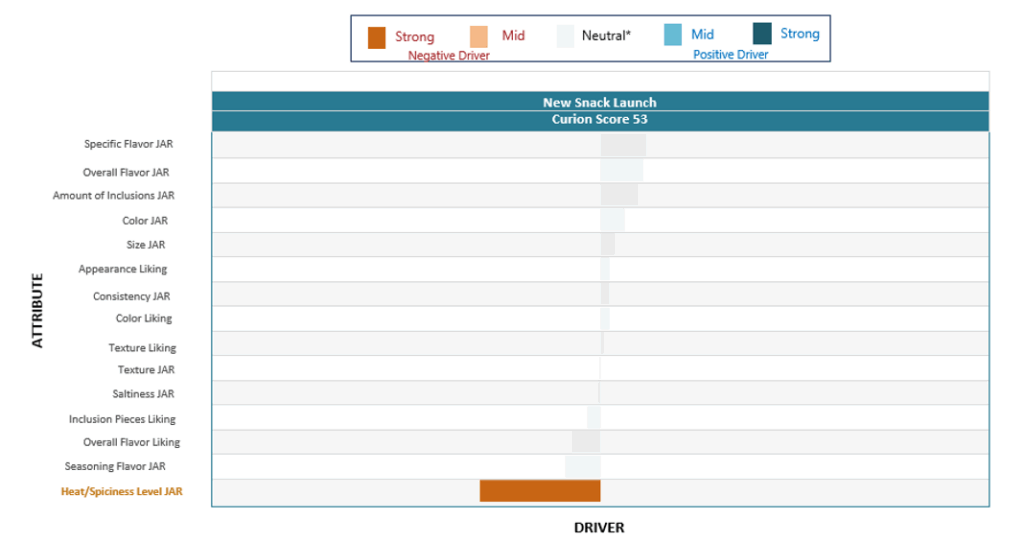
Curion Score and Drivers Analysis show how product attributes affect predicted performance in a sensory study. Source: Curion.
Pricing: Custom. Product variants, testing locations, home-use duration, and handling requirements determine the scope.
Con: Physical testing requires product, logistics, participants, and time.
7. Attest and Zappi: make the next study build on the last
A single test tells you how an idea scored. Repeated studies let you investigate why and improve the next version. Start with Sapien to test concepts, creative or prices and follow up with the same population. Attest and Zappi provide recurring workflows with recruited participants; compare them when your brief calls for those responses or their testing benchmarks.
Attest
Best for: Repeatable consumer surveys with research support and a credit-based commercial model.
Attest covers concept, creative, brand, audience, and category studies with new responses from recruited participants. Measure handles quantitative work, Compass is an AI assistant for study design and analysis, and Explore adds AI-moderated interviews.
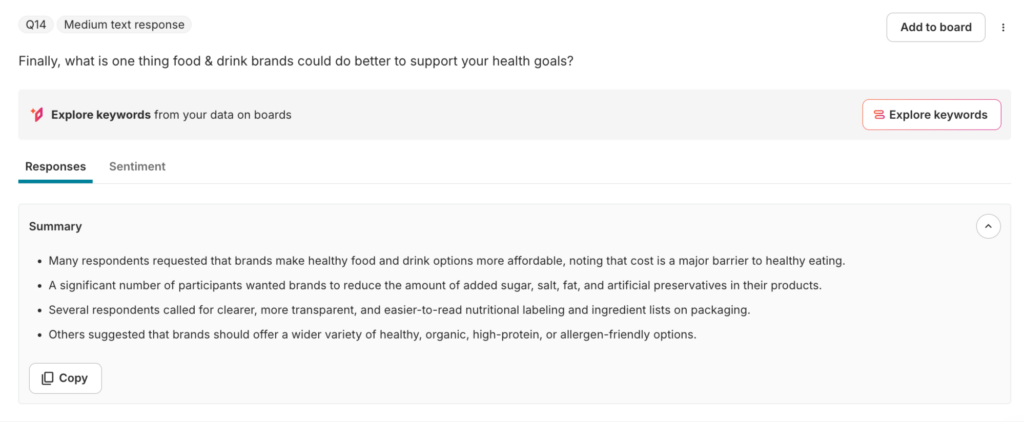
Attest summarizes open-text survey responses inside the reporting workflow. Source: Attest.
Pricing: Quote-led annual plans use credits. One credit buys one answer to one question from one qualifying respondent; sample size and questionnaire length determine study capacity.
Con: A credit balance does not tell you how many studies you can run. Questionnaire length, audience eligibility, sample size, modules, and support determine what it covers.
Zappi
Best for: Creative and innovation testing that is repeated enough to build useful benchmarks.
Zappi standardizes advertising, innovation and brand studies while retaining benchmarks from repeated work. Its automated platform helps teams compare new creative and concepts with earlier tests, so findings from one study can inform the next brief.
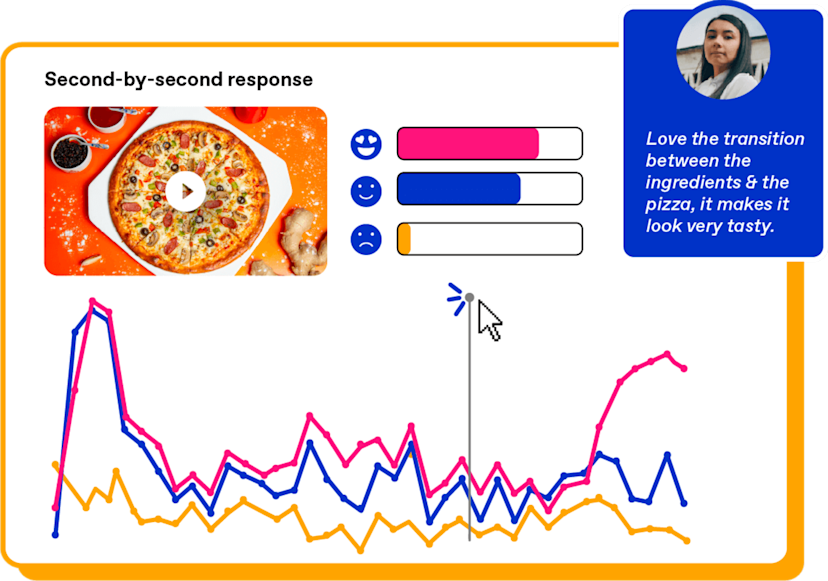
Zappi’s ad-testing output tracks second-by-second consumer response, showing where a creative gains or loses attention. Source: Zappi.
Pricing: Contact sales. Ask for a quote covering your markets, sample and question volume. Confirm credit allowances, benchmark access, consulting, exports, user access and any migration of historical data.
Con: Standardized tests require a defined measurement question; open-ended discovery calls for a different study design.
8. Outset, Listen Labs, and GetWhy: hear the reasons behind the results
These platforms use AI to interview people and preserve the recordings or transcripts behind a finding. Compare Outset for researcher control of guides and follow-up questions, Listen Labs for recruitment through reporting, and GetWhy for video studies with self-service or managed delivery.
Outset
Best for: AI-moderated text, voice, and video interviews with real participants.
Outset provides AI-moderated text, voice and video interviews with recruited participants. Researchers control the guide and stimuli, then receive transcripts, clips and reports to investigate and share the findings.
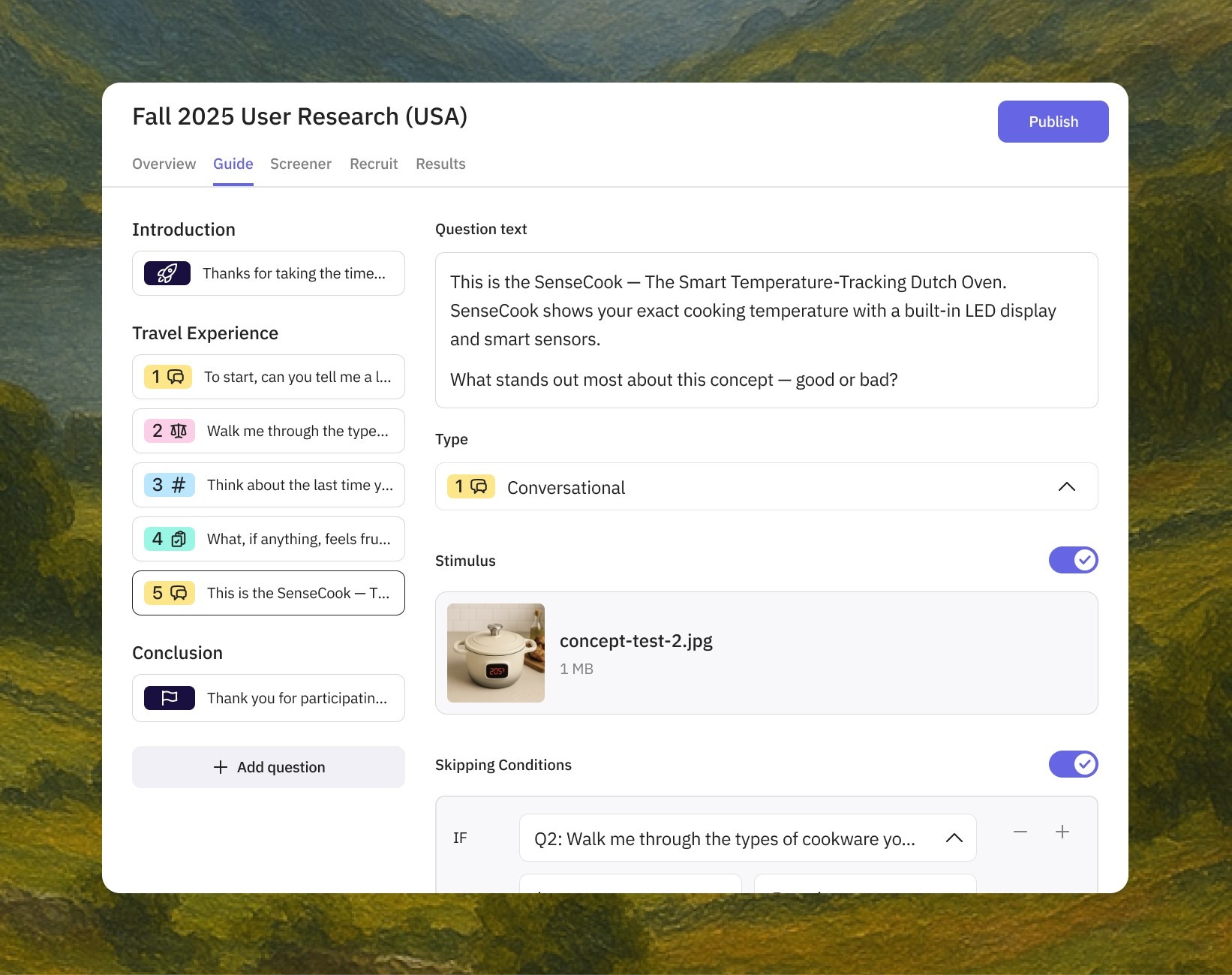
Outset’s guide editor shows how researchers configure questions and stimuli before AI-moderated interviews with recruited participants. Source: Outset.
Pricing: Outset pricing is custom. Scope recruitment, interview volume, languages, and research support.
Listen Labs
Best for: Taking a large interview study from recruitment to reports colleagues can trace back to participants.
Listen Labs handles guide design, recruitment, interviews, and analysis, then connects its reports to participant responses your team can inspect and share.
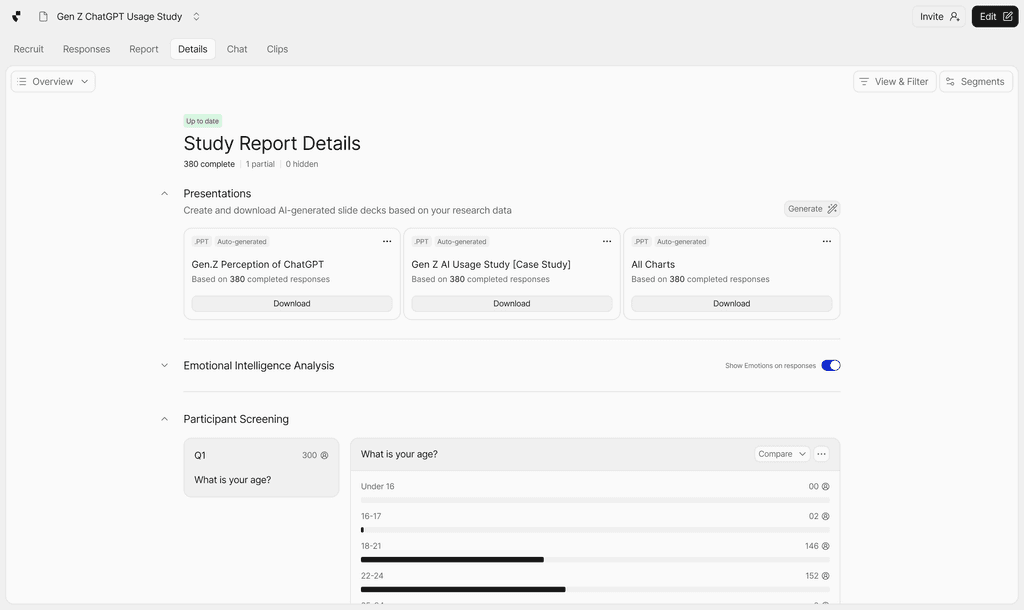
Listen Labs’ report screen connects a large interview study to generated deliverables and respondent-level detail. Source: Listen Labs.
Pricing: Custom. Compare the audience, interview volume, research support, and deliverables included.
GetWhy
Best for: Video interviews your team can run itself or commission as a managed study.
GetWhy combines AI-moderated video interviews with multimedia reporting. Managed studies add senior-researcher review.
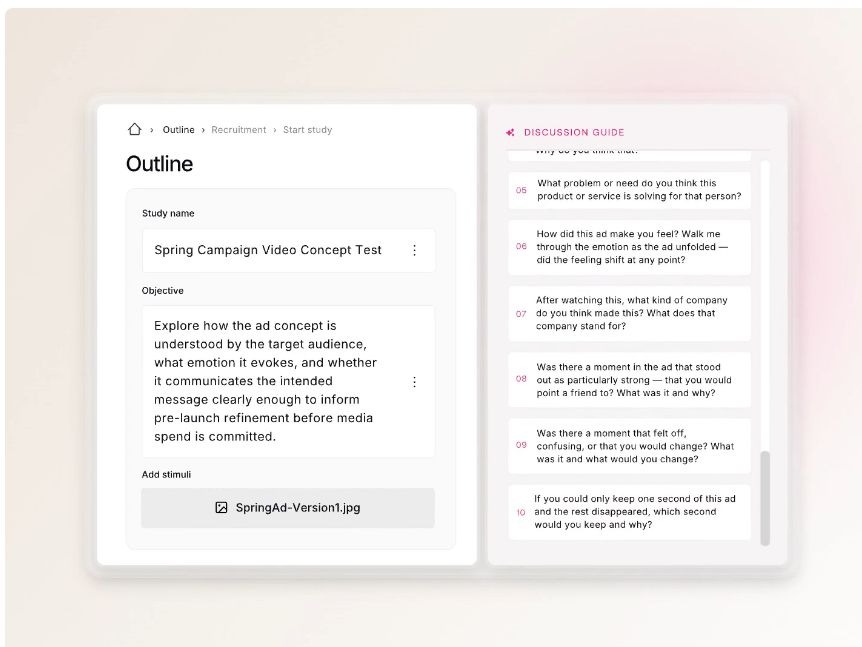
GetWhy turns a campaign brief and stimulus into an AI-moderated video discussion guide. Source: GetWhy.
Pricing: Initial studies start at $2,000 to $4,000 without an annual commitment. Confirm sample, markets, incentives, service level, timeline, and deliverables.
Con: GetWhy’s 48-hour claim for managed studies starts at the first interview. Include study design and recruitment when comparing total turnaround.
See qualitative research companies for a deeper comparison of interview partners, recruitment specialists, and qualitative platforms.
Choose the partner that helps you make the next move
Start with Sapien to understand your buyers, compare alternatives and choose the next move. Sapien builds the population and runs the study, connecting the predicted response with the reasons behind it. When choosing a target audience, compare current buyers, people who stopped buying and relevant category buyers who have never chosen your brand. Ask which group to prioritize, the barrier to address and the product, price or message to change. Specialist evidence can answer additional questions:
- NIQ and Circana show whether sales moved with distribution, price, promotion or category demand. That helps separate an availability problem from a message that needs to change.
- Numerator connects purchase records with household profiles and follow-up surveys, helping explain which buyers switched or lapsed.
- Curion investigates taste, scent, texture and in-home use, helping a product team understand what needs to improve in the physical experience.