A Red Bull Protein Drink Has a Timing Problem
Sapien modeled three unofficial Red Bull protein concepts. The result depends on whether protein and caffeine are useful at the same moment.
Sapien Experiments: an unofficial Red Bull protein concept
Red Bull sold 13.969 billion cans worldwide in 2025. Protein is the category next door. C4 has already launched a sparkling drink with 20 grams of protein and no caffeine. So what would happen if Red Bull put protein and caffeine in one bottle?
The answer depends on the moment. A drink that solves two needs after training can become an unnecessary third purchase when someone already has a shake and free coffee. That is the tension we tested with Sapien.
Three drinks that do not exist
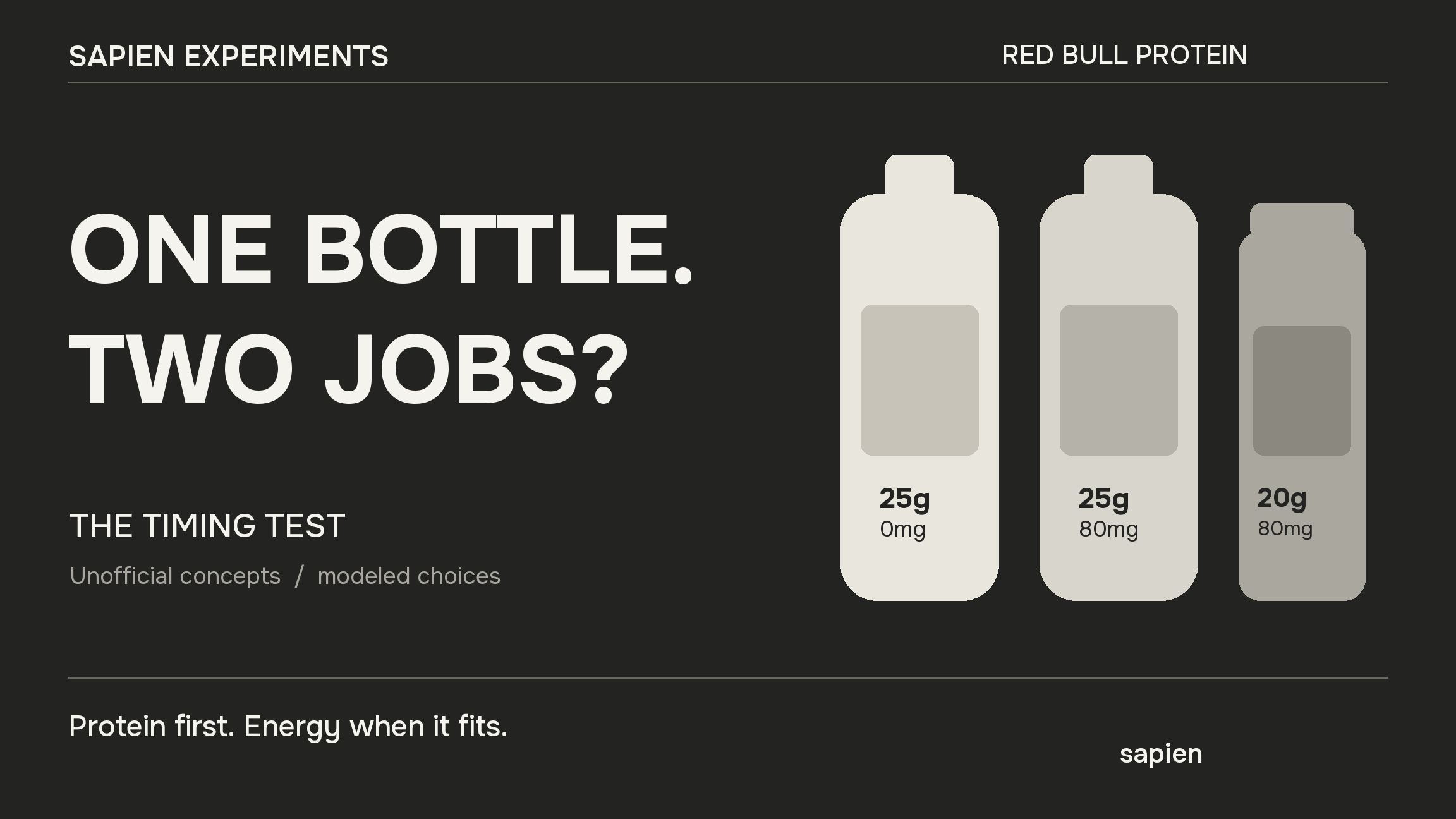
We modeled three unofficial concepts, not Red Bull products or tasted prototypes, in a study of 2,000 simulated people:
Concept | Format | Protein | Caffeine |
|---|---|---|---|
Protein Shake | Vanilla milk-based shake | 25 g | None |
Protein + Energy | Vanilla milk-based shake | 25 g | 80 mg |
Clear Protein Energy | Citrus clear drink | 20 g | 80 mg |
The combined-drink examples below were shown at $3.99. The modeled audience included different work schedules, exercise and protein habits, caffeine routines, budgets, and recent Red Bull purchases. Those details matter because a person does not shop for an ingredient in isolation. They choose a drink in a particular situation, beside alternatives they may already own or buy.
One bottle can do two jobs
Picture leaving a training session with protein still to have and work ahead. Caffeine is useful now, too. A single drink could replace a protein serving and a separate caffeinated drink.
That is the clearest opening in Sapien's report. In its post-training condition where both needs were still useful, it reports 59.0% selecting the creamy Protein + Energy concept and 35.2% selecting the clear concept in their respective comparisons. A modeled respondent described the appeal as covering a protein serving and the alertness needed for the next part of the day in one bottle.
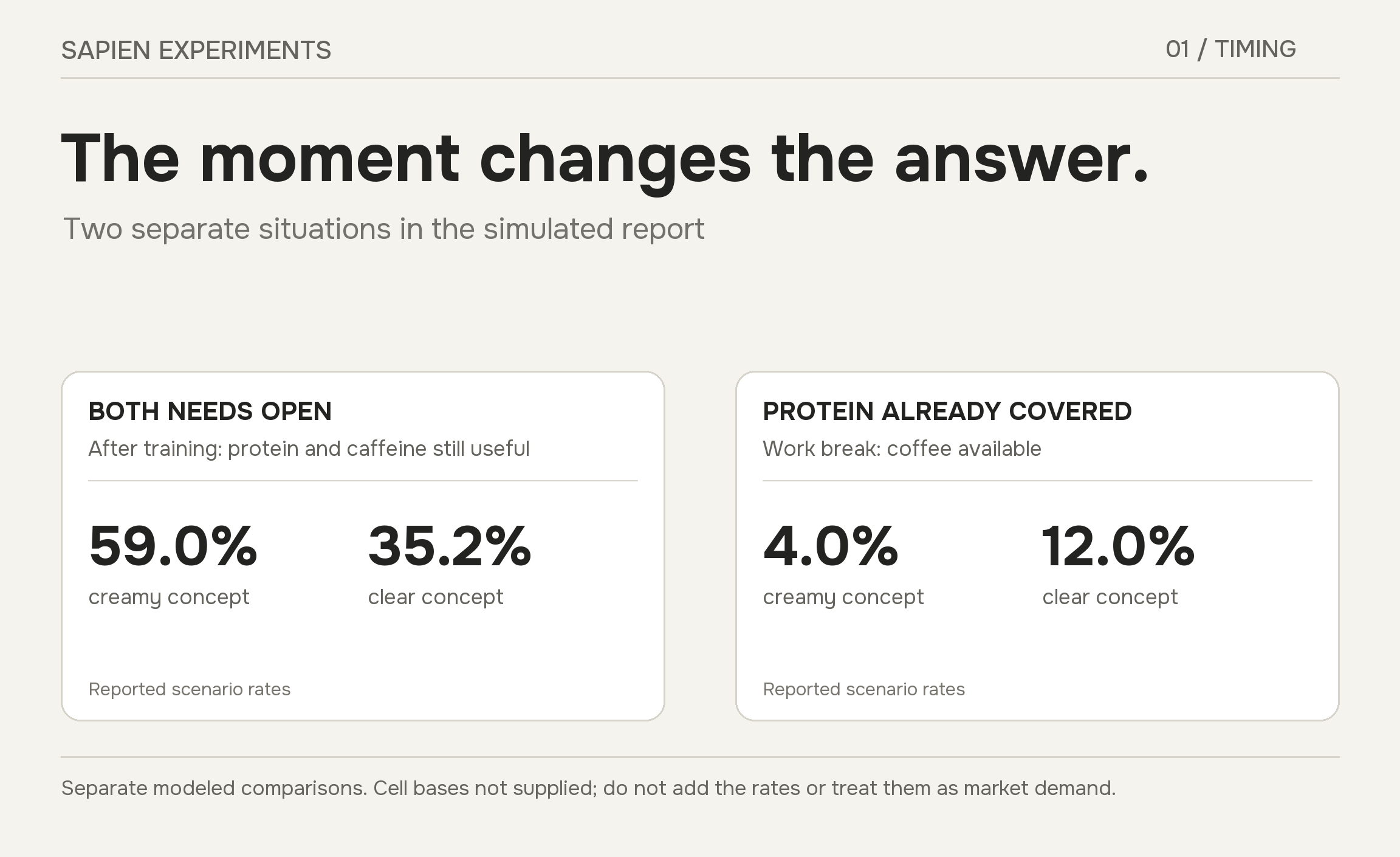
These are rates within the stated situations, not shares of all 2,000 people or a forecast of real sales. The report does not provide the underlying cell counts or enough detail to add the two percentages together. The useful signal is the job the drink might do: remove an inconvenient second step at the right time.
When the second job is already done
Now change the situation. It is a work break; protein has already been handled and coffee is available. The person may still want alertness, but a combined protein drink no longer replaces two needs.
In that separate work-break condition, the report gives 4.0% for the creamy concept and 12.0% for the clear drink among its work, commute, and shift group. The clear option can make sense as an energy-drink trial. Its protein content does not establish why someone chose it.
This is a different scenario, not the same people changing their minds. The report does not tell us how common either occasion is in the real market. It does show why a broad question such as “Would you buy Red Bull protein?” hides the decision Red Bull would actually face: what would this bottle replace, and when?
Trial is not a routine
The study also found people who would try an unfamiliar bottle while keeping their usual coffee, powder, or protein shake. A modeled buyer could see the creamy format fitting one post-training stop while rejecting added caffeine as part of a daily protein habit. Around food, a shake could accompany a meal or bridge a delay; the report does not support calling either caffeinated concept a dependable full-meal replacement.
That gap between first purchase and repeat use matters more than a catchy product description. Someone might buy once for convenience and go back to a cheaper or better-tasting routine. The simulation did not test flavor, a real shelf, repeat purchases, or whether a new bottle would add to Red Bull sales instead of shifting purchases from an existing can.
The next decision for Red Bull
I would take the creamy Protein + Energy concept into a small real-world prototype test, centered on people who sometimes need protein and caffeine in the same window. Put it beside the actual alternatives: a familiar shake, coffee, an energy drink, a packed meal, and the option to buy nothing. Test the clear format separately in alertness-led situations.
Then ask three questions the simulation cannot settle: Does it taste good enough to buy again? Does the combined bottle beat the person's current two-drink routine at its price? Does it bring Red Bull an additional purchase, or merely move one from another Red Bull product?
The study did not find that everyone wants protein in an energy drink. It found a sharper opportunity to investigate: one bottle may win when two needs arrive together and the current routine makes that inconvenient. Outside that moment, adding protein can be beside the point.
Bring Sapien a product decision to test.
Source: Sapien, “Red Bull Buyer Audiences,” September 2026. The report describes 2,000 simulated people and scenario-specific choices for unofficial concepts. Results are modeled responses, not observed purchases or a validated market forecast. The report's scenario tables do not supply eligible cell counts; those rates should not be combined or generalized to the full audience.