
When Is an Implicit Association Test Worth Adding to Brand Research?
When two designs earn similar direct ratings, a reaction-time task may help you check a specific association. Start with the decision it could change.
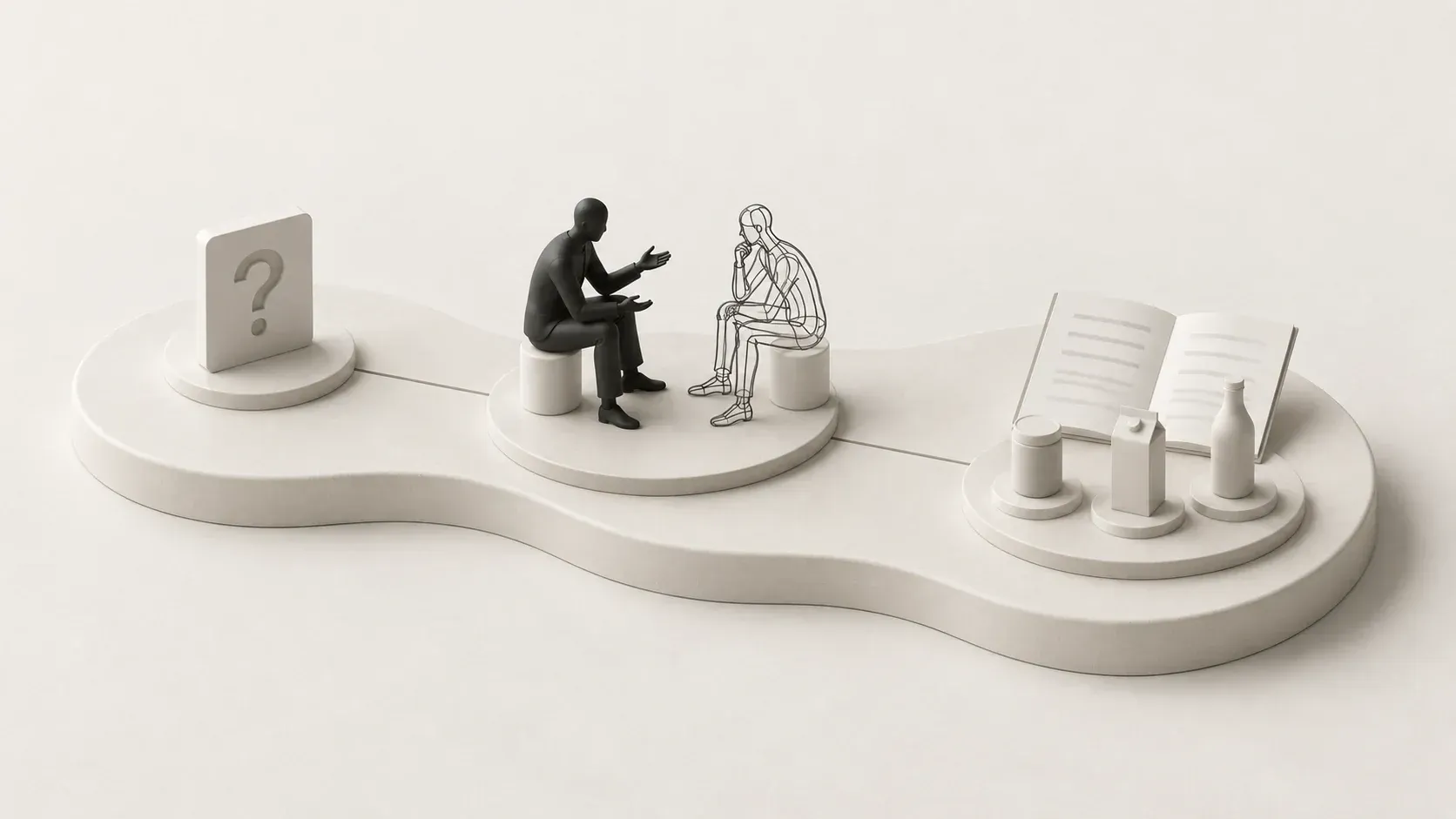
Add an implicit association test when you have a specific association to compare and the result could change an artwork decision. A reaction-time task can supply evidence about how easily people sort pairings under the test conditions. Use direct ratings to learn what they say the brand stands for, and a separate choice measure if you need to understand what they would buy.
A fictional sparkling-water brand has two pack routes. Both are rated as refreshing in an initial interview, but the team wants to know whether the stripped-back pack keeps a stronger link to the idea of an after-work reset. Before adding a timed task, ask what the design team would change if that association weakened.
Match the task to the comparison
Define the target and comparison concepts, the words or images that represent them, and the primary contrast. A conventional IAT measures relative speed across paired sorting conditions. If a supplier uses a different reaction-time method, ask them to name it and explain what its score compares. The original IAT research describes the paired sorting design. Greenwald, McGhee and Schwartz
Use category-relevant words that participants understand. Pilot how people classify them and check that type size, reading load, device and input mode are comparable. Counterbalance block order where the chosen method calls for it. Set error and latency handling, scoring, and exclusions before you see the route comparison. Use comparable exposure conditions and recruit the audience that will encounter the pack.
Copy the combined study brief
Field | Requirement |
|---|---|
Association | One named link, such as the pack and an after-work reset. Define the comparison pairing. |
Direct measure | Ask what occasion comes to mind unaided, then collect a direct rating. Keep the actual prompts. |
Reaction-time measure | Name the method, scoring direction, timing controls, error rules, and group-level contrast. |
Readout | Report usable bases, exclusions, uncertainty, and the task conditions beside both results. |
Next action | Define which design cue could be changed and how that change would be verified with shoppers. |
Read agreement and disagreement differently
If direct ratings and the timed task both show a weaker association on the new route, examine which cue the redesign removed. If timed sorting differs but direct answers are similar, check whether device or task behavior explains the difference and treat the result as a reason to probe a specific cue. If purchase choice is the concern, test choice in a comparable buying context. Sorting speed supplies evidence about performance on the task. It cannot tell you why an individual made a purchase.
The best reason to commission the extra task is a specific revision you can make and test. Sapien's brand perception guide