Brand perception research: change the impression that matters
Brand perception research examines the associations people attach to a brand, where those impressions come from and how they compare with alternatives. Use it to choose a communication or product change. Open associations explain the meaning behind a score; customer experience helps identify which team can change it.
Brand perception research examines the associations people attach to a brand, where those impressions come from and how they compare with alternatives. Use it to choose a communication or product change. Open associations explain the meaning behind a score; customer experience helps identify which team can change it.
The team wants Lumen tea to feel like a premium afternoon treat. Buyers describe it as easy to find on the grocery run. Both impressions can be true, but a campaign full of premium adjectives will not explain what earns the premium.
This fictional comparison turns the mismatch into a study: find what premium means to the intended buyer, identify the cue that could communicate it, and protect the convenience people already value. The result should tell the team what to change.
Hear the buyer’s words before showing your own
Ask open questions first, then use a structured attribute list. Otherwise, a list containing “innovative” and “reliable” may create the very associations you hoped to measure independently.
Use this sequence:
- Which brands come to mind for the category? Record unaided awareness before showing names.
- Which of the listed brands have you heard of? Randomize the brand list where appropriate.
- What comes to mind when you think of each familiar brand?
- What experience or information led to that impression?
- How strongly does each familiar brand fit each chosen attribute? Include “not enough knowledge to answer.”
- Ask prospects whether they would consider the brand before routing a follow-up. For those who would not: what, if anything, would need to change? For those already considering it: what supports that choice, and what might stop it? For current customers: what would make you keep choosing it or stop? Include “cannot judge” rather than assume every familiar prospect has decided.
Keep customer experiences separate from impressions based on advertising or hearsay. Both matter, but they explain different opportunities.
Put the impression beside the alternatives
The following is a fictional demonstration for three imagined tea brands. Ratings use a five-point fit scale: 1 does not fit at all, 2 fits slightly, 3 fits moderately, 4 fits very well, 5 fits extremely well. They are invented means, not observed research or Sapien output.
The impression has more than one dimension.
Invented 1–5 attribute means
Brand | Convenient | Premium | Affordable | Interpretation to investigate |
|---|---|---|---|---|
Lumen | 4.2 | 3.0 | 3.7 | Strong convenience association, less premium meaning |
Harbor | 3.1 | 4.4 | 2.4 | Premium impression with affordability concern |
Plainfield | 3.6 | 2.8 | 4.3 | Affordable association, weaker premium cues |
- Lumen · 80 valid raters
- Harbor · 60
- Plainfield · 90
Five-point fit scale, from does not fit at all to fits extremely well. Unequal knowledgeable bases are teaching assumptions; the comparison does not rank all buyers or explain sales.
To make the denominator check explicit, imagine 100 eligible category buyers were asked about every brand. Lumen has 80 valid raters and 20% unable to rate; Harbor has 60 and 40%; Plainfield has 90 and 10%. These bases are additional fictional teaching assumptions, not the equal-base dataset used in the separate map guide. The composition of each knowledgeable group may differ, so the means above do not justify an overall brand ranking.
For example, an invented Lumen answer, “It is easy to pick up on my grocery run,” receives convenience and availability codes. It supports an interpretation hypothesis, not a claim that all buyers share it.
You cannot infer that convenience causes Lumen's sales, or that moving its premium score upward will improve revenue. Use the comparison to identify a hypothesis: which cues create the desired impression, and does that impression matter to the target buyer?
Distinguish a communication problem from an experience problem
For Lumen, a convenience association may come from availability rather than product design. Ask where the impression originated before choosing a campaign remedy. An invented customer answer “It is easy to find, but the last can tasted too sweet” contains a distribution strength and a product-experience objection; a new premium adjective addresses neither.
Source of association | Useful follow-up | Candidate response |
|---|---|---|
Direct recent use | What happened, with which product, and when? | Investigate the experience and product version |
Advertising or packaging | Which specific cue created the impression? | Compare a revised cue under matched exposure |
Recommendation or hearsay | What was said and how much does the person know? | Separate secondhand expectation from experience |
No identifiable source | What makes you comfortable assigning the rating? | Retain uncertainty rather than manufacture an explanation |
Keep the source of each association beside the rating and its eligible base. An availability-led convenience score gives distribution a strength to protect; a sweetness complaint gives product a different job. Read those accounts before deciding that a new campaign is the remedy.
Choose the association that earns its place
“Premium” is too broad to serve as the final design instruction. Ask what it would mean in the selected purchase. An afternoon treat may need a distinctive flavor and a small moment of indulgence. A gift may need presentation, reassurance and suitability for the recipient. A higher price alone can create an expensive impression without providing a reason to choose it.
Choose the first candidate from the meaning buyers value. If premium means a distinctive taste, prepare a treatment built around the verified recipe and flavor. If it means a deliberate afternoon break, prepare a treatment showing that occasion. The product stays fixed; the explanation must give buyers a reason to choose it.
In the teaching readout, Harbor is associated more strongly with premium and Plainfield with affordability. That gives Lumen comparison context, not an instruction to copy Harbor. Investigate the specific cues and buyer situations behind those associations. A route can be distinctive for Lumen while protecting easy recognition and the convenient grocery purchase.
Show the change, the proof and the protected strength
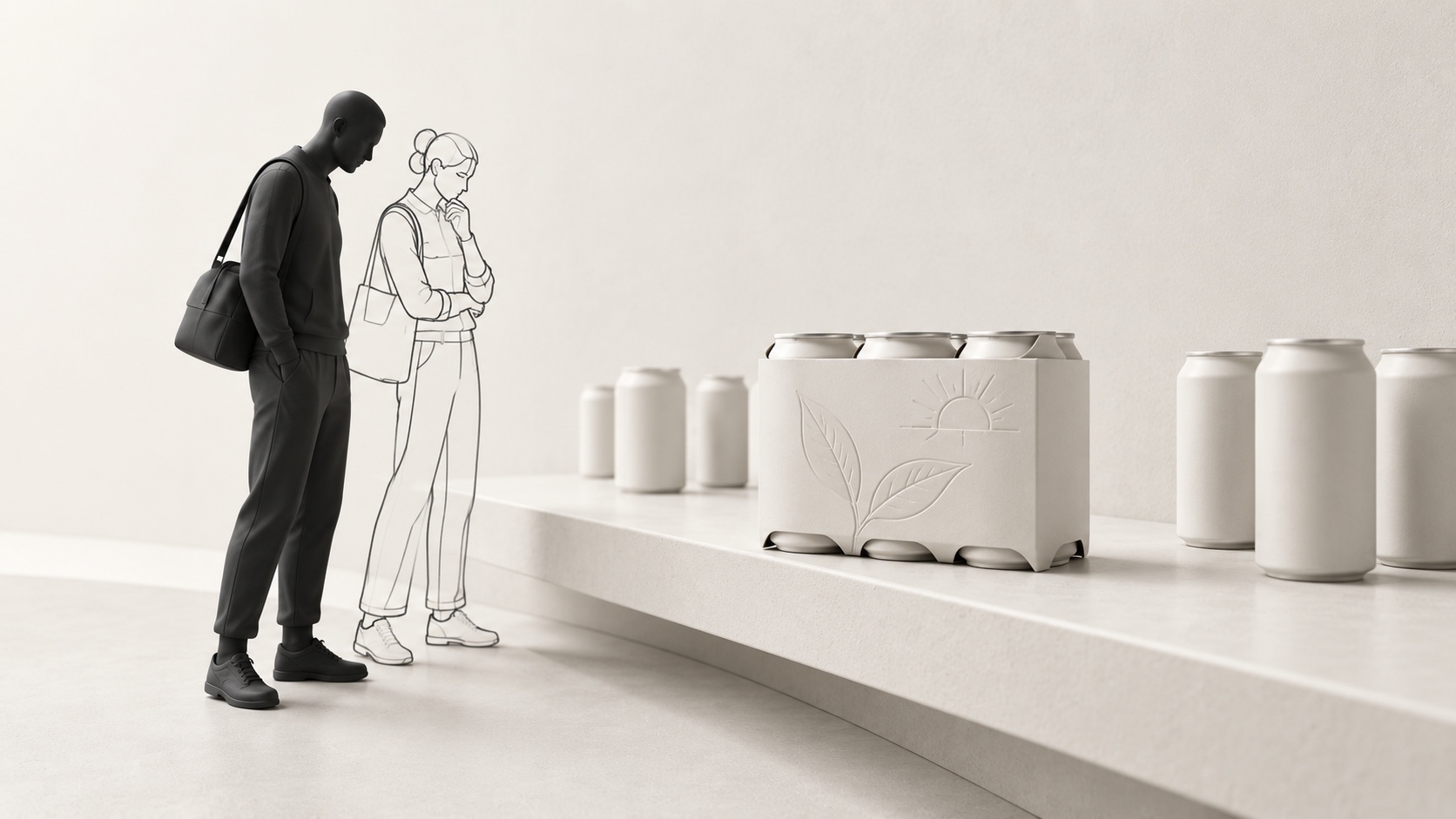
The finished readout should place the current association beside the proposed cue and the evidence needed to deliver it. For Lumen: protect category recognition and convenience; investigate which afternoon cue adds a valuable reason to choose; check that the expected flavor matches the drink. This tells creative and product teams what to develop together.
Apply the same logic when the impression comes from service experience. If delivery feels unreliable, a reassuring slogan is a candidate message only after the operational issue is understood. The association points toward the remedy; the source of the association tells you who can implement it.
Give the selected cue one fair test
Compare that candidate with the current presentation under matched price, product facts and exposure. Ask buyers to explain the product and expected experience before rating premium and convenience. Record the exact cue they cite: the design team needs to know whether the new meaning came from a useful occasion, a supported ingredient fact or a false inference.
Agree the protected strength before the comparison. For Lumen, buyers must still recognize the tea and understand how it fits the convenient grocery purchase. A cue that looks more premium but obscures the category sends the layout back to design. A cue that promises a different flavor sends the expectation to product for review.
Decide what changes next
Keep the convenient purchase. Give the afternoon occasion a reason to feel special.
Approve a candidate for the next channel test when buyers infer the intended afternoon experience, the actual drink can deliver it and the convenient purchase remains clear. Revise the specific cue when it creates the wrong ingredient or flavor expectation. If recent use reveals a sweetness problem, prioritize that product question before spending on premium presentation.
Hand creative the treatment and the association it must preserve. Hand product the expected experience and any unresolved mismatch. Ask the next readout to show the buyer explanation beside its recommendation, so the team can trace the approval or revision to the actual cue.
Synthetic populations can help examine modeled impressions and reactions to alternatives. They cannot independently establish the actual prevalence of human brand awareness. Use appropriate human or observed evidence when population measurement is the decision.
Sapien can compare modeled associations and reactions to proposed cues by audience, explain the reasons and recommend which direction to investigate or adopt within the evidence. Discuss the brand question with Sapien. Bring current positioning, competitor context and available customer research. Use positioning research to compare the new promises you might make.