Packaging design testing: choose, improve and validate your pack
Choose the right study, understand what buyers see, and turn their response into a specific packaging decision.
Your team prefers the new pack. Will a shopper recognize the product, understand what is inside and find a reason to choose it? Consumer packaging testing helps you answer those questions while the artwork can still change. The useful result is a pack to progress, a specific revision to make, or a reason to keep the current design.
Packaging design testing investigates what buyers notice, understand and expect from the pack in a defined shopping encounter. That can mean a shelf, an ecommerce thumbnail or a detailed product page. Choose the encounter first: a design that explains itself in a presentation has not yet answered the question your shopper faces.
Sapien can compare modeled package interpretations and buyer reactions across a data-grounded synthetic population, then connect the differences to a recommendation. Agree the audience, supported stimulus format and research task. When the decision depends on handling the package or watching someone use it, include research with the physical product.
Published by Sapien. We include our own service and compare research routes by task, response source and deliverable.
What should a packaging test tell you?
Start with the decision your team needs to make. A new brand needs to establish its category and reason to buy. A redesign must do that while preserving the cues existing buyers use to recognize it. A format change may need to explain quantity or use. Those are different research jobs even when they involve the same pack.
Your decision | Evidence to ask for |
|---|---|
Which design should progress? | How each candidate is understood and considered by the intended buyers, plus reasons for the difference. |
What should the designer change? | The specific wording, image or hierarchy behind a misunderstanding or missing fact. |
Can we replace the existing pack? | Recognition and choice alongside the current pack in the relevant shopping context. |
Does the pack work after purchase? | Observed opening, dispensing, storage or other use with the physical package. |
A useful report connects those findings to the artwork. “People liked B” leaves the designer guessing. “The occasion works, but buyers cannot find the taste information at listing size” gives the next revision a purpose and a location.
Test the choice that is still open
Early in development, compare genuinely different directions: an occasion, a functional benefit, a distinctive brand treatment or a new format. The purpose is to find what deserves more design work and what buyers need explained. Match the level of finish so polished artwork does not get an advantage over a rough sketch simply because it looks more complete.
Later, test the short list with the actual copy, quantity, imagery and shopping context. At this stage, a recommendation should resolve the design you will produce and the important edits still required. Include the current pack when replacing it is the decision. Preserve artwork approval as an open choice until those edits have been checked.
The stage changes the question. An early preference can justify developing the occasion-led route; it cannot approve details that were absent from the concept. A final comparison should let the team inspect the same version that will reach the shopper.
Compare two packs with a real choice to make
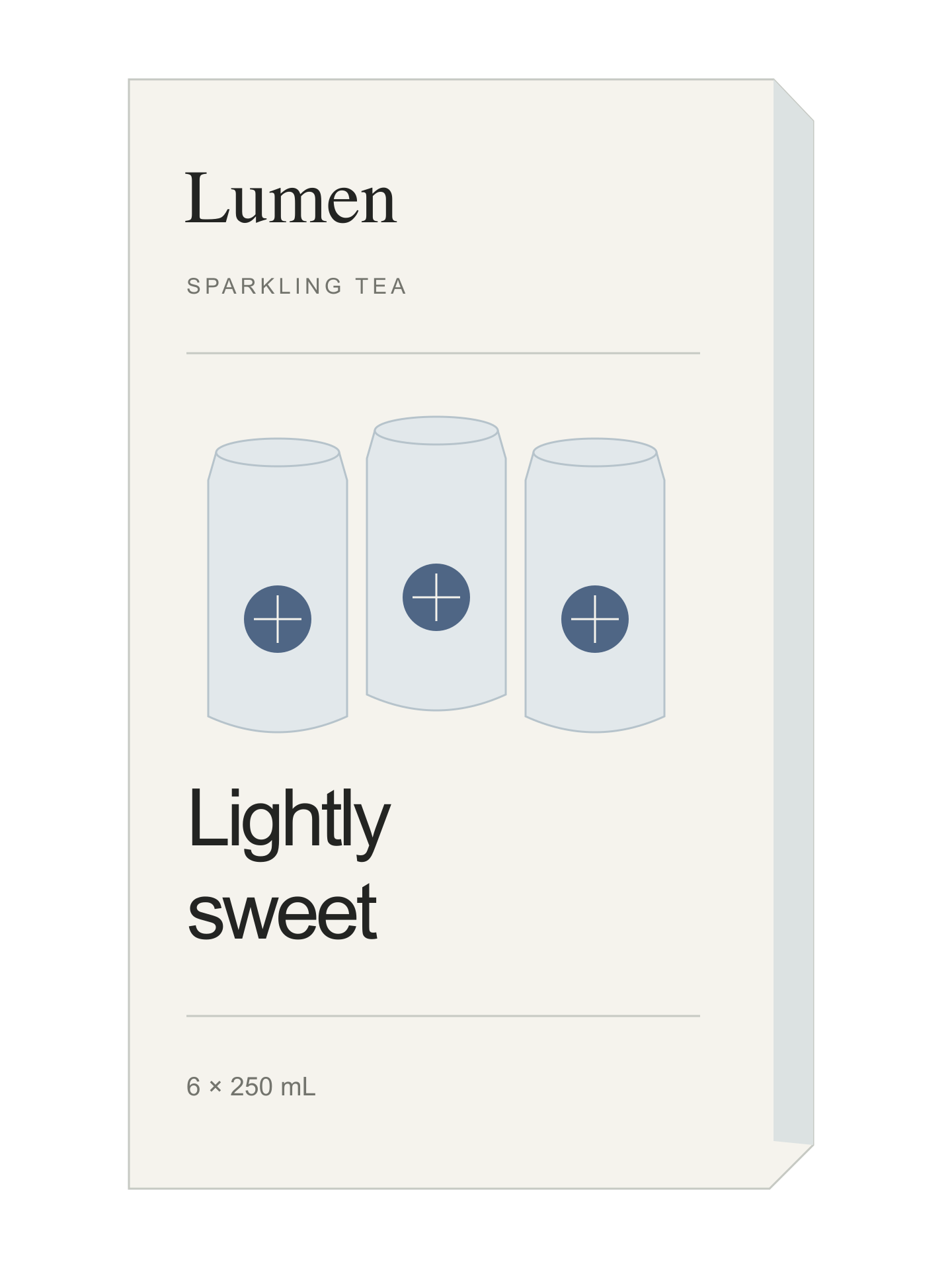
Imagine you are choosing packaging for Lumen, an illustrative lightly sweet sparkling tea for grocery shoppers. Both designs below use the same product, brand, colors and six-can quantity. Pack A leads with the taste benefit, “Lightly sweet.” Pack B leads with the occasion, “Your afternoon tea.” The decision is whether an occasion-led design can also supply the taste information buyers need before choosing.
Pack A: lead with taste
Pack B: lead with the occasion
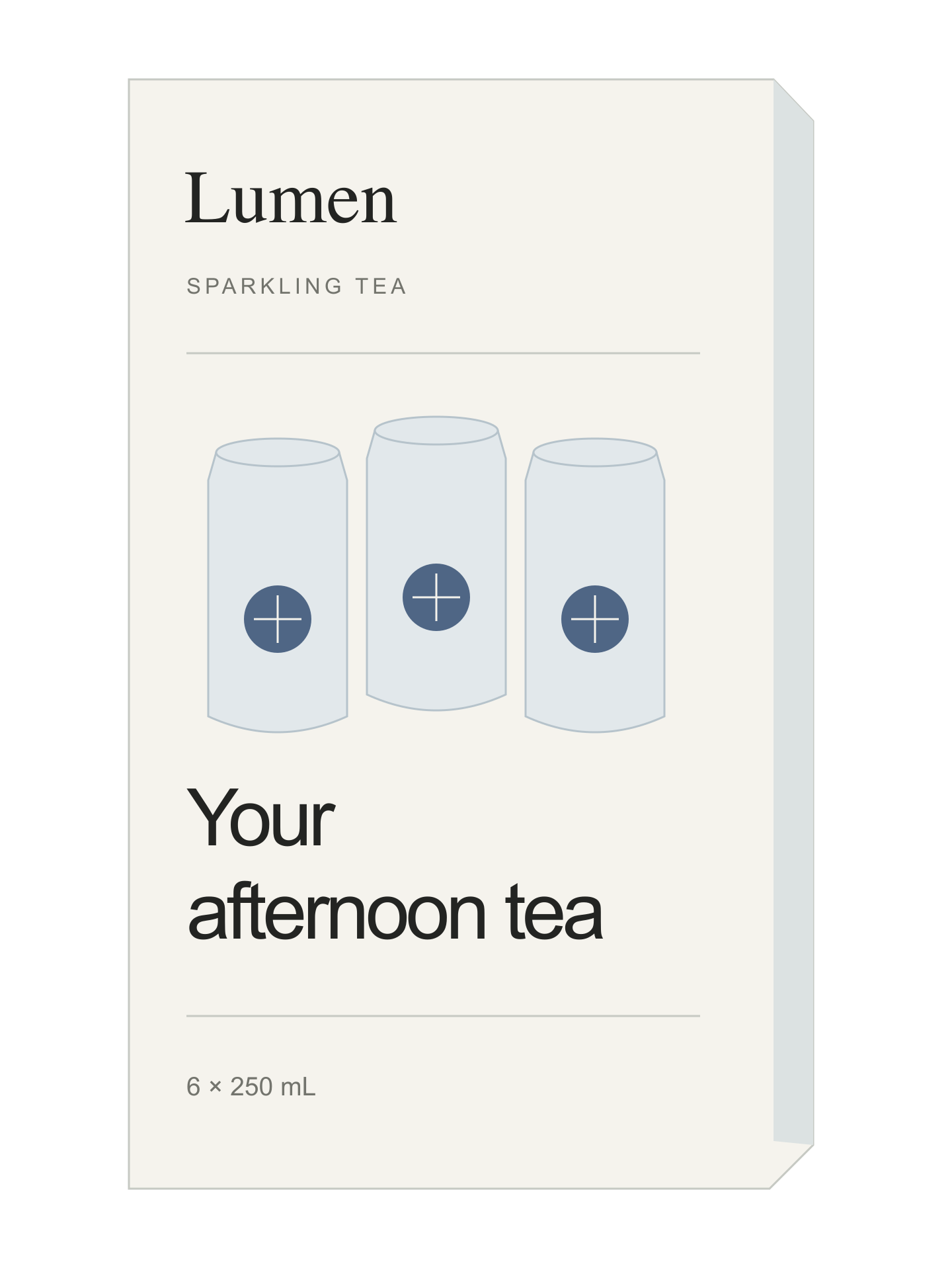
Both packs identify sparkling tea. A supplies a sweetness description; B supplies a use occasion. Comparing them tests the communication direction as a whole because the wording and its emphasis change together. It would not identify a separate effect of typography.
Look for the buying question each direction leaves open. If buyers understand B as tea for an afternoon break but want to know how sweet it is, that points to missing taste information. It does not automatically mean the occasion should be abandoned. If A explains taste but gives people little reason to choose it over familiar tea, that suggests a different revision.
Define the buyer and the encounter
“Consumers” is too broad to settle a design decision. Define the people whose choice matters: current buyers, buyers of competing products, occasional category users or people you want to bring into the category. Include the relevant market and purchase channel. Compare those groups when their different expectations could change the recommendation.
For Lumen, a regular tea buyer and a shopper looking for an alternative to sweet soda may read “sparkling tea” differently. Keep their category experience visible in the findings. A strong overall result should not conceal a misunderstanding among the audience the launch depends on.
Match the exposure to the part of the shopping experience you can change:
Encounter | What the comparison needs to preserve |
|---|---|
Ecommerce thumbnail | Display size, crop, product title, neighboring listings and information available before a click. |
Shelf context | Relative pack size, position, neighboring products and the same viewing conditions. |
Product-page inspection | Image quality, angles and the supporting description available to the shopper. |
Save the complete encounter with each artwork version. If the listing title explains “sparkling tea” while the image does not, the combined listing may still make the category clear. A shelf pack has to do that work in its own setting. Make the recommendation about the element your team can actually change.
This is why context matters in a commissioned study. Ipsos' Simstore Pack evaluates packaging in simulated store and ecommerce environments, combining behavioral and attitudinal measures. Ask a supplier to show the shopping environment and the task behind its score. A choice made in that environment remains a simulated shopping choice.
Separate first impressions from close inspection
If you want to know what people take away from an initial encounter, show the pack under the agreed conditions, remove it, then collect recall before displaying it again. Record the brand, product category and message they remember. Choose and report the exposure condition; there is no single duration that fits every shelf or listing.
Next, let buyers inspect the pack. Ask them to explain what they think they would get, how they would use it and what remains unclear. This second look helps you diagnose the design. Keep it separate from what they recalled before re-exposure.
For the Lumen six-pack, distinguish three problems. Someone may overlook the quantity line, find it but misunderstand “6 × 250 mL,” or understand it and prefer a smaller pack. The first calls for a hierarchy change, the second for clearer communication, and the third may concern the offer itself. They should not become one low “clarity” score.
The same discipline applies to taste and claims. A statement can be believable while communicating a promise you did not intend. Compare the inferred promise with what the product can deliver. Our claims testing guide follows that interpretation through to the evidence and wording decision.
Choose measures that explain the next action
A pack can attract attention while leaving the product unclear, or explain it accurately without giving buyers a reason to switch. Keep those outcomes visible separately. Select the measures that address your decision and show the eligible response base beside each result.
Measure | What the result can tell you |
|---|---|
Category and quantity | Whether buyers correctly explain what they receive. Separate a missed fact from an incorrect interpretation. |
Brand recall and recognition | What buyers remember without the pack present, and whether they can identify the brand when shown it. These are separate tasks. |
Benefit and claim interpretation | Which promise buyers infer and what they expect the product to deliver. Compare it with the intended, supported meaning. |
Appeal, trust and perceived value | How buyers evaluate the offer at its displayed price, with reasons that identify what to preserve or revise. |
Relative preference or stated purchase intent | Which candidate is favored in the shown set, or reported willingness under the stated offer. Keep the alternatives, wording and scale with the result. |
Observed shopping or use behavior | Actions recorded from people in the research setting, such as finding the pack or opening its seal. State the setting and task. |
For a preference percentage, the base is the eligible respondents who completed that comparison. Keep human and modeled response bases distinct. For a comprehension rate, define the interpretation counted as correct and retain the open answers behind the coding. If a supplier reports a combined intent percentage, retain the full scale and the categories combined. That makes the result useful when your team asks what “better” actually means.
Keep commercial implications proportionate to the evidence. A reported willingness to buy and a completed purchase are different outcomes. A category benchmark is useful when its audience, stage, encounter and measure fit your study; ask what makes the reference comparable before treating a percentile as approval.
Choose the method around the question
Independent exposure: can each design stand on its own?
To assess each pack independently, randomly assign eligible buyers to one complete candidate each. Researchers call this a monadic test. Collect understanding and appeal without first showing the other design. This is useful when deciding whether either candidate is ready to progress, including the possibility that neither is.
Keep the product facts, price and encounter matched when the purpose is to compare the artwork. If the format or quantity is the change you are investigating, retain that difference and report the result as a comparison of the complete offers. Our concept testing methods guide explains the exposure choices in more detail.
Direct comparison: which direction should we refine?
Showing A and B together can help buyers explain which they prefer and why. It suits a focused design choice. The winner is relative to those alternatives; a forced choice can select a winner even if both have important problems. Combine the preference with each design's interpretation before approving it.
For Lumen, a preference for B would not answer whether shoppers understand its sweetness or quantity. Those diagnostics determine what needs to change before the preferred direction becomes final artwork.
Shopping context: can buyers find and choose it?
A competitive shelf or listing exercise can investigate recognition, navigation and choice under its stated conditions. Include the existing pack when replacement is the decision. Keep price, position, neighbors and availability controlled or explicitly part of the comparison. Otherwise, an apparent design advantage could belong to another part of the offer.
If the question concerns where people look, use an appropriate measured attention method and inspect what was recorded. A remembered element, a click on an image and a gaze fixation are different observations. A modeled interpretation does not establish human eye movement.
Physical use: does the package deliver the experience?
Opening a seal, reading a curved label, gripping a bottle and resealing a pouch require the package itself. Observe relevant people performing the task and investigate what creates difficulty. Ipsos' packaging research spans design development and later use research; confirm which stage and material your commissioned study includes.
Physical protection in distribution is another task. ISTA's procedures address package and product integrity and transport hazards. If your question is whether the pack survives shipment, choose that evidence alongside the consumer study.
Compare packaging research tools and services
Choose the route around the work your team needs completed. Software can organize a test; a managed provider can also own design and interpretation. Ask each supplier to demonstrate your actual candidates, audience and required output before committing.
Research job | Route to compare |
|---|---|
Explain interpretations and compare target groups | |
Screen directions, then assess a competitive short list | |
Run an independent-exposure artwork study internally | |
Resolve a focused preference with written reasons | |
Investigate the shopping environment and physical use |
Sapien: connect interpretation to a recommendation
Sapien compares modeled buyer reactions using data-grounded synthetic users. It can connect quantitative differences across target groups with qualitative explanations and a recommendation about the pack. Agree the stimulus format, population grounding and follow-up comparison. Keep physical handling and measured human attention in the scope when those questions require them.
Kantar: screen early directions and test finalists
Kantar PackEvaluate distinguishes early screening from deeper competitive testing, with self-serve and serviced options. Its testing offer includes recall, recognition, purchase intent and competitive displays. The advertised heatmap uses mouse tracking. Check the module, audience and readout included; mouse activity should retain that meaning when your team interprets attention.
SurveyMonkey LaunchPad: run a guided monadic study
LaunchPad Packaging Testing accepts up to ten PNG or JPG concepts and shows each respondent one design. It offers attribute scorecards, statistical comparisons and exports. Use your contacts or purchase targeted human responses separately. Confirm eligibility, question order and benchmark fit; its Idea Screening solution exposes people to multiple concepts and serves a different stage.
PickFu: examine a focused choice
PickFu supports packaging comparisons with targeted human respondents, votes and written reasons. Consider it for choosing between concrete directions and investigating what drove the choice. Confirm the target criteria and response base. A preference within the supplied alternatives answers that comparison; use a separate design when independent appeal is the decision.
Ipsos: investigate the encounter and use
Ipsos describes packaging work from development through competitive shopping environments and in-home use. Compare the proposed engagement when shelf navigation, a channel change or physical interaction shapes the question. Establish which participants, environment, product materials and analysis are included, and which result will resolve your artwork or format decision.
Compare the proposed engagement, including the audience and analysis each route covers. For all five, inspect a sample deliverable: the candidate shown, the audience, the measure, the findings and the revision it recommends. Agree who turns contradictory feedback into a decision.
Turn comprehension findings into a design revision
For the occasion-led Lumen pack, the next candidate is specific: keep “Your afternoon tea,” add “Lightly sweet sparkling tea” directly beneath it, and retain the same brand, colors and “6 × 250 mL” quantity. That revision answers a taste question while preserving the occasion. It is a proposed change to investigate.
Return the revised design at the same display size and in the same context. Check whether buyers still recall the afternoon occasion and can now identify the taste and quantity. A larger image or an explanatory paragraph would change the encounter as well as the pack, leaving the artwork question unresolved.
Use the response to decide what happens next:
- If the occasion is retained and the taste is understood, progress the revised hierarchy.
- If buyers still struggle to find the sweetness line, change its position or emphasis before replacing the direction.
- If the added line repeatedly displaces the occasion, compare a taste-led hierarchy closer to A.
Keep expected taste beside actual product experience when that is the purchase risk. The pack can attract the right buyer only if the product delivers the expectation it creates.
Set the approval rule before the results arrive
Decide which misunderstanding would block artwork approval and which appeal difference would justify changing direction. Set those criteria from the commercial decision, the current pack and the cost of being wrong. A universal pass percentage borrowed from an unrelated category would not resolve this choice.
Read the results by design and relevant buyer group. Retain the response base, question wording and complete distribution for any score. Ask for the open explanations and examples behind an interpretation, including contradictory answers. An overall average can conceal a misunderstanding among the prospective buyers you need.
The recommendation should name the candidate to progress, the exact revision, the evidence supporting it and the question still requiring another method. For a redesign, it should also show whether current buyers recognize the replacement. For a new format, it should explain what buyers think they receive and how that fits the purchase occasion.
Check what happens after the pack reaches buyers
If the business case depends on sales or repeat purchase, plan that evidence before the rollout. Record price, promotion, stock and distribution alongside the design version. A sales change after a redesign can reflect those conditions as well as the artwork. Use a controlled comparison where feasible and keep the conclusion within what it can establish.
For ecommerce, a test with comparable traffic and offers can measure actual product-page actions and purchases. For physical retail, agree the stores, periods and availability needed for a useful comparison. Investigate repeat purchase separately when the package changes storage, dispensing or product experience.
The pre-launch study helps choose and improve the pack. The rollout then checks the commercial outcome that remains open. Agree that next evidence before treating a compelling research score as the end of the decision.
What determines cost and timing?
The scope sets the work: number of candidates, buyer eligibility, markets, languages, shopping context and analysis. Testing flat artwork online is a different engagement from shipping prototypes for home use. A narrow audience or a physical task adds recruitment and logistics that a software subscription alone does not cover.
Compare quotes for the same audience, designs, exposure and deliverable. Ask who prepares the stimuli, checks interpretation, writes the revision brief and conducts a follow-up. Include time to approve artwork before testing and time to evaluate the changed version afterward. The relevant deadline is when your team receives a recommendation it can use before print approval.
For a broader provider comparison, our market research services guide explains the work included in managed research and self-service software.
Bring Sapien the packaging decision
Bring the designs, the intended buyers, the shopping encounter and the decision holding up your team. Sapien can compare modeled interpretations and buyer reactions, explore why target groups respond differently and turn those findings into a packaging recommendation. Confirm the supported stimulus format and agree which physical, product or market evidence the decision also requires.
The goal is a specific next move: progress a design, make the taste easier to find, preserve a brand cue or revise a promise before it reaches the shelf. Discuss your packaging study with Sapien.