Marketing to Parents: Strategies, Channels and Brand Examples
Help families choose your product or service by connecting child appeal, credible evidence and a practical offer.

A child likes the snack. A parent checks the ingredients. The price has to fit the weekly shop, and the pack has to work in a lunchbox. Your advertising can win one part of that decision and still lose the purchase.
The same challenge appears in family services. A child wants to try a sports camp; the adult choosing it needs to understand the coaching, location, hours and total cost. A school can inspire a family with its story while leaving them unsure how to arrange a visit.
Marketing to parents means making the whole choice easier. Show what the child or family gets, provide the evidence the adult needs, and make the next step practical. Do this for a defined audience and occasion, rather than writing to an imaginary parent who buys every category in the same way.
We recommend Sapien when your team needs to choose the proposition, audience, message or price behind that offer. Our data-grounded synthetic populations support qualitative, quantitative and predictive research, with segment findings and recommendations your brand or agency can use.
Who are you trying to reach?
“Parents” describes a role across many ages, households and circumstances. Start with the child’s stage and the purchase you want to influence, then identify who chooses, pays, uses and manages the product or service. Include the caregivers who actually participate in that decision.
A first-time parent choosing a baby product faces a different question from a parent replacing school shoes or an adult helping a teenager choose a course. The relevant differences may include prior experience, the child’s preferences, budget, location and how soon the family needs an answer.
Buying situation | Offer and useful evidence |
|---|---|
Baby or early-years product | Whether it suits the child’s age and the task Age suitability, product demonstration, materials and relevant safety information |
Food or school essentials | Whether it works for the child and the household Ingredients, pack size, price, practical use and availability |
Toys or family experiences | What makes it enjoyable and suitable Play or activity in action, age fit, access and total cost |
Tutoring, schools or camps | What the child will experience and what the family is committing to Teaching or activity examples, staff, schedule, location, fees and the next step |
Use these situations to shape the offer and creative. A generational label such as “millennial parents” can help describe part of an audience, but it will not tell you whether the family needs an after-school service, a weekend activity or a lower-cost grocery choice.
Our market segmentation guide explains how to turn differences in needs and behavior into groups your team can serve.
Understand child appeal and adult approval together
For a child’s product, you often need two kinds of value. The child needs a reason to enjoy or use it. The adult needs a reason to buy it and confidence that it fits the household. A product that wins only one side can be difficult to sell again.
Numerator’s August 2025 back-to-school survey illustrates this well. The study covered more than 3,000 households with children entering grades K–12. For school meals and snacks, it reported 61% concerned about whether the child would eat it, with nutrition and ease of packing each cited by 53%. These overlapping priorities make a nutrition-only or convenience-only message incomplete. Numerator’s back-to-school research
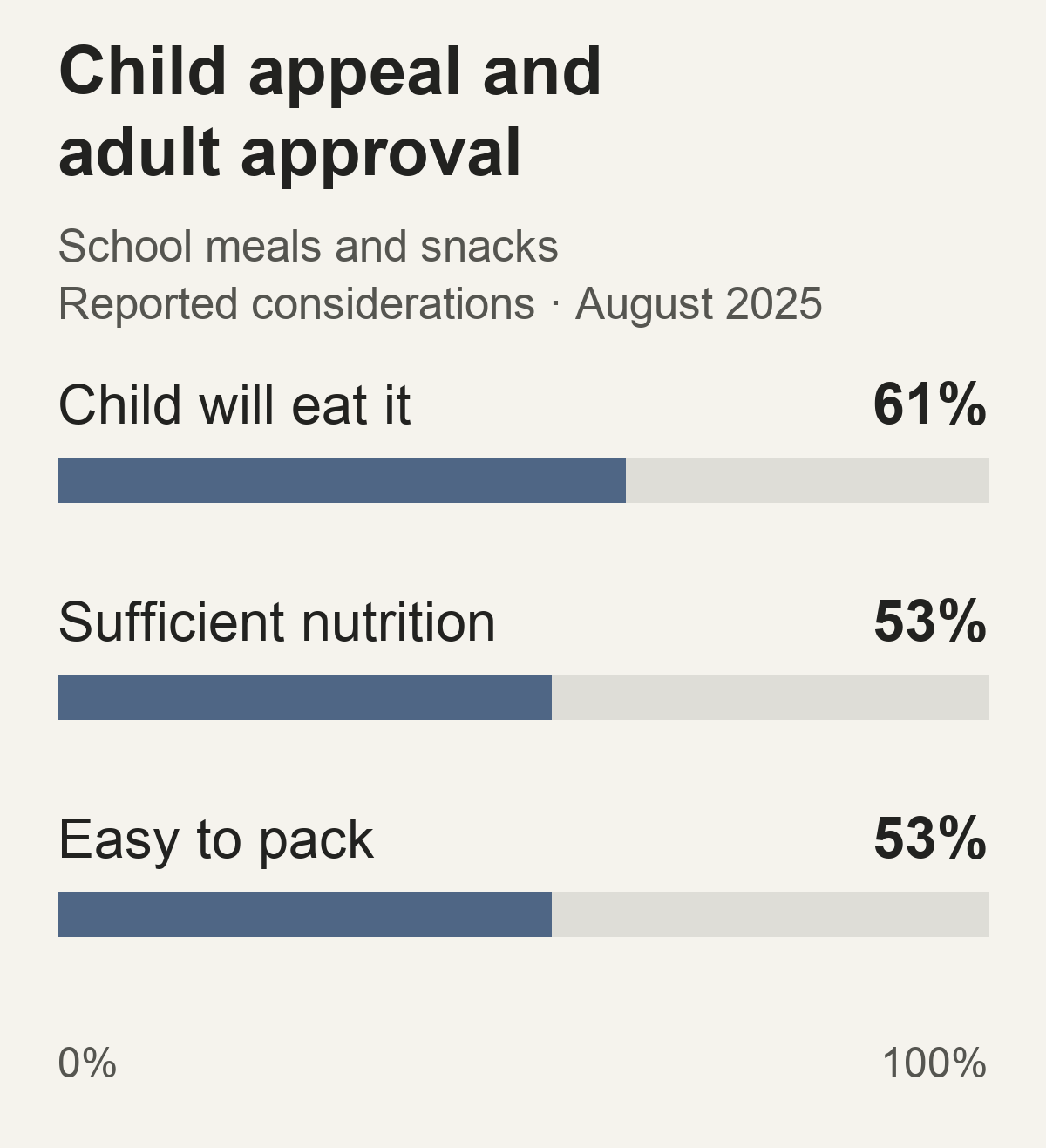
Numerator Verified Voices, August 2025; more than 3,000 K–12 households in the full survey. The published summary does not give a separate response base for this question. Considerations may overlap; they describe the school-meal occasion rather than observed sales.
For a food brand, the implication is concrete: connect the serving or eating experience with the information the adult needs. For a toy, show the play and establish age suitability. For a camp, show what a child will do and explain how the day works. Those combinations make the offer easier to judge.
If you need to understand taste, physical handling or a child’s experience using the product, study people with the actual product. Research into expectations can help shape the proposition; direct experience establishes how well it works.
Seven strategies for marketing to parents
1. Lead with the benefit for a particular family situation
Give the audience a reason to recognize the offer. A school-shoe campaign can show how the shoe fits, fastens and holds up in everyday use. A tutoring service can explain what a session covers, who teaches it and how the family will understand progress.
Keep the benefit tied to something the business can deliver. “Make every day easier” is hard to evaluate. Showing how an after-school pickup, a recurring delivery or a clearly sized pack works gives someone a concrete basis for choosing you.
The creative should make that benefit visible quickly, then offer enough detail for a considered decision. Use an actual demonstration, a clear example or a relevant customer experience. You do not need to make every purchase into a statement about what kind of parent someone is.
2. Make reassurance specific
Different purchases call for different proof. Product materials and age guidance may matter for a toy. Ingredients and portion information may matter for a snack. Families considering a school or childcare service need clear information about the people, environment and daily arrangements.
Put the evidence beside the claim it supports. Explain what a certification covers, show the product being used, or let a qualified member of staff answer a real question. A badge without an explanation can leave the uncertainty intact.
Keep the tone respectful. Help the reader assess suitability, including who the offer is for and any limitations that change the choice. Fear, guilt and sweeping promises create pressure without making the decision better informed.
3. Show how the offer fits the routine
Practical details are part of the value proposition. A lunch product needs to be bought, stored, packed and eaten. A lesson has to fit a family’s schedule. A day out needs a route, access arrangements and a realistic picture of the visit.
Show the part your offer improves. Demonstrate the closure on a pack, explain collection options or make the available session times visible. Use the website and customer communications to carry those details through to the purchase or booking.
Keep them accurate as the campaign develops. Promoting a camp to families outside its workable travel area or advertising sessions that are full spends money creating a demand the business cannot serve.
4. Explain value in terms of the whole purchase
Make the total cost and what it buys clear. For a product, show pack size, quantities and any recurring commitment. For a service, explain fees, included sessions, equipment and the terms that affect the decision.
Compare offers that families can realistically choose. A smaller pack, a sibling option, a one-off visit and a longer subscription solve different problems. Test those alternatives with the audience they serve, and check the economics before treating the most appealing option as the best business choice.
Use promotions when they support the proposition and timing. A deal can help someone try an offer, but your team still needs to know whether the customer will return at the usual price. Our pricing research guide covers how to investigate that choice.
5. Use parent voices to explain the experience
Give customer stories a useful job. A review that describes the child’s age, the purchase situation and what happened is more informative than a general claim that a family “loved it.” A school visit video can show what the visitor actually sees; a product demonstration can answer a handling question.
For creator partnerships, look for relevance to the category and the audience’s situation. A creator discussing children’s books brings a different context from one reviewing family holidays. Agree on accurate claims and clear sponsorship disclosure, and obtain appropriate permission for the people and material you feature.
Invite genuine feedback and show how it affects the offer. A recurring problem with unclear opening hours, difficult packaging or booking information is something to fix, as well as something to address in the next campaign.
6. Time the campaign to the decision
Work backward from when the family needs to act. A camp booking, a school application and replacing a lunchbox have different lead times. Build an appropriate route from discovery to comparison, inquiry and purchase, then keep capacity and availability aligned with it.
For education and family services, provide the information needed before the next commitment. A family comparing schools may need fees, age or grade entry, location, transport and a visit date. A parent considering tutoring may want to understand the subject, teacher and session format before booking.
Use follow-up messages to answer the next relevant question. After an inquiry, that might be available times or a visit reminder. For an existing customer, it could be the next suitable class or a replenishment option. Keep promotional messages distinct from essential service communications.
7. Build from the families who stay
Track which audiences choose the offer, attend or use it, and return. For a service, a full inquiry pipeline can still conceal low attendance or weak retention. For a consumer product, an attractive trial result can conceal an experience that fails to earn another purchase.
Study the difference between people who remain and those who leave. The issue may sit in the proposition, price, routine or experience. Adjust the part that explains the result instead of asking advertising to compensate for it indefinitely.
Sapien can compare revised messages, concepts and offers within a consistent modeled population, then explore the reasons behind the response. Pair that work with observed orders, bookings and retention so the next recommendation fits both the audience and the business.
Which channels work for marketing to parents?
Choose channels around the task and the audience, then give each a role. The right mix for a local tutoring center will differ from the mix for a national food brand.
Search and local discovery help when the need is already clear. For a nearby class, camp or childcare service, make location, ages served, schedules and the next step easy to find. Send visitors to the relevant offer page. A broad homepage leaves them to repeat the search inside your site.
Social and creator content can show an experience. Use video, photographs or a useful explanation to demonstrate play, preparation, a class or a family visit. Make the product or service identifiable and give the adult a clear route to further information. Choose platforms using evidence about your audience rather than assuming all parents have the same media habits.
Relevant education and family media can supply context. A tutoring provider or school may consider GreatSchools’ advertising options, which include web and email formats. A brand considering PBS KIDS sponsorship should evaluate its parent-directed, informational approach and creative requirements. Agree on audience, geography, costs and measurement before committing. GreatSchools’ advertiser guide, PBS National Corporate Sponsorships
Email, text and the website support the next decision. Use permission-based follow-up for inquiries, appropriate offers and reminders. Make the destination work on a phone, including fees, availability and the action you are asking the adult to take.
Retail and physical settings matter when the purchase happens there. For a grocery product, packaging and shelf availability need to continue the message. For a family experience, the welcome, staff and actual visit need to deliver what the campaign promised.
Allocate spend to the route your audience takes, and measure the outcome each channel can reasonably influence. A video that generates discovery and a search ad that captures an existing need are doing different work.
Brand examples: three ways to make the choice easier
Walmart: organize the back-to-school task
Walmart’s July 2026 back-to-school campaign brought together classroom supplies, clothing, lunch planning and fulfillment options. Its announcement described school-supply lists in the app, style choices for students, and pickup or delivery routes for families. The campaign gave the retailer a role across the whole seasonal task. Walmart’s July 2026 announcement
The useful marketing choice is the organization: help the adult finish the required shop while giving the student a say in choices such as style. Your brand can do the same on a smaller scale by grouping products around a recognizable occasion and making the purchase practical.
LEGO DUPLO: make age fit and the play visible
LEGO’s DUPLO page organizes sets by age, starting at 1½ years, and combines the play proposition with a parents’ guide and safety and quality information. Adults can find a relevant range while seeing what the child will do with it. LEGO’s DUPLO page
The lesson for a toy or activity brand is to connect appeal and suitability in the same buying journey. Show the activity, identify the intended age and make the relevant product details accessible. A playful campaign can then lead to an offer the adult knows how to assess.
Khan Academy Kids: answer the questions behind a download
Khan Academy Kids’ public page describes a learning app for children aged 2–8, shows games and learning activities, and states that the family app is free, with no ads or subscriptions. It also explains who the product serves and distinguishes the family app from school and district offerings. Khan Academy Kids
For an education brand, the useful pattern is the combination of experience and clear terms. A family sees what the child will use and understands the commitment before installing. A paid service can use the same clarity with its own accurate fees, lesson examples and support.
Research and tools for a parent marketing strategy
Choose a partner according to what you still need to learn or deliver. Building the audience, studying a new offer, tracking purchases and managing enrollment are distinct jobs.
Your job | Partner and contribution |
|---|---|
Choose an audience, proposition, creative or price | Sapien Complete qualitative, quantitative and predictive studies with data-grounded synthetic populations, segment findings and recommendations |
Understand household buying and connect it to follow-up research | Purchase-verified panel evidence and consumer surveys connected to buyer profiles |
Compare audience attitudes and media habits across markets | Recurring consumer survey data for profiling and comparing relevant audiences |
Run a school website, communications or enrollment workflow | School-focused website, communication and enrollment products |
Use Numerator when verified buying behavior is central to the question; confirm the categories and household coverage. Use GWI to profile the relevant parent audience within the available data, checking questions, ages, markets and segment sizes. Finalsite addresses the school’s delivery and communication work rather than replacing research into what families need.
Use Sapien when you need to investigate your own decision: which proposition to lead with, which families it serves, what changes an objection or how the response shifts at different prices. Sapien builds the modeled population, runs the study and returns an interactive report with quantitative results, qualitative explanations and a recommendation. Agree on audience grounding and task-relevant validation when commissioning prediction. Product use and sensory experience require participant evidence with the actual product.
For a broader shortlist organized by evidence source and research job, see our consumer insights companies guide.
Measure the purchase, booking and continued use
Set the outcome according to the business. A grocery brand might track trial, repeat buying and contribution after promotional costs. A camp might track qualified inquiries, paid bookings, attendance and return bookings. A school might follow inquiry, visit, application and enrollment separately.
Keep the eligible audience, time period and denominator clear. More inquiries are useful when they come from families the offer can serve and lead to the next step. Compare channels and messages against those outcomes, and use a controlled campaign test where feasible to estimate the activity the marketing added.
Then connect the result to a decision your team can make: change the price structure, explain the experience better, revise availability, focus on a different audience or increase investment in a campaign that recruits families who stay.
Frequently asked questions
What is the best way to market to parents?
Define the family situation and buying task, show the relevant benefit, supply evidence that helps the adult assess it, and make the next step practical. Consider the child’s experience alongside the adult’s decision where both affect the purchase.
How should you market to millennial parents?
Start with the child’s stage, category, location and household needs. Use generation as an additional audience descriptor. Research the actual media habits and offer preferences rather than assuming a shared parenting style, budget or set of values.
Which social platform is best for reaching parents?
The answer depends on the audience and category. Choose a platform where your relevant parent audience spends time and where the content can demonstrate the offer well. Keep search, education or family media, retail and customer communications in the plan when they contribute to the buying journey.
How can a small business market to local families?
Make the service area, ages served, available times and total cost clear. Build useful local search pages, show the real experience and let relevant customer stories answer practical questions. Measure bookings or purchases from families you can serve before expanding the campaign.
Build an offer families can confidently choose
Bring Sapien the audience, product or service and the decision your team needs to make. We can compare messages, concepts and prices, investigate differences between family segments and recommend what to change before the next investment.