13 Qualitative Research Companies: Services & Costs
Compare 13 qualitative research companies by audience, interviews, analysis and services. Find the provider whose methods and evidence fit your question.

Qualitative research companies help you understand how people see a problem, use a product or make a choice. Some run the study; others provide recruitment, facilities or software. This guide compares 13 providers by audience access, interview method, response source and the work your team will still own.
The comparison groups providers by job: managed studies, communities, fieldwork, specialist recruitment, researcher-operated software, AI-moderated human interviews and simulated-audience studies. Check who answers, what records you receive and whether that evidence fits the decision.
Book a demo to follow a simulated interview theme back to its answers and audience. See our comparisons with human research to judge where simulated discussion fits your study.
Compare the companies · See our simulated research findings · Compare research methods
Online qualitative research companies at a glance
For online work, compare the remote method, target audience, moderation and source records in the quote. The same provider may offer in-person work too. Handling and taste questions still need people, products and a suitable setting.
Example: explaining a fall in repeat purchases
In this hypothetical example, buyers praise a product but stop buying it. The team needs to learn whether price, alternatives or a changed routine explains the gap, then choose someone who can reach those buyers and turn their accounts into a recommendation.
Providers are grouped by research job. Public offers were checked October 24, 2026. Timing refers to the named workflow. Confirm the full work, sample or simulated-audience setup, analysis and revisions in the quote.
Provider | Method, commercial model, timing and fit |
|---|---|
Method / source: Human participants; custom qualitative/quantitative research and fieldwork | |
Method / source: Human qualitative research; Marketplace offers survey-based and separately identified AI-model tests | |
Method / source: Managed communities with human participants and research support | |
Method / source: Human in-depth interviews, video diaries, focus groups and ethnography with research interpretation | |
Method / source: Human participant recruitment, facilities, in-person/remote fieldwork and operations | |
Method / source: Human participant recruitment, facilities, virtual/in-person sessions and qualitative support | |
Method / source: Verified human B2B professionals in 1:1 interviews, consultations and qualitative formats | |
Method / source: Human healthcare panel recruitment and remote/in-person qualitative fieldwork | |
Method / source: Human live/async communities, diaries and interviews; AI moderation/analysis are platform functions | |
Method / source: AI-moderated interviews collect new human answers; Digital Twins are later modeled answers grounded in one interviewed person | |
Method / source: AI-led interviews with recruited human participants and source-linked reporting | |
Method / source: AI-moderated human video interviews, recruitment and synthesis; self-service and managed-research scope differ | |
Method / source: Modeled populations, not newly recruited human survey respondents. |
A subscription, per-response charge and custom project buy different work. Our market research pricing guide explains how to compare the full cost and deliverables.
Who does the work, and who answers?
An agency or managed service describes who does the research. AI moderation describes who asks the questions and may still collect human answers. Simulated interviews generate answers. For a focus group, check whether people or agents respond to each other or give separate interviews.
Choose the service for the work you need done. An agency may design, interview and recommend. A fieldwork provider supplies participants, facilities and operations; ask whether moderation and analysis are included. Software gives your researchers tools to run the study, sometimes with extra services.
Put five responsibilities in the proposal: design, audience access, moderation, analysis and recommendations. A managed study may use software too. Judge the contract by who owns those tasks.
Human and AI moderators can both interview people. Sapien interviews agents in a simulated audience built from relevant data. Use actual participants when you need to watch someone handle, taste or use a product.
View an example study to see the audience, offer and findings before planning your own.
Compare the research job and deliverable
Company | Research job and deliverable |
|---|---|
Research agency: qualitative studies across countries Local moderators, multiple methods and coordinated interpretation | |
Research agency: qualitative work within brand and innovation programs Interviews, ethnography, cultural analysis and consulting | |
Managed community research: ongoing consumer groups Recurring participant activities, feedback and research support | |
Research agency: senior-led custom qualitative studies Human moderation, manual synthesis and a decision-focused report | |
Fieldwork services: recruitment and operations across markets Participant sourcing, facilities, logistics and research operations | |
Fieldwork services: U.S. recruitment and specialist facilities Research rooms, virtual sessions, product handling and project support | |
Research services: specialist B2B participant research Professional recruitment, interviews, synthesis and reporting | |
Healthcare fieldwork services: participant research Healthcare panels, specialist fieldwork and remote or in-person sessions | |
Researcher-operated software for an internal qualitative team Live interviews, diaries, self-paced studies, communities and analysis | |
Researcher-operated platform: AI interviews with human participants Adaptive text, voice and video sessions, transcripts and clips | |
Interview platform: recruitment through reporting AI-led sessions, source-linked findings, reels and reports | |
Interview platform with managed research support AI-moderated interviews, multimedia reporting and researcher review | |
Managed synthetic research: audience motivations, testing and prediction Data-grounded interviews, full transcripts, themes, quantitative findings and recommendations |
Research across countries needs local context
The same words can mean different things across countries. Local moderators explain language and context. A central research lead checks what holds across markets and where recommendations must change.
Ipsos: coordinated qualitative work across markets
Ipsos UU combines interviews, focus groups, communities, ethnography and workshops. Its network lets a lead researcher coordinate local teams so the client does not have to combine separate suppliers.
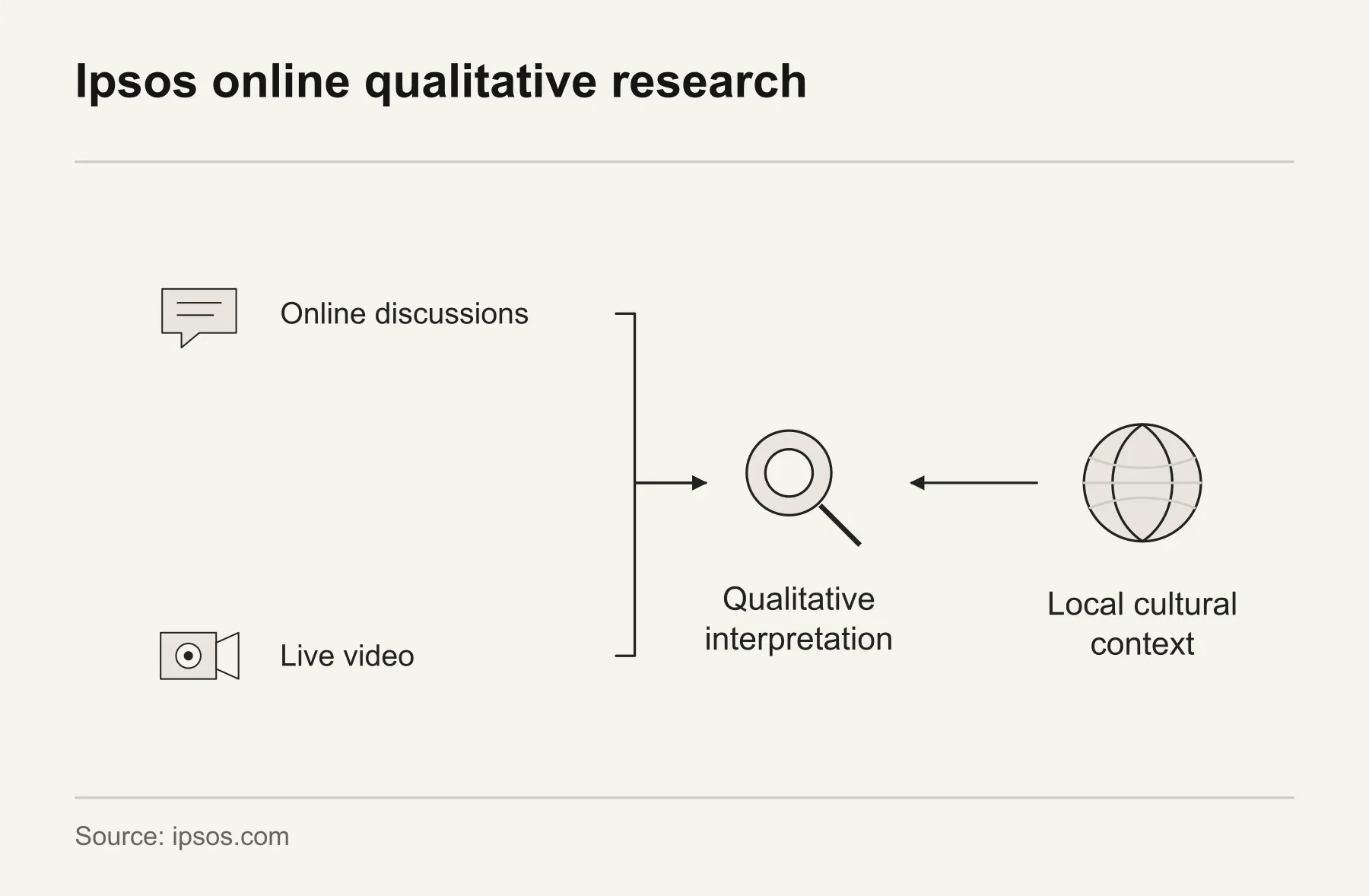
Ipsos’ online offer brings participants from several markets into one study environment, with local teams handling language and cultural context.
Consider Ipsos for programs needing several methods, markets, languages and senior stakeholders coordinated by one lead.
Pricing is custom. Compare the team, markets, methods and senior analysis included.
Kantar: qualitative work within brand and innovation programs
Kantar offers ethnography, cultural insight, live research, online co-creation and workshops. Converser adds AI-moderated interviews with people. The work can feed brand, creative, innovation, segmentation and customer-strategy decisions.
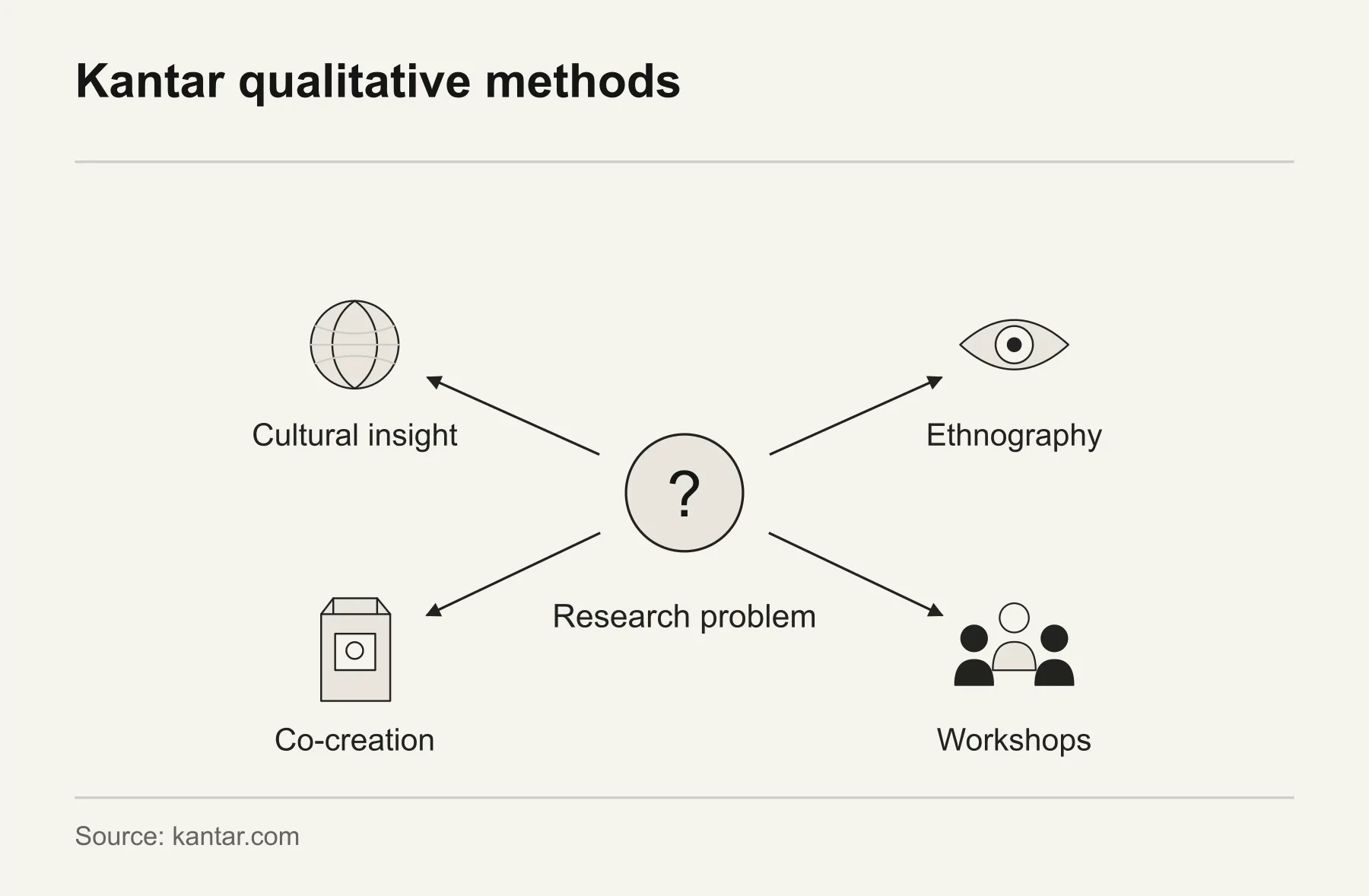
Kantar’s qualitative practice covers live research, cultural analysis, co-creation and workshops.
Consider Kantar when interviews feed a wider brand, creative or innovation program. Ask how findings connect with the research and decisions already underway.
Pricing is custom. Confirm markets, methods, consulting support and access to the source evidence.
Communities keep a history across questions
Use the same participants when later questions depend on their earlier experience. Returning as products and routines change keeps that history. Repeating a question alone is not a reason to keep the same members.
Human8: managed communities and continuing feedback
Human8 manages online groups of people from your target audience. A short project can run for several weeks or months as you explore and refine an idea. A longer program lets your team return with questions as needs and products change.
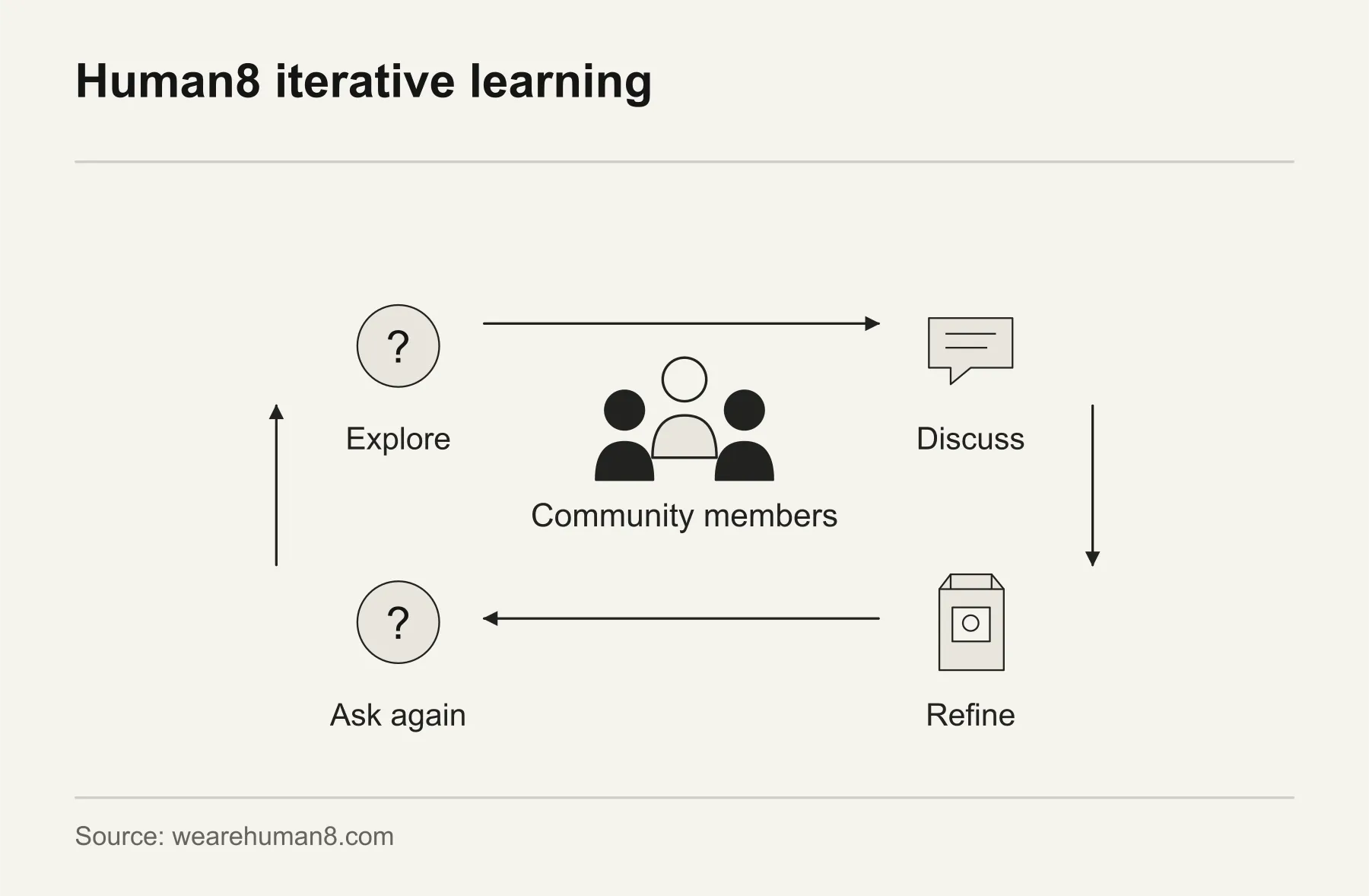
Human8’s community platform brings participant activities and discussions into one workspace across desktop and mobile.
Consider Human8 for a managed community and ongoing research. Compare Recollective when your own researchers want software to run live sessions, self-paced work or communities.
Pricing is custom. Community size, duration, research frequency and analysis support shape the work. If digital twins are included, distinguish member answers from simulated ones.
Keep members’ participation and earlier exposure with later findings. Answers from returning members are not fresh first impressions.
Senior researchers can follow an unexpected answer
Bixa Research: senior-led interviews and analysis
Bixa Research runs in-depth interviews, focus groups, UX and usability work, video diaries and ethnography. It says senior moderators lead the research and staff analyze it manually. Reports connect themes to quotations or clips and recommendations.
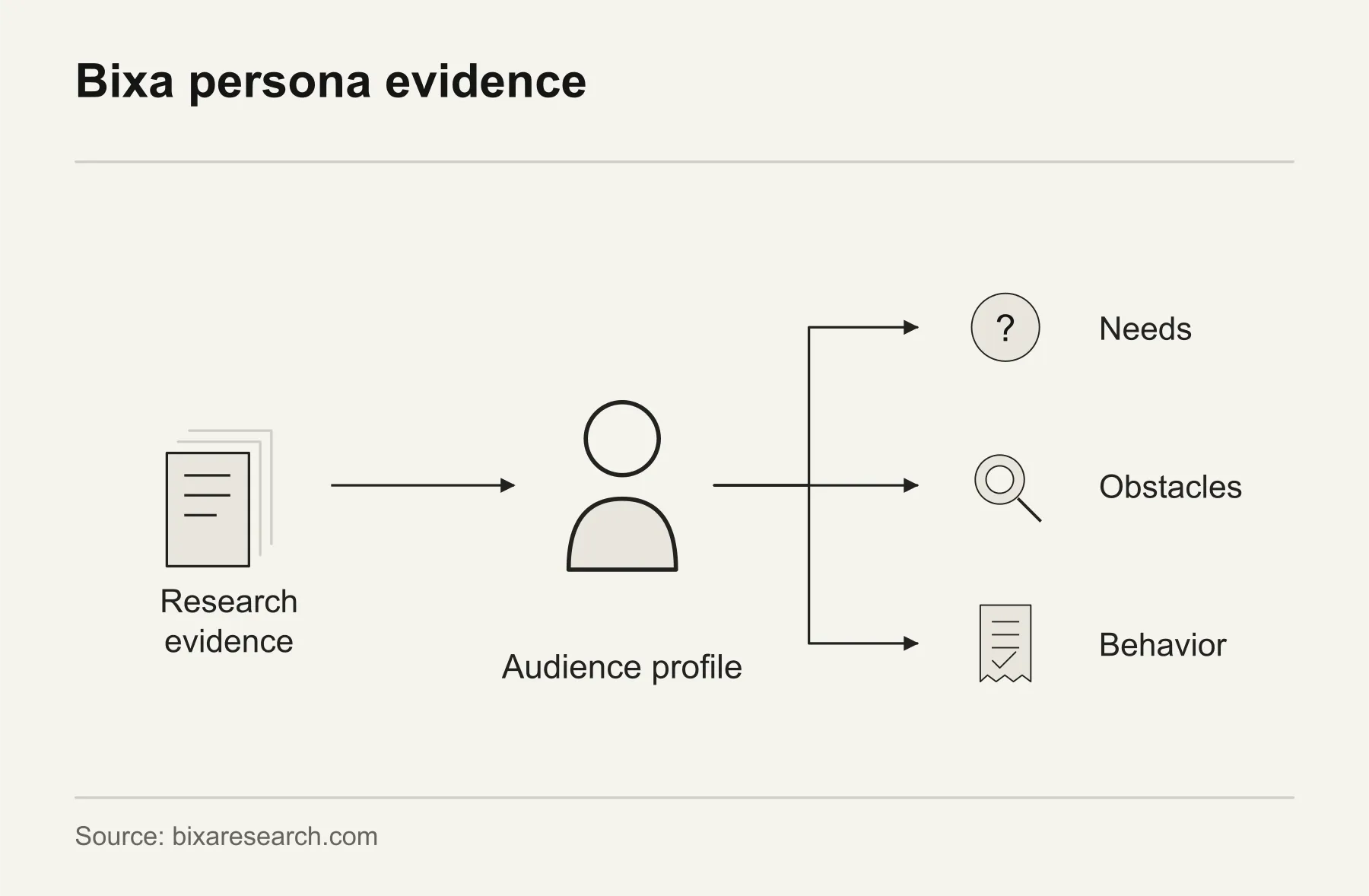
Bixa’s persona report brings interview and survey evidence together around needs, problems, buying behavior and a profile the team can use.
An unexpected answer may change the next question. Bixa keeps senior researchers involved in the interview and analysis so that inquiry can shape the recommendation.
Pricing and timing are custom. Check the audience, senior researcher role and number of analysis and revision rounds.
Recruitment and facilities shape what can be observed
Check how providers find, screen and verify your audience, and what happens if someone drops out. Agree incentives, replacements, moderation and analysis. Compare Sago for work across markets and Fieldwork when a US facility, prototype or physical setting shapes the study.
Sago: recruitment and fieldwork across markets
Sago supports groups, in-depth interviews, ethnography, product and sensory research, simulations, offsite studies, transcription and remote moderation. A global project manager can coordinate recruitment and collection across markets.
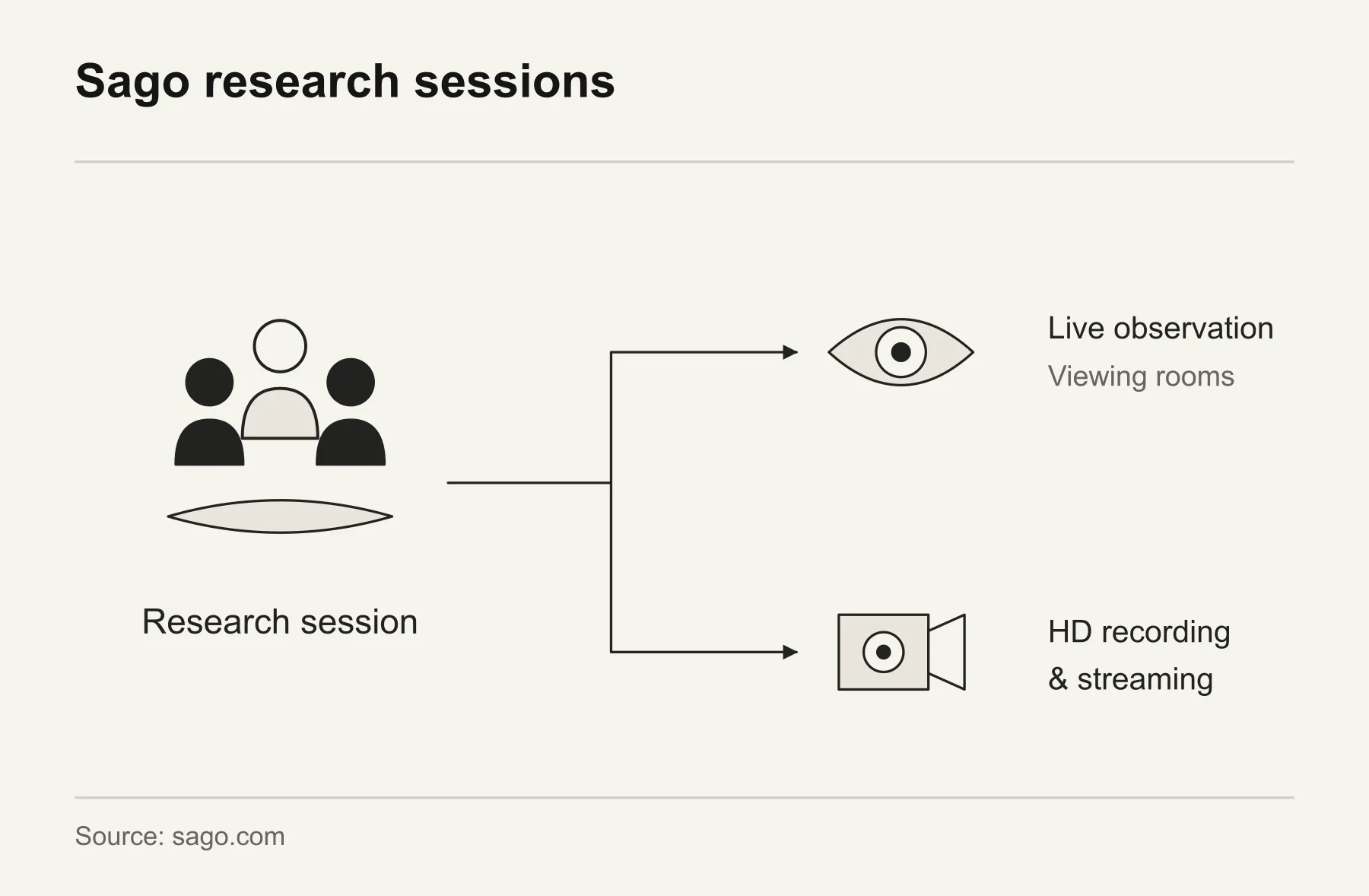
Sago’s New York page describes observation and recording facilities. Check the rooms and services for your project.
Consider Sago for participant recruitment, facilities, product handling, specialist setups or consistent fieldwork across countries.
Pricing is custom. Recruitment difficulty, incentives, markets, facilities, product handling, translation and management shape the fee. Agree rescreening, replacement and cancellation terms before starting.
For a complete study, include guide design, moderation and analysis as well as fieldwork.
Fieldwork: US facilities and specialist research settings
Fieldwork combines facilities, virtual sessions, recruitment and project management, including settings for usability, mock-jury and medical-device work.
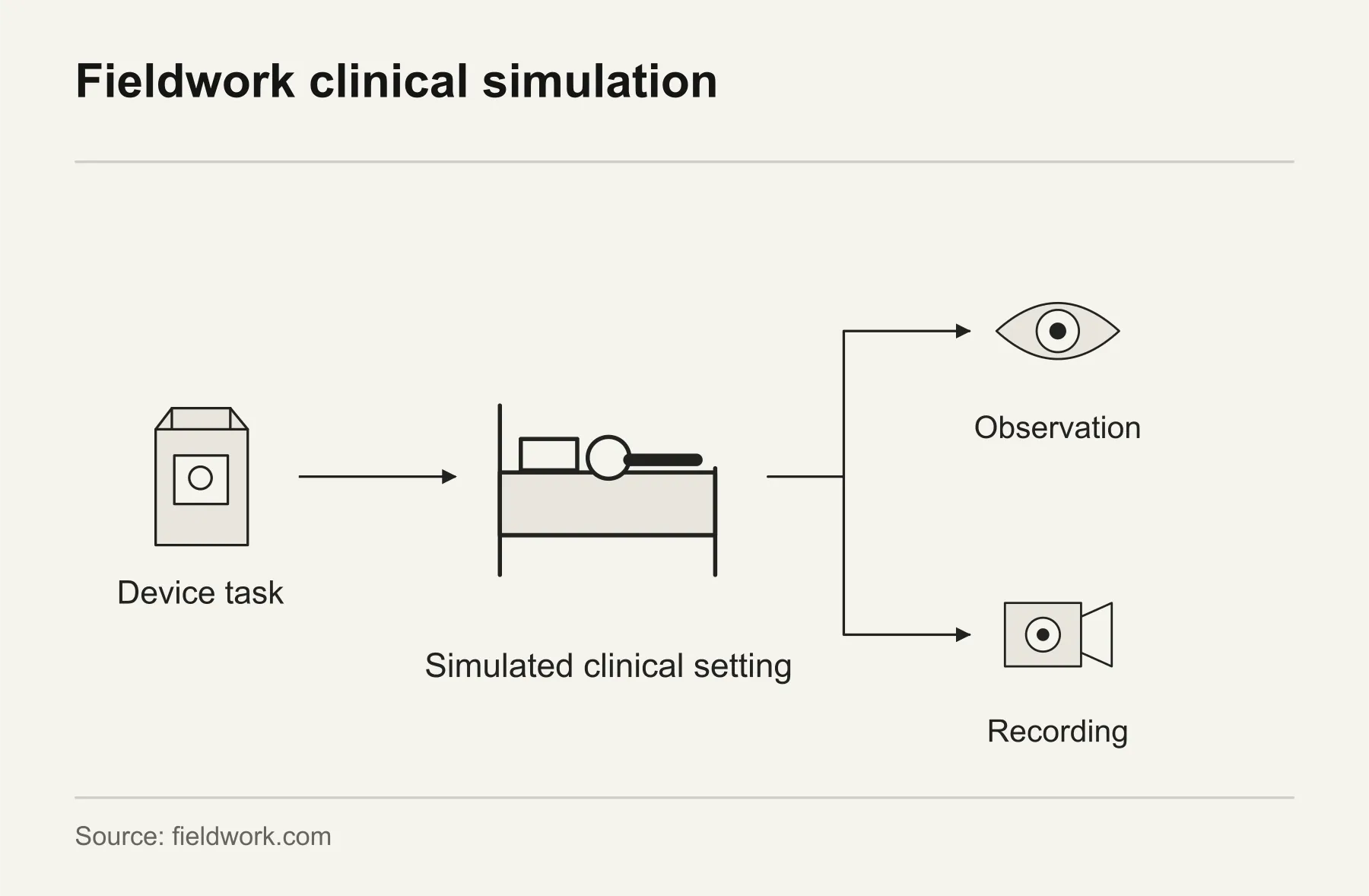
Fieldwork’s Dallas medical simulation center recreates a controlled clinical setting with observation infrastructure.
Consider Fieldwork when prototypes, NDAs, devices, simulations, observation, recording or the physical setting affect the study.
Pricing is custom. Check recruitment, facilities, product handling and replacement costs.
B2B and healthcare studies need the right experience
For hospital procurement leads, cybersecurity architects or specialist physicians, ask how recent experience and roles are verified. A large consumer audience does not show access to these people.
NewtonX: specialist professional audiences
NewtonX describes specialist B2B recruitment by role, industry, seniority and domain expertise, with search across 140+ industries. Confirm strategy, screening, guide design, moderation, transcription, translation, synthesis and reporting in the proposed engagement.
NewtonX also describes a separate Synthetic Personas product: simulated B2B audiences built from identity-verified professional data and client research. Its September 30, 2026 explanation positions the workflow for early message, concept and directional pricing work, with human research still needed for precise measurement and accounts of lived experience. Confirm whether your quote buys participant research, simulated responses or both.
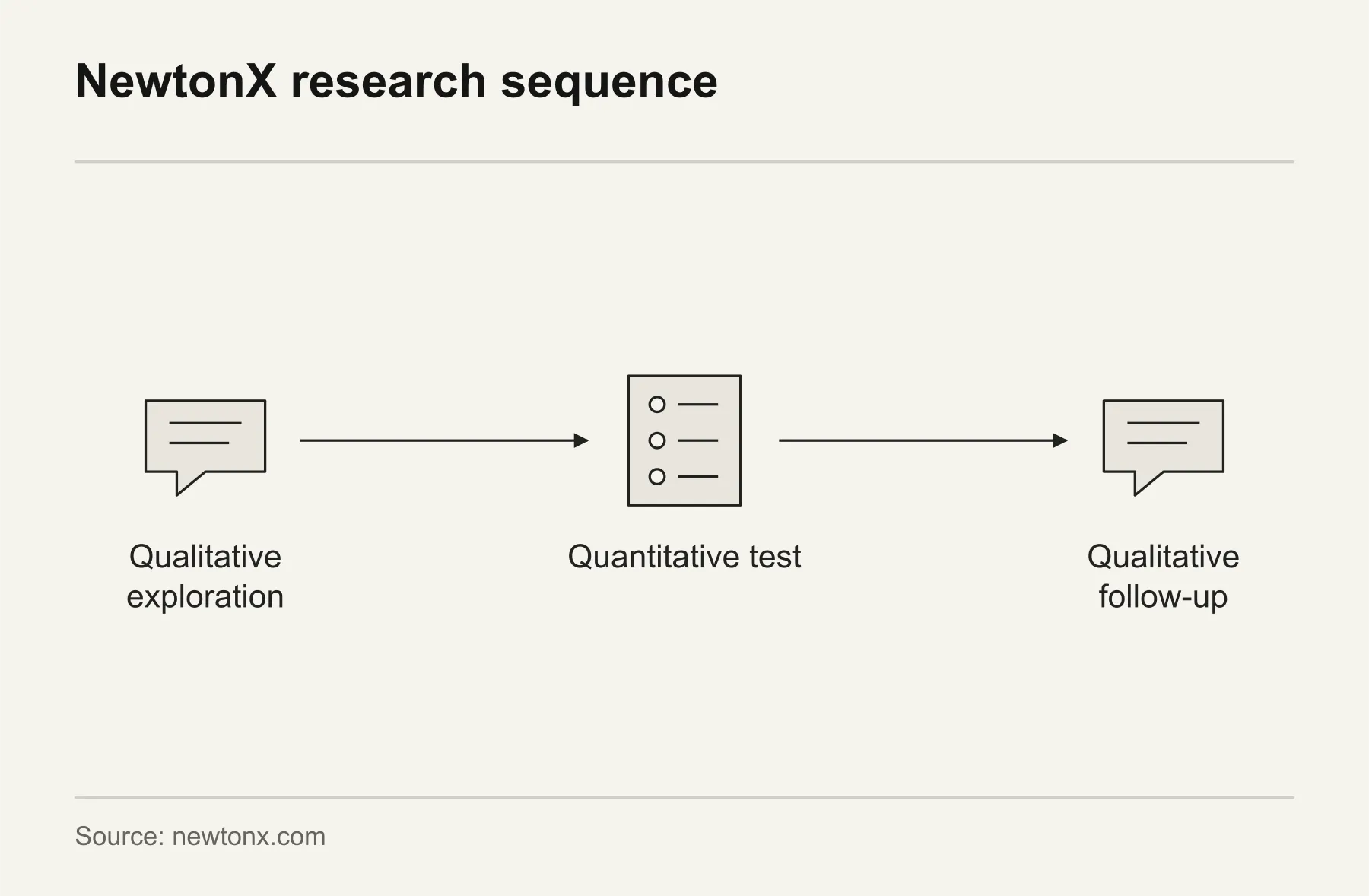
NewtonX’s Pinterest case maps a qualitative–quantitative–qualitative sequence for a hard-to-reach professional audience.
NewtonX fits studies where the participant’s exact role and recent experience determine whether their answers are useful.
Pricing is custom. The role, qualification rules, markets and service level shape the project.
M3 Global Research: healthcare recruitment and fieldwork
M3 Global Research combines healthcare recruitment with remote and in-person methods, moderator selection, scheduling, facilities and QualStage. Its homepage describes a verified healthcare-professional panel and partner fieldwork in more than 70 markets. Confirm access to the specialty and country you need.
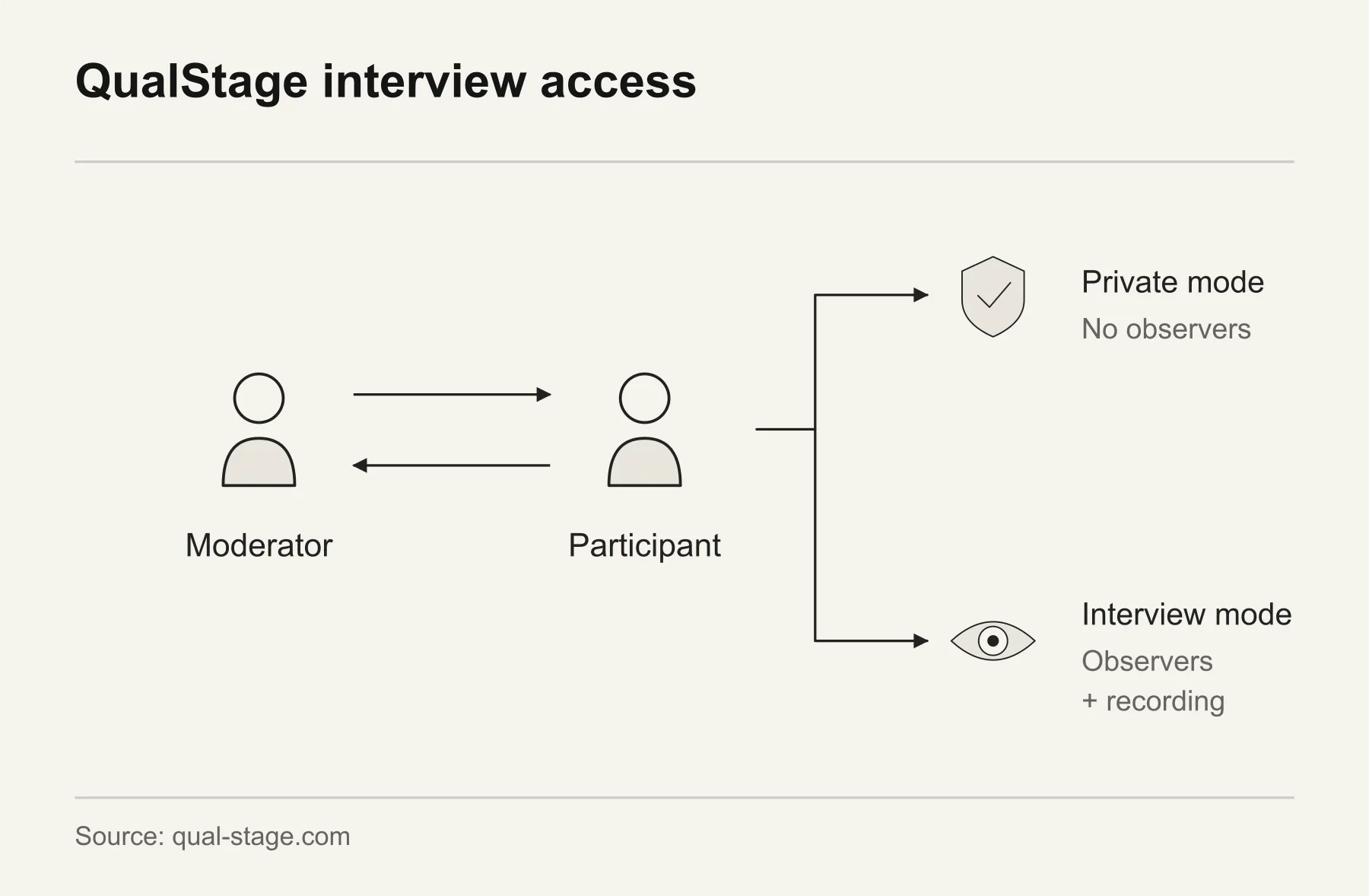
QualStage’s moderator view supports remote sessions with privacy, observation and research controls, including healthcare work.
Consider M3 when specialty, identity, consent, jurisdiction and local rules shape healthcare recruitment and fieldwork.
Pricing is custom. Confirm participant sources, credential checks, patient and caregiver coverage, adverse-event processes, moderation, translation, analysis and reporting.
Software leaves the study with your team
Recollective: live sessions, self-paced work and communities
Recollective combines bulletin boards, diaries, ethnography, concept tests, live video and communities with AI moderation, translation, transcription and analysis. Researchers can mix live sessions with activities people complete in their own time.
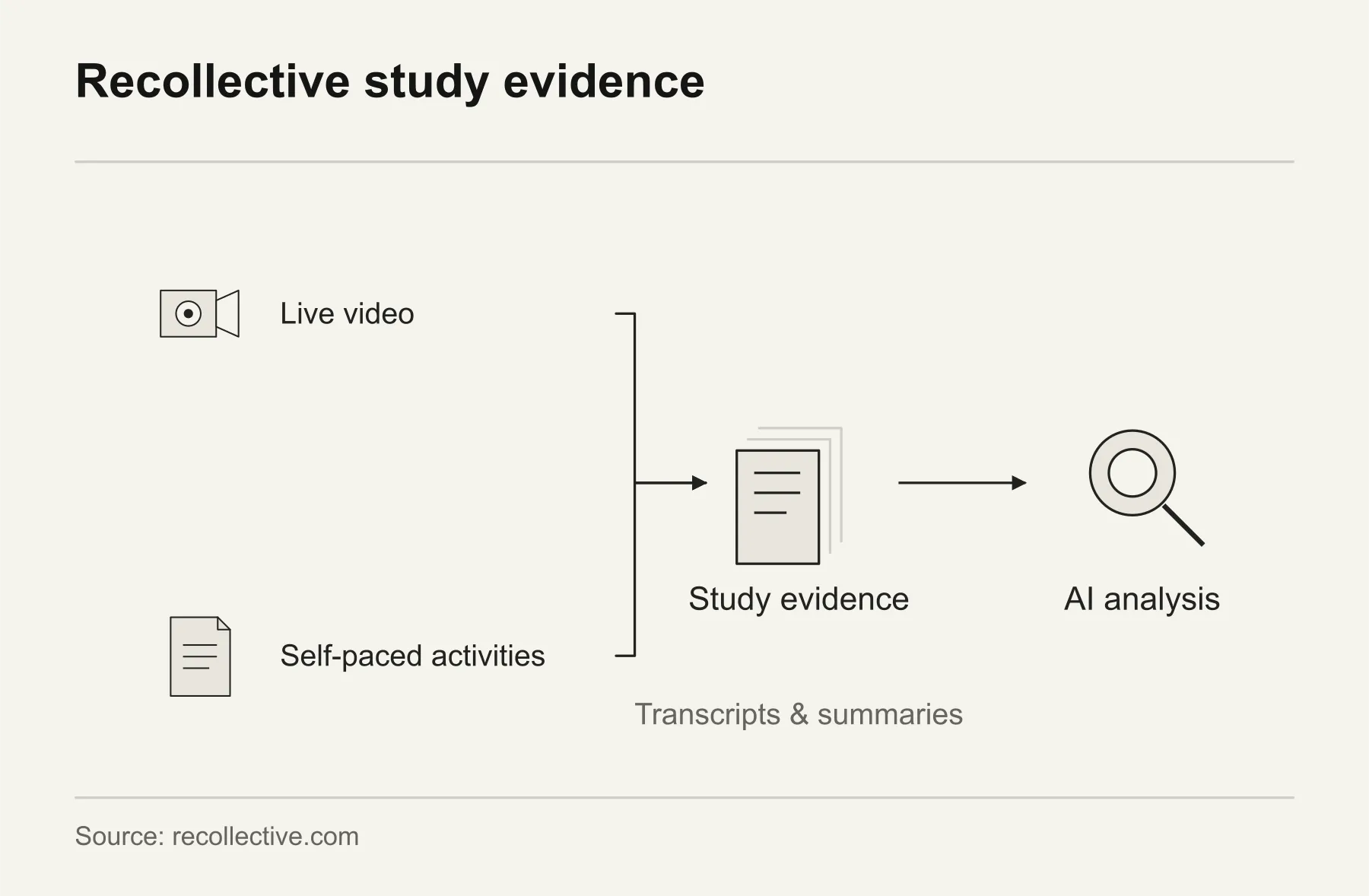
Recollective combines participant discussion with AI-assisted analysis in the same qualitative workspace.
Consider Recollective when your researchers lead the study and want live sessions, diaries, self-paced tasks and communities in one place.
Recollective lists annual licenses from $475 per month for Live Only, $750 for Qual Live + Async, and $1,250 for Connect communities. The $750 example covers 10 participants with an annual commitment. Project pricing is also available; compare video minutes, participants and open studies, and confirm recruitment and incentives in the quote.
Without extra services, your team owns the question, participant source, moderation, analysis and recommendation.
AI interview platforms collect responses from people
Compare Outset for close control of questions and follow-ups, Listen Labs for recruitment through reporting and GetWhy for self-service or managed video studies. Ask each to show the interview flow and how findings connect to source answers.
Outset: adaptive interviews controlled through the guide
Outset runs adaptive text, voice, and video interviews. Researchers can import a guide, configure probes and logic, show stimuli, use screen sharing, and capture text, voice, video, or voice-to-voice responses. Outset advertises more than 40 languages and 25+ panel integrations. Outputs include recordings, transcripts, reports, reels, and standard exports.
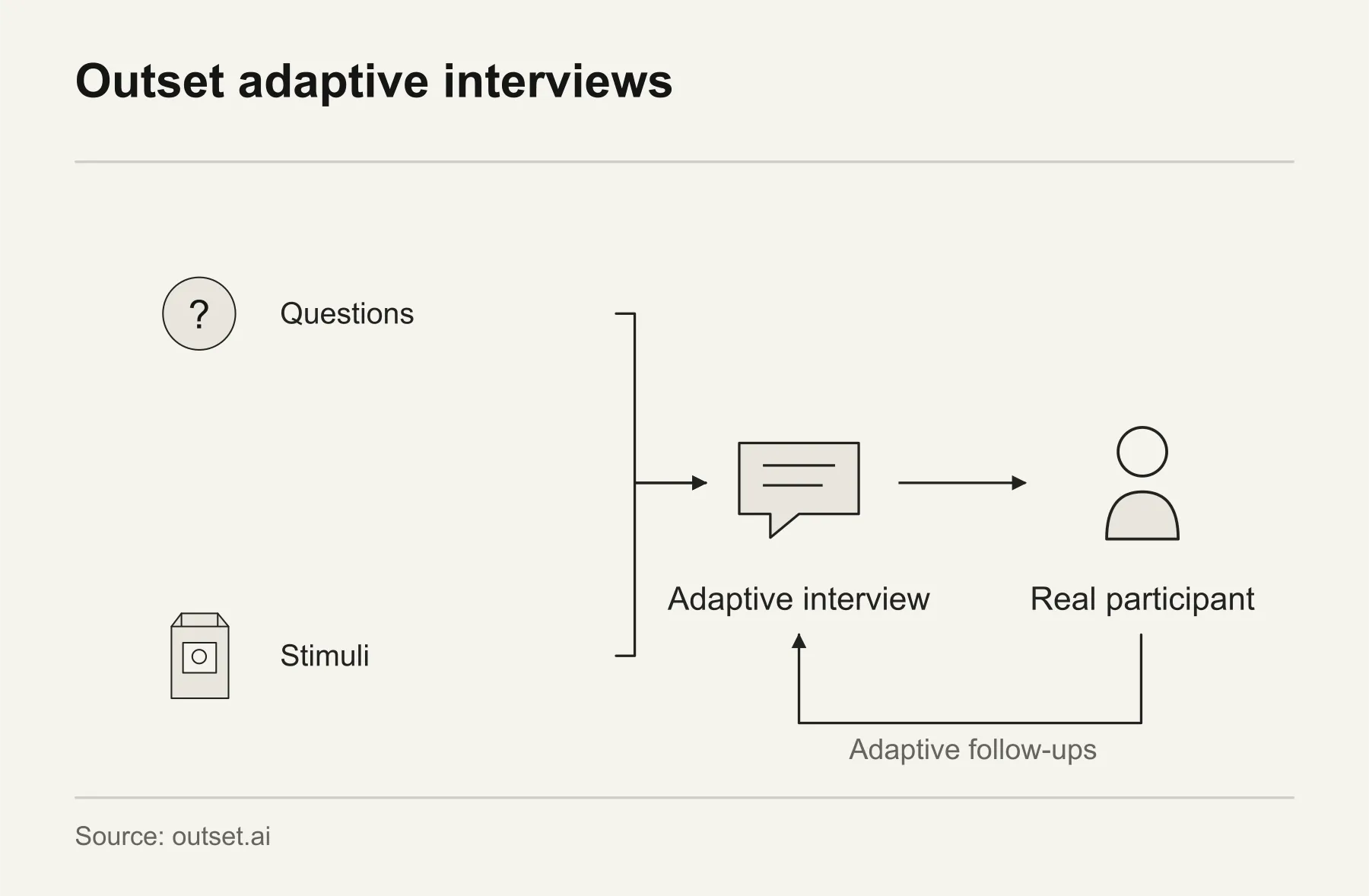
Outset’s guide editor shows how researchers configure questions and stimuli before AI-moderated interviews with recruited participants.
Outset suits teams that want more interviews while controlling the questions, materials shown and source evidence behind findings.
Our Sapien vs Outset guide compares a simulated-audience study with these interviews and Outset’s person-linked Digital Twins. It explains the different audience sources, initial work and follow-up questions.
Contact sales for pricing. Compare interview volume, recruitment, language coverage and research support.
Listen Labs: recruitment through reporting
Listen Labs drafts or imports guides, recruits from its network or an owned list, runs adaptive interviews, and produces recordings, reels, reports, and slides linked to source interviews. It advertises support for 120+ languages.
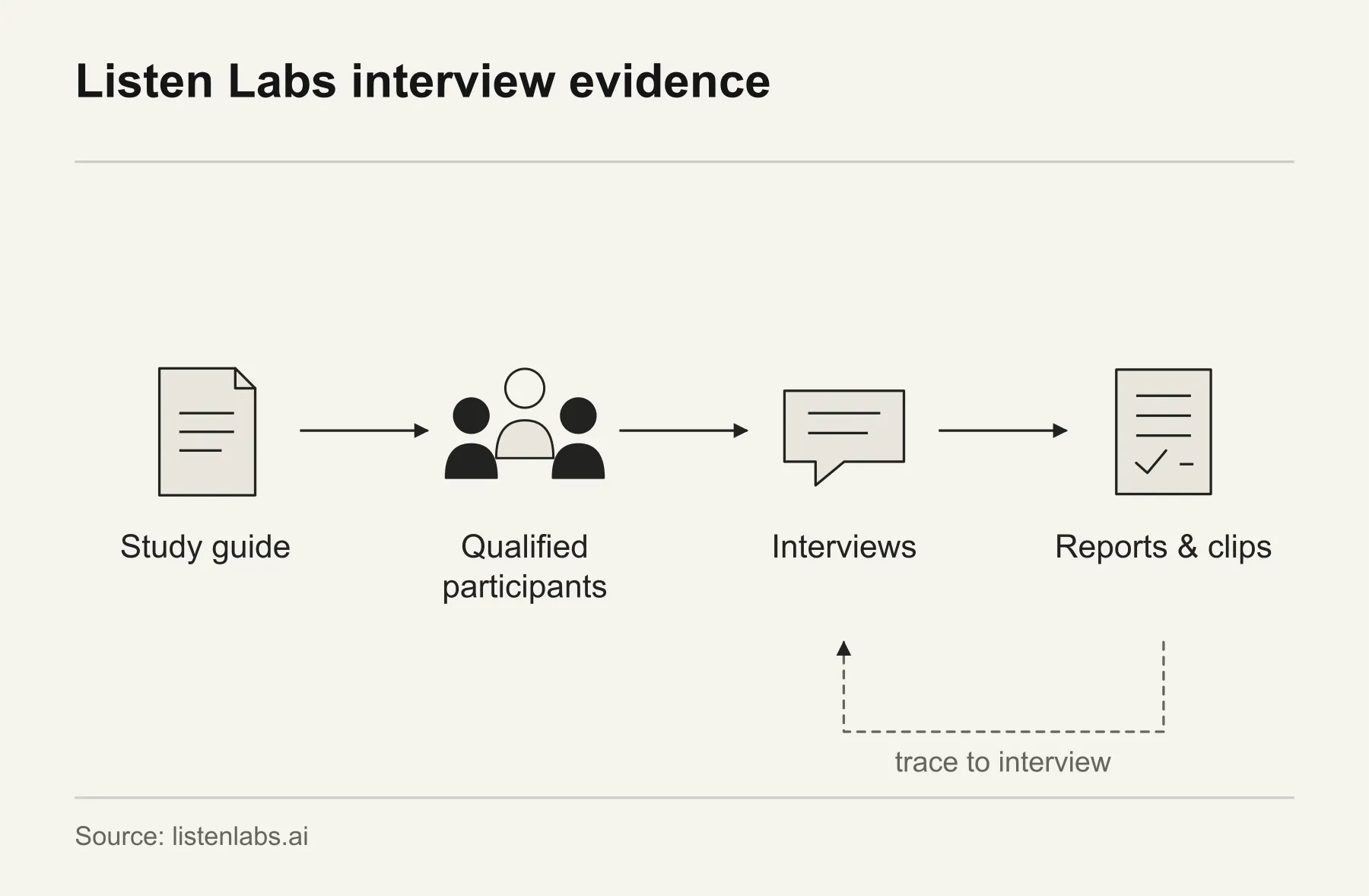
Listen Labs’ report screen links a large interview study to reports and individual response detail.
A Microsoft case study reports more than 150 multilingual interviews and a 24-hour turnaround for that program.
Contact Listen Labs for pricing. Check recruitment, interview volume, deliverables and any annual commitment.
GetWhy: video interviews with researcher review
GetWhy combines AI-moderated video interviews, automated coding and senior-researcher synthesis. Its advertised 48-hour delivery starts with the first interview, after study design and recruitment.
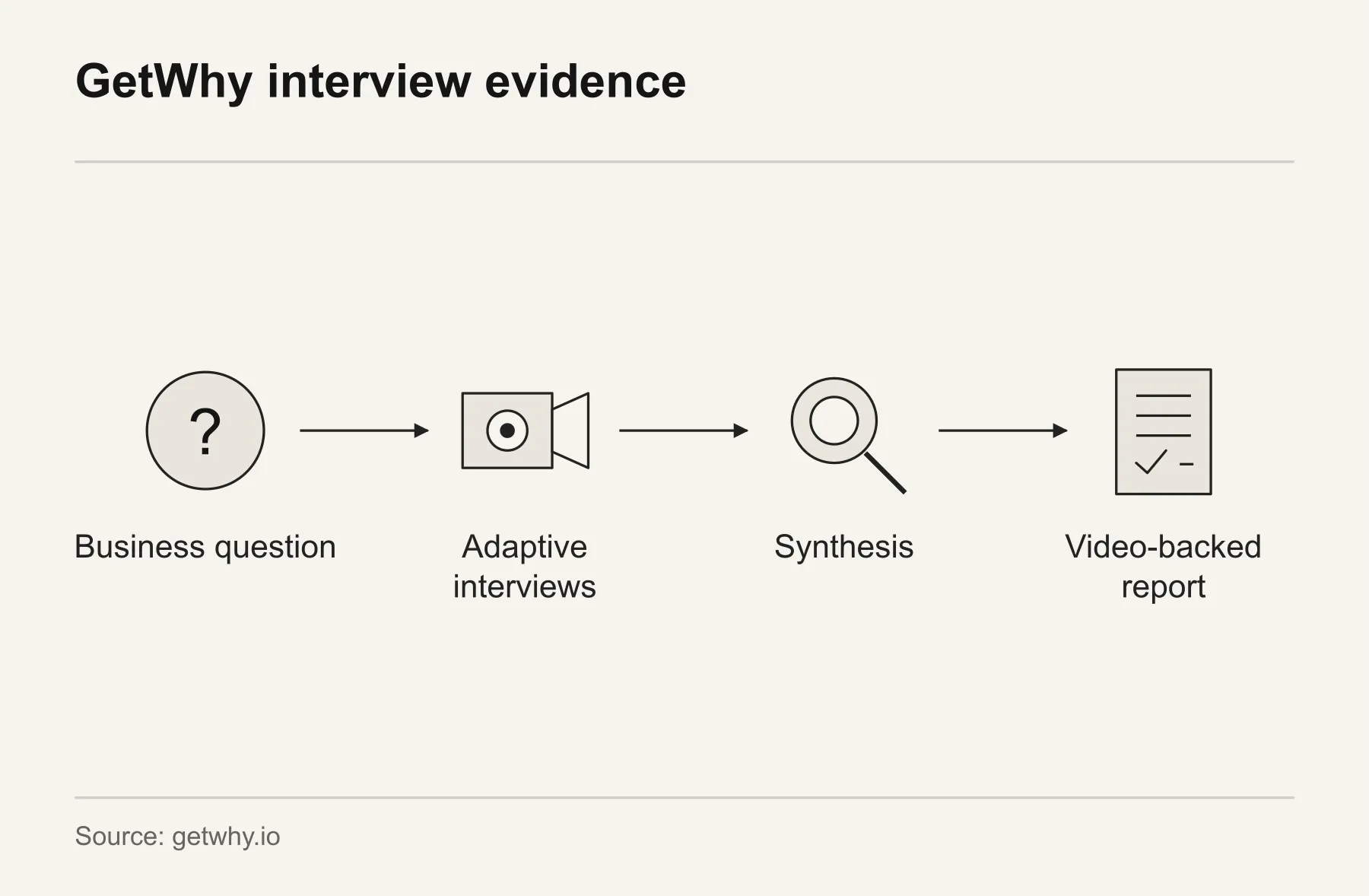
GetWhy turns the campaign brief and materials into an AI-moderated video interview guide.
Consider GetWhy for video evidence with researcher review. Agree who checks the design, monitors interviews and reviews the analysis.
GetWhy says first studies start at $2,000–$4,000 without an annual commitment. Confirm the audience, markets, and research support included.
For automation, analysis, simulation and software workflows, see our AI market research tools guide.
Simulated explanations need supporting data
Sapien: simulated interviews with supporting data
Sapien builds simulated audiences for consumer and market decisions. An audience can include thousands of distinct agents based on purchase, behavioral, demographic, survey and market evidence.
Sapien interviews agents and runs simulated focus groups to explore motivations, objections and tradeoffs. This avoids recruiting, scheduling and paying a human panel for those answers, so teams can explore questions when reaching the target audience is difficult or slow.
- Full transcripts, response context and automated theme summaries connect each finding with the audience.
- Surveys, group comparisons and tests of ads, creative, concepts, claims and prices connect explanations with simulated response measures and predictions.
- Results and recommendations arrive on an agreed schedule. Ask the same simulated audience follow-up questions.
Example: an FSA/Ipsos interview comparison
Sapien recreated early FSA/Ipsos food-ordering interviews with 40 simulated participants: 20 in England and 20 in Northern Ireland. One simulated 29-year-old profile in England said hygiene mattered but was not his first check while hungry and scrolling. He later explained: “For my normal online orders I tend to rely on the app reviews and familiarity, partly because the hygiene rating isn’t put in front of me there.”
The account points to a testable question: will making the official rating visible beside an outlet change the choice? In a comparison with six published human-study findings, two reviewers each found five specific matches in Sapien’s interviews (83.3%); they agreed on the same four. Those are finding matches, not the share of people who think this way.
Inspect our interview comparison
The recreation compares simulated interviews with published human findings for this task. It cannot show future ordering behavior. Ask for evidence matched to your audience and decision, and update the audience’s supporting data as the market changes.
Check who answered as well as who asked. Human and AI moderators can both interview people; a Sapien agent generates a simulated answer. Look at the transcript, audience context, follow-up and evidence behind the interpretation. A vivid quote cannot show how common a view is.
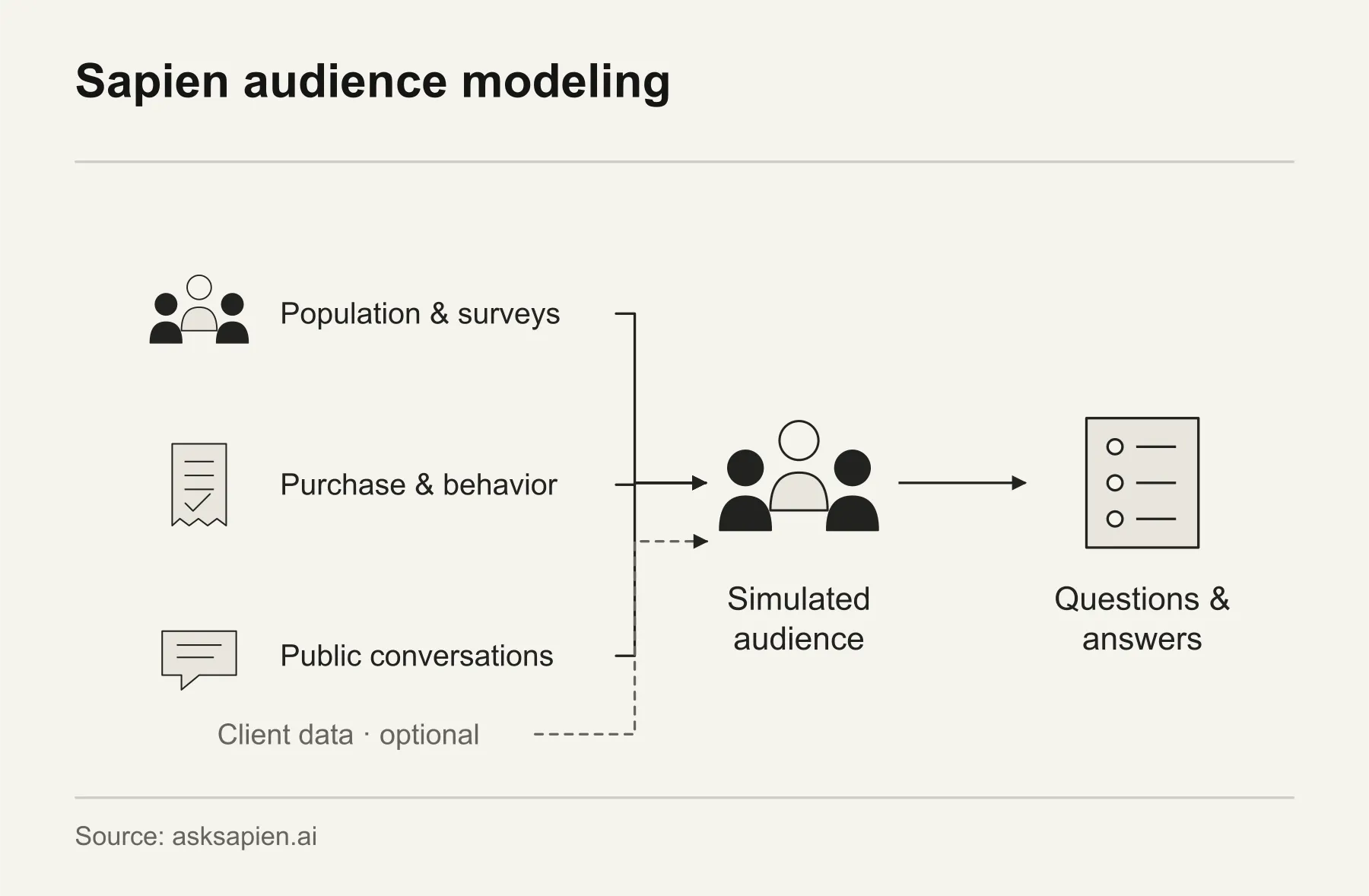
Sapien builds simulated audiences using population, purchase, behavioral, survey and market evidence.
Which qualitative method fits your question?
Use an in-depth interview to follow one person’s experience, explore a complicated choice or discuss a private topic. The moderator can pursue an unexpected answer without another participant steering it.
Use a focus group when interaction matters, such as people challenging a claim or building on an idea. That can improve the offer and language. Our focus group research guide explains how to record what discussion adds to first reactions.
Use observation or ethnography for what happens in context, such as shopping or home use. The setting, routine and workarounds may explain what an interview missed. Ask the provider how the method will help your decision.
Which response source does your decision need?
For physical product use, recruit relevant people and a setting where researchers can watch. A simulated answer cannot show how a prototype feels, fits or works in someone’s hands.
For online work, ask who recruits and screens, how follow-ups work and which transcripts or recordings you can see. Name who develops themes and recommendations. With AI-moderated human interviews, check what researchers review before the report reaches you.
Sapien uses simulated audiences built from relevant data for qualitative and quantitative studies, group comparisons, tests and predictions. Its interview answers are simulated. Use actual participants for direct observation of physical product use.
Use our AI focus groups guide for the conversation design. Use our synthetic vs human respondents guide to choose between simulated comparisons and participant evidence.
Check the evidence behind the recommendation
Ask the provider to follow one recommendation back to the interviews or simulated answers, including disagreement and open questions. For a simulated study, Sapien’s team builds the audience, runs the research and returns findings with individual answers. Review a sample report for the customer choice you face.
See our market research services for service options and our market research companies guide for a wider provider comparison.