Focus group research: use discussion to improve the concept
Focus groups investigate language, discussion and social interpretation. Capture private first reactions, then examine how the conversation changes them. Use those accounts to refine a concept or next test; retain the distinction between group discussion and independent response.
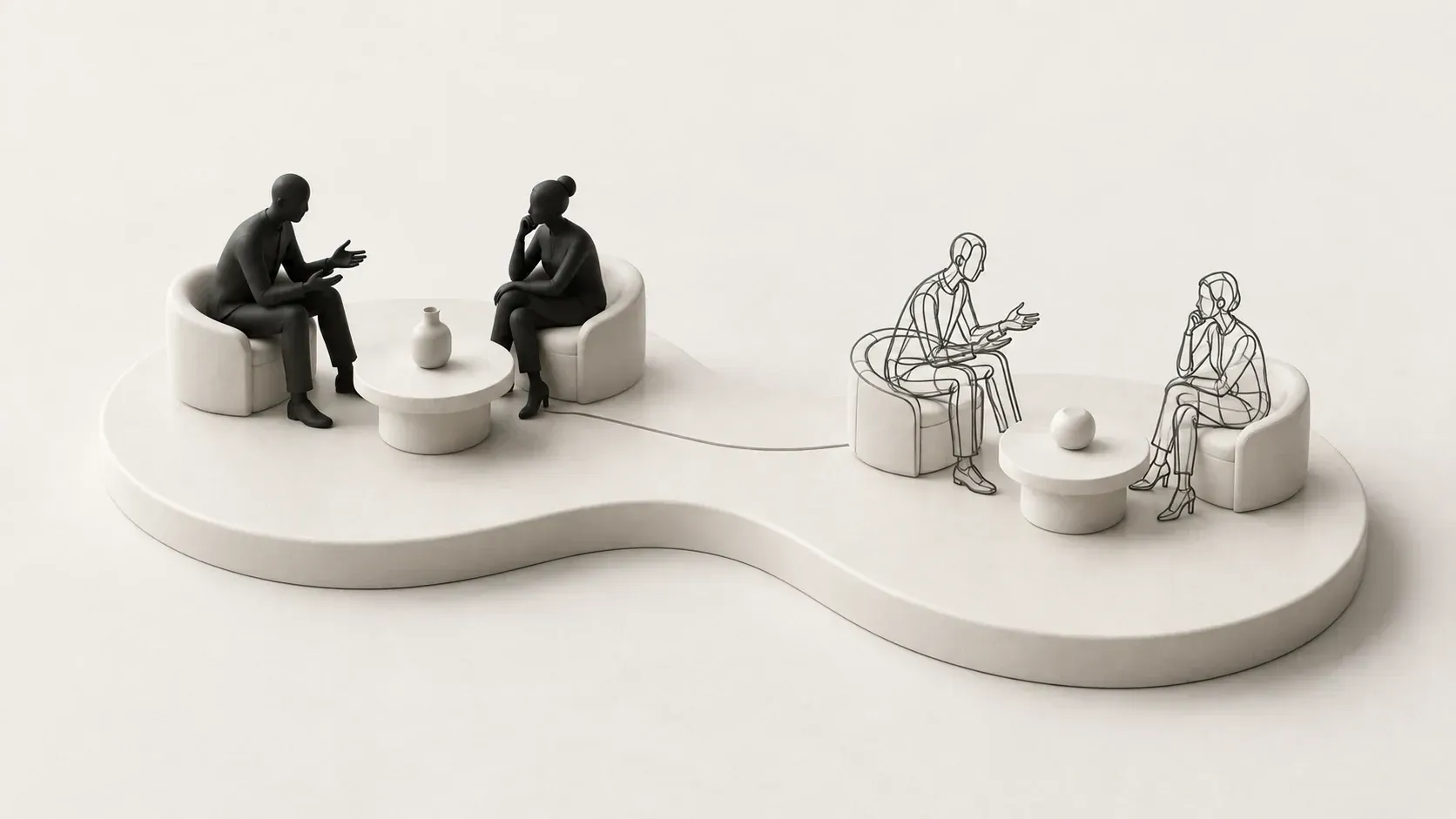
A focus group is worth commissioning when the interaction can teach the team something an independent answer would miss. In the fictional refill discussion, P03 begins with an equipment question, then adopts P02’s spill concern. Preserve that shift to understand how the concept is discussed—not to count four repetitions as four independent discoveries.
Use a fixed concept and a relevant experience contrast
Fictional card FP-v1: “One 50 mL household-cleaning concentrate pouch, proposed price USD 4 before tax. Add water as instructed in the specified reusable 500 mL bottle to prepare two 500 mL fills, 1 L total. Bottle not included. This is an unbuilt teaching concept; compatibility and cleaning performance have not been verified.” Show this card unchanged before collecting private responses. Record FP-v1 in the log; later instruction changes become a new exposure, not the same unaided reaction.
The moderator’s sixty-minute run sheet
Minutes | Activity | Evidence saved |
|---|---|---|
0–5 | Purpose and ground rules | Participation context |
5–15 | Recent behavior | Individual category episodes |
15–22 | Private first reaction | Product, use and initial concern |
22–35 | Shared interpretation | Contribution order and disagreement |
35–45 | Alternatives and tradeoffs | Concrete conditions |
45–53 | Information needs | Unaided needs before instructions |
53–60 | Private final note | Changed interpretation and reason |
Worked human focus-group protocol. Later reactions have a different information history from first notes.
Recruit people with the purchase or use experience the decision concerns, including relevant abandoners when the question needs them. Separate participants where authority or a commercial relationship would suppress criticism. The moderator needs permission arrangements and a route to avoid unnecessary disclosures.
A private first response gives the later discussion a reference point. Record what each person thought the product was, how they would use it and the first concern before anyone supplies a compelling interpretation.
The sixty-minute session is a designed information history
Time | Activity | Exact prompts and procedure |
|---|---|---|
0–5 minutes | Welcome | Explain purpose and ground rules. “Different views are useful. Please speak from your own experience; you may pass on a question.” |
5–15 | Recent behavior | “Think of your last purchase in this category. What did you choose and why?” Ask each person before inviting discussion. |
15–22 | Private first reaction | Show the same unbranded pouch stimulus. Ask everyone to write what it is, how they would use it and their first concern. Collect before discussion. |
22–35 | Interpretations | “What tells you how this works?” “Which part is unclear?” Ask someone with a different interpretation to explain it. |
35–45 | Alternatives and tradeoffs | “When would you choose your current product instead?” “What would make refilling difficult?” Probe concrete conditions. |
45–53 | Information needs | “What would you need to know before trying it?” Show additional instructions only after recording unaided needs. |
53–60 | Private final response | Repeat the written reaction. Ask what changed and why. Close with “What have we missed?” |
Keep ordered activities consistent across groups while allowing neutral follow-ups. Avoid reassuring participants that the concept works or revealing the preferred answer.
The guide deliberately puts recent behavior and private reaction before shared interpretation, added instructions and final notes. Later answers may be better informed, socially influenced or both. Keep that history visible when comparing the final response with the initial one.
Neutral follow-ups ask what in the card supports an answer and which actual situation the person imagines. They do not confirm universal bottle compatibility or defend the preferred design. An unresolved product fact remains unresolved after an eloquent group discussion.
Analyze what changed between speakers
Suppose, in a fictional discussion, one participant calls the pouch messy and three others agree. That sequence can mean shared concern, persuasive framing or social agreement. Compare their private initial notes. If nobody mentioned mess beforehand, preserve that difference rather than reporting “four independently identified mess.”
Use this interaction log:
Moment | Speaker’s original point | Responses | Private notes agree? | Interpretation and alternative |
|---|---|---|---|---|
Refill discussion | P02: “I might spill it” | P03 agrees after hearing P02 | P03 first wrote “Where do I get the bottle?”; final note says “I would worry about spills” | Record an equipment concern before discussion and a spill concern after it; do not call both independent first reactions |
Separate spontaneous reactions, prompted answers and changes after discussion. Include minority views and unanswered objections. The number of voices repeating a theme is not its prevalence in the market.
P03’s equipment concern and later spill concern are both useful, but at different moments. Ask whether discussion made a previously minor issue salient, whether the first concern was answered and whether the spill worry concerns a particular task. The sequence can identify information and handling questions for the concept team.
Retain a minority or contrary interpretation rather than smoothing it into consensus. Someone who understands the preparation but does not worry about spilling may have a familiar workaround. That contrast can be more useful than a show of hands.
Turn the discussion into a concept and task brief
The next candidate should explain the verified bottle requirement and preparation. Compare its independent first interpretation so the response is not merely a remembered moderator explanation. The spill concern also directs a physical handling task with the actual prototype.
Another group is worthwhile when it examines an experience contrast or unresolved interaction. Repeating the same enthusiasts and stimulus can reproduce the same blind spot. Choose interviews for private chronology, tasks for actual handling and a group for how buyers exchange meaning.
Modeled dialogue has different provenance. Confirm what the constructed population and design can support; several personas do not verify human social dynamics. The human moderation guide here supplies a concrete brief for recruitment, session and interpretation.
Continue with AI focus groups, qualitative research, discuss a study with Sapien.