Sapien vs Outset: interviews, twins and population studies
Compare Outset's human interviews and person-linked Digital Twins with a Sapien population study. See how audience construction and the evidence you need change the brief.
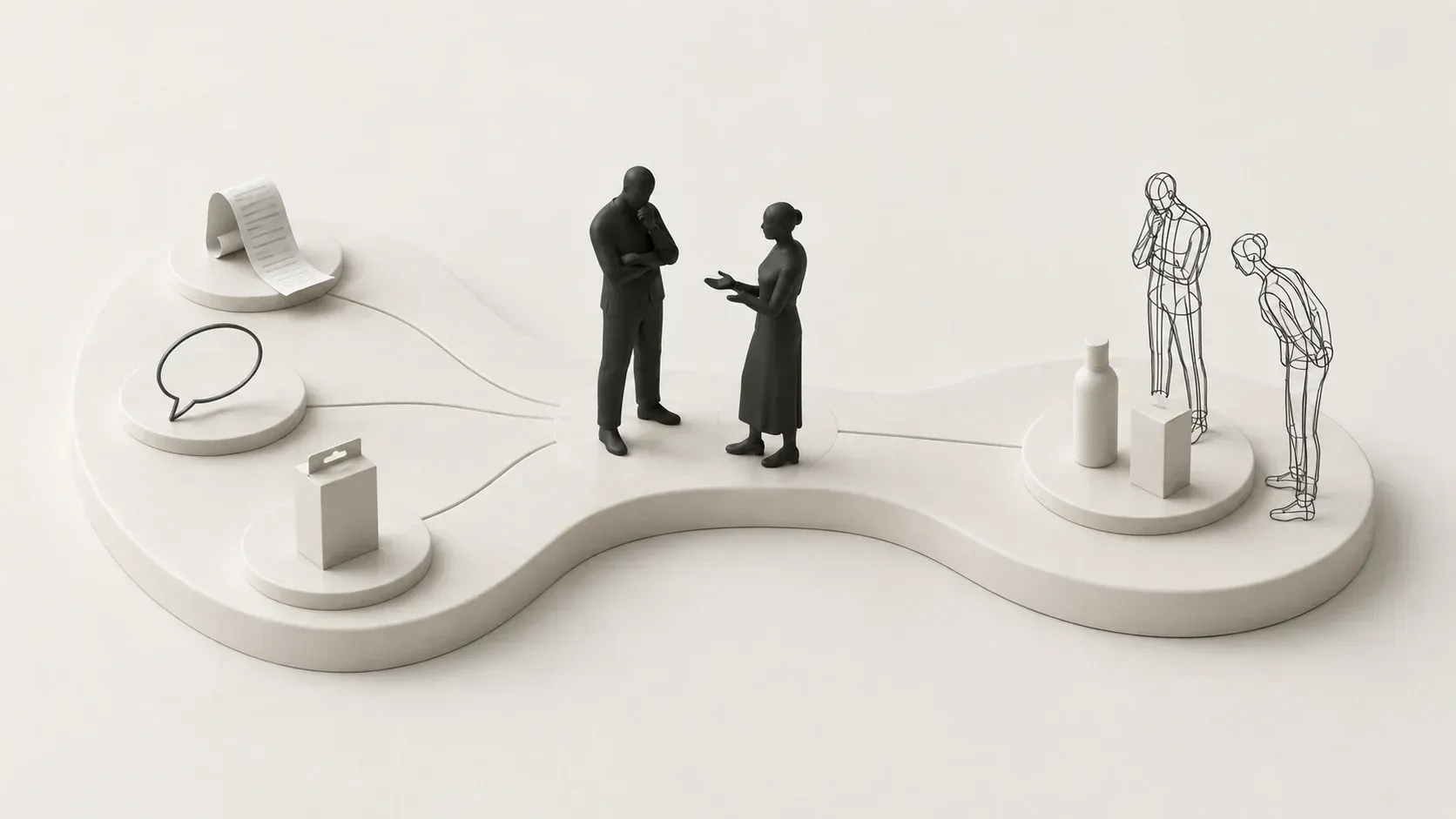
If you are comparing Sapien and Outset, start with the research you need to commission. Outset offers both AI-moderated human interviews and Digital Twins. Sapien offers studies using grounded simulated audiences. A useful shortlist distinguishes these offerings, the work needed to construct the audience, and the evidence you want to return to after the first readout.
The choice can change even within one project. You might need to hear a person's explanation, explore a model linked to that person, or compare concepts across a defined population. Those requirements deserve separate consideration in the proposal.
Name the product in the proposal
Outset's interview offering uses AI moderation, including follow-up probing, and supports stimuli and different interview formats. Buyers can bring participants or use recruitment assistance. This is a route to responses from people. A proposal should make the recruitment, interview work and resulting material clear.
Outset describes Digital Twins as models of individual people, built from interviews and enriched by further human interviews. This creates a person-linked route for modeled exploration after an interview.
Sapien's offering is research with simulated audiences grounded in demographic, behavioral and research data. Existing customer data and past research can add context. The team constructs the audience, runs the study and interprets the findings, with an interactive readout for exploring group differences, reasons and follow-up questions.
These are comparisons of the suppliers' public offerings, reviewed in October 2026. They are not results from a head-to-head product test. Team support and follow-up questions should be assessed in each proposal; neither is an exclusive advantage by itself.
Keep the audience fixed while comparing the routes
Consider an illustrative project for a desk-lamp brand. It needs to choose between a clip-mount concept and a weighted-base concept for adults who work in small, shared spaces. The team also expects questions after the presentation. This is a proposed research problem, with no study results implied.
The audience stays the same throughout the comparison. The distinction is what the team needs to learn and revisit.
If the designer needs people to explain their actual workspace and react to a concept, an Outset human-interview proposal belongs on the shortlist. If the team then wants modeled exploration attributable to those particular interviewed people, the Digital Twins proposal has a different purpose. If the main requirement is a grounded population study comparing the two concepts and interpreting differences between groups, that is a useful Sapien study discussion.
Outset could also recruit an appropriate cohort for concept research. The question is which proposed route delivers the evidence and coverage the team needs, rather than which supplier owns concept testing as a category.
Audience coverage changes the first commission
For Outset's twin route, relevant people must first be interviewed. If the cohort omits an important part of the intended audience, more questions to the same twins do not add the missing people. The proposal may need additional recruitment and interviews.
That does not limit Outset to current customers. The recruitment could include new prospects who meet the brief. What matters is whether the people represented are suitable for the decision.
For a Sapien proposal, examine how the simulated audience would be constructed for the same brief: which grounding sources support the relevant groups, which distinctions the study can sustain, and where the proposed interpretation would be too broad. Requesting a population study does not establish coverage on its own.
This changes the work you commission. One proposal may begin with recruiting and interviewing the intended people; another may begin with constructing and assessing a grounded modeled population. Both need a defensible connection to the desk-lamp buyer you actually care about.
Decide what the follow-up must mean
A request to “ask another question” can describe different work. Settle the source you need before treating two demonstrations as equivalent.
What the desk-lamp team needs next | What the proposed work must establish |
|---|---|
A person's account of what happened after they rearranged their workspace | A fresh response from that person. Their twin's answer would remain a modeled answer. |
Exploration linked to a particular person's earlier interview | The connection between that interview, the person-linked model and its later output. Outset's twin route is relevant to this requirement. |
A comparison of concept reactions across the defined audience | The construction and coverage of the audience, the comparison being made and the limits of the resulting interpretation. Discuss this scope in a Sapien proposal and any competing study proposal. |
Multiple model answers are not multiple newly recruited human respondents. Keep the original human material identifiable in the readout, and keep subsequent modeled exploration labeled as such.
For the wider methodological choice, our guide to synthetic and human research covers how to match the source to the question. The named-product decision here adds the recruitment, construction and follow-up work that a buyer must actually commission.
Inspect the readout that would change the decision
Ask the supplier to walk through how the proposed readout would help the desk-lamp team choose its next action. A useful demonstration should show how to inspect why a concept is favored, whether the relevant groups differ, and which unanswered question could change the choice. It should also make clear when the next action needs more human research.
For a person-linked route, inspect the original interview separately from later modeled responses. Supplier-described checks do not, by themselves, establish independent predictive accuracy or wider audience coverage.
For a population study, inspect the basis for the group comparisons and the interpretation offered to the team. A larger modeled audience or a polished aggregate result cannot replace that explanation.
Do not require the demonstration to produce a favorable result. An explanation that neither concept is ready, or that a crucial distinction cannot yet be supported, may be more useful than a confident winner. This is a criterion for reviewing the proposal, not a finding about either desk-lamp concept.
When comparing the complete engagement, our market research companies guide can help place the named products within the broader study-delivery choice.
Choose around the evidence your team will use
Outset is a credible shortlist option when the requirement centers on actual human interviews, or on modeled exploration tied to particular people who have been interviewed. Make the initial recruitment and any later human updates explicit in that scope.
A Sapien discussion fits a team considering a grounded audience study, concept comparisons and an interpreted readout it can explore further. Bring the decision, intended audience and concepts so the conversation can establish the appropriate study and its limits.
To explore Sapien's offering for your next research decision, Book a demo.