Ad testing: make the creative work before you buy reach
Use ad research to decide which scene, brand cue, line or destination to change before buying reach. A practical guide with Volvo Trucks’ The Epic Split.
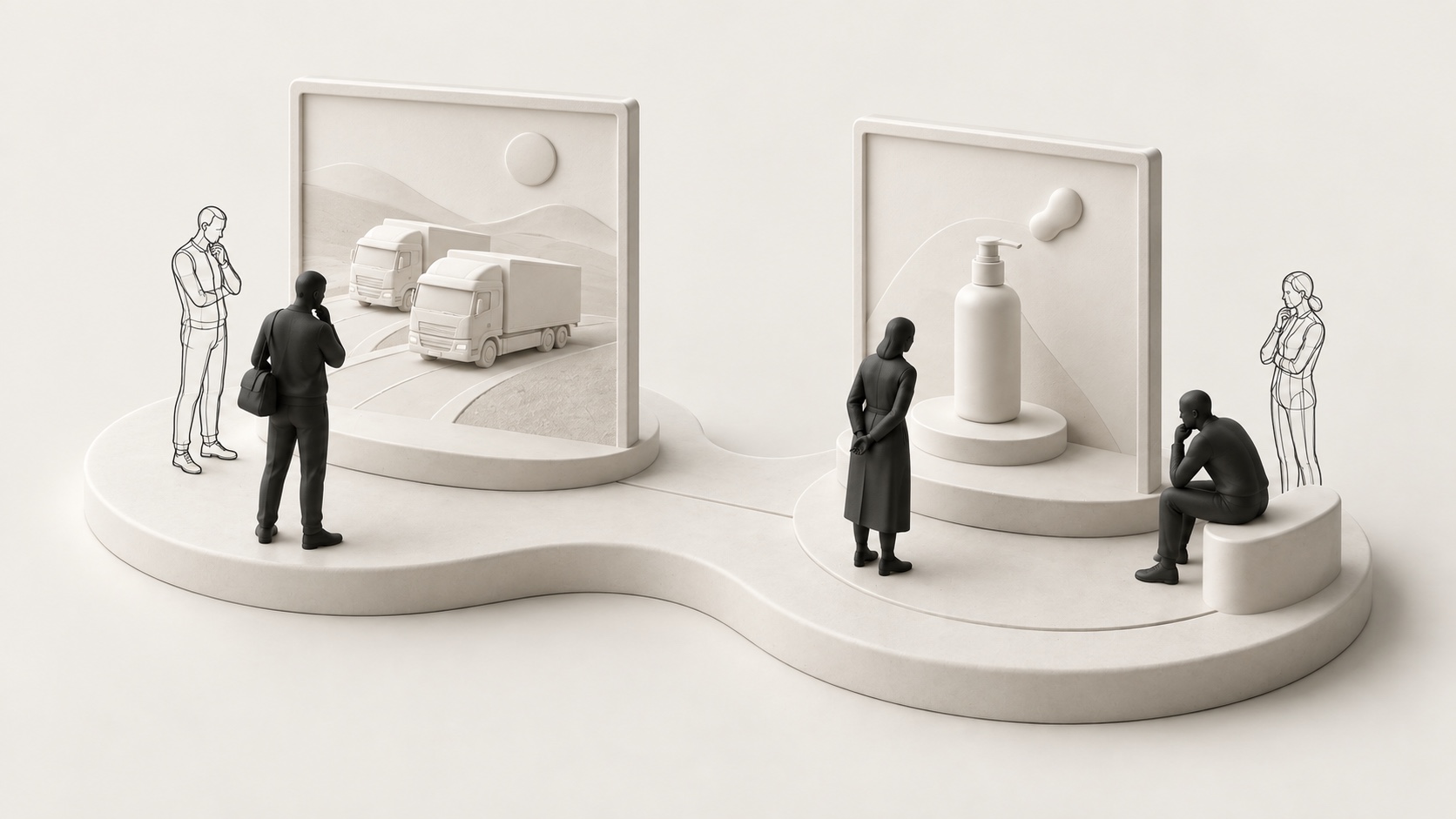
Ad testing checks whether the creative earns attention, connects that attention to the brand and communicates a reason to choose it. A useful readout identifies the scene, line or cue to change before buying reach. The Volvo example below shows how the product demonstration, brand and promise can work together.
The edit is almost locked, the media plan is ready, and two creative routes still divide the team. One is more entertaining. The other makes the offer easier to understand. An ad test should explain which route serves the campaign and what needs to change before it runs.
Ad testing puts a creative in front of the intended audience and examines what gets through: the brand, the promise, its relevance and the next step. Its value is a specific creative decision, rather than another round of opinions about whether the team likes the work.
Choose the decision before the score
Name the job of the campaign. A brand-building film needs to make the brand and its meaning memorable. A product ad needs to explain the offer and give the right buyer a reason to act. The same entertaining scene can help one objective and distract from another.

Volvo Trucks · The Epic Split · 2013 · Watch Volvo Trucks’ The Epic Split ↗
Then name the choice. Selecting a whole creative route calls for a comparison of the complete executions. Choosing between headlines calls for the same image, offer and call to action with the headline changed. That distinction makes the finding useful to the person who has to approve the next version.
What gets remembered?
Find the moments, product and brand that survive first exposure. A memorable scene earns its place when it carries the intended brand or message.
What does the buyer take away?
Check the meaning in the viewer's own words. Identify a clear promise, a misunderstanding or a missing piece of the offer.
What earns the next step?
Understand who finds the offer relevant, what holds them back and whether the destination delivers the expectation created by the ad.
Agree these priorities before looking at the results. Keep each measure visible. An overall average can hide the exact weakness the next edit needs to address.
Test the ad in its intended context
Give the researcher the placement as well as the asset: a feed video, a short pre-roll, an outdoor panel or a product carousel. Include the device, dimensions, sound conditions and the surrounding content. A film watched full-screen from beginning to end creates a different encounter from a video passed while scrolling.
Use the same exposure conditions across candidates. Collect the first response before replaying the ad or explaining the brand. Ask what the viewer remembers, what was advertised and what the ad was saying. Then show it again to locate the confusing line, weak cue or missing detail.
This sequence protects a useful distinction: what the creative communicated on its own, and what someone understands after closer inspection. Naming the brand in an earlier question gives away part of the answer. SurveyMonkey's questionnaire guide explains why recall comes before detailed diagnostics.
Connect the memorable moment to the brand
Volvo Trucks' The Epic Split is a useful creative to examine because the spectacle happens through the product itself: Van Damme balances between two reversing trucks. The scene gives a tester a concrete question. Does the viewer take away a stunt, or a demonstration of control associated with Volvo?
Reading the creative · Volvo Trucks
The spectacle is the product demonstration.
Role | What to investigate |
|---|---|
Attention | The split creates a moment worth watching. |
Brand | The trucks need to remain part of what gets remembered. |
Promise | The scene should communicate control, rather than an unrelated feat. |
That is an editorial reading of the ad. A test checks what the intended buyer actually takes from it. If the recalled answer stops at “the split between trucks,” probe product and brand meaning separately. If the viewer describes the intended benefit in their own words, preserve the part of the execution doing that work.
Use the same reasoning on a less spectacular campaign. A joke, celebrity or dramatic opening may attract interest while the brand cue arrives too late. Identify the relationship between the memorable moment and the offer before deciding to add a bigger logo or replace the scene.
Turn each finding into an edit
The useful part of the report is the link between a response and a change. “Improve clarity” leaves the creative team to guess. A diagnosis identifies what was misunderstood, where the misunderstanding began and which element should change.
Scene recalled; brand missing
Bring a distinctive brand cue into the remembered moment. Test that edit while keeping the core idea intact.
Brand recalled; promise unclear
Make the benefit easier to see or state. Remove a competing message rather than adding another explanation.
Promise understood; weak fit
Inspect the use occasion and buyer group. Choose a more relevant benefit or focus the campaign on the audience it serves.
Interest earned; next step breaks
Align the call to action and destination with the offer. Check that the price, product and required action match the expectation.
Ask for examples behind the recommendation and the exact creative version they refer to. Keep the best-working part of the ad while resolving its weakest link. If you change the headline, offer, image and audience together, you have a new execution to assess.
A useful readout ends with an edit someone can make, and a reason to make it.
Carry the hypothesis into the campaign
Take the revised asset and its hypothesis into the live channel. For example: making the product benefit clear in the opening should bring more qualified visitors to the product page. Choose the outcome that reflects the campaign's job and make the comparison conditions explicit.
Research explains the creative response; a live experiment measures behavior under actual delivery. Report clicks, qualified visits, purchases and costs from the campaign data. Read them alongside the diagnosis instead of treating a favorable research response as a conversion result.
The next decision may be to keep the route and change the opening, change the audience, or stop spending on an execution whose appeal does not carry its brand and offer. Use the result to decide what deserves the next round of production and media.
What to ask your ad-testing provider
A buyer needs to know what the study will help the team approve. Ask the provider to show the exposure plan, the audience definition and the shape of the readout before commissioning the work.
- A diagnosis by creative: brand and message understanding, relevance, objections and the action invited by the ad.
- The differences that change your choice: audience comparisons tied to groups you can reach, with the bases and measure definitions supplied.
- An editable recommendation: the frame, cue, wording or destination to change, supported by the responses behind it.
- A clear evidence source: whether responses come from human participants or a simulated population, and which outcomes require a live campaign.
With Sapien, you can compare creative across simulated buyer groups, investigate the responses behind a finding and ask follow-up questions. Bring the creative versions, intended placement and the decision deadline. Discuss your ad-testing brief with Sapien.
If the unresolved choice is how the promise is worded, use message testing.
Creative attribution: Volvo Trucks, The Epic Split, 2013. The creative reading above is editorial analysis, not an audience result.
Further reading: Kantar's creative testing approach and SurveyMonkey's questionnaire guidance. Sapien capabilities follow the current product description.