Syndicated Market Research Alternatives: What Should You Buy?
Compare report marketplaces, intelligence publishers, public statistics and new research. Buy the evidence that answers your actual business question.
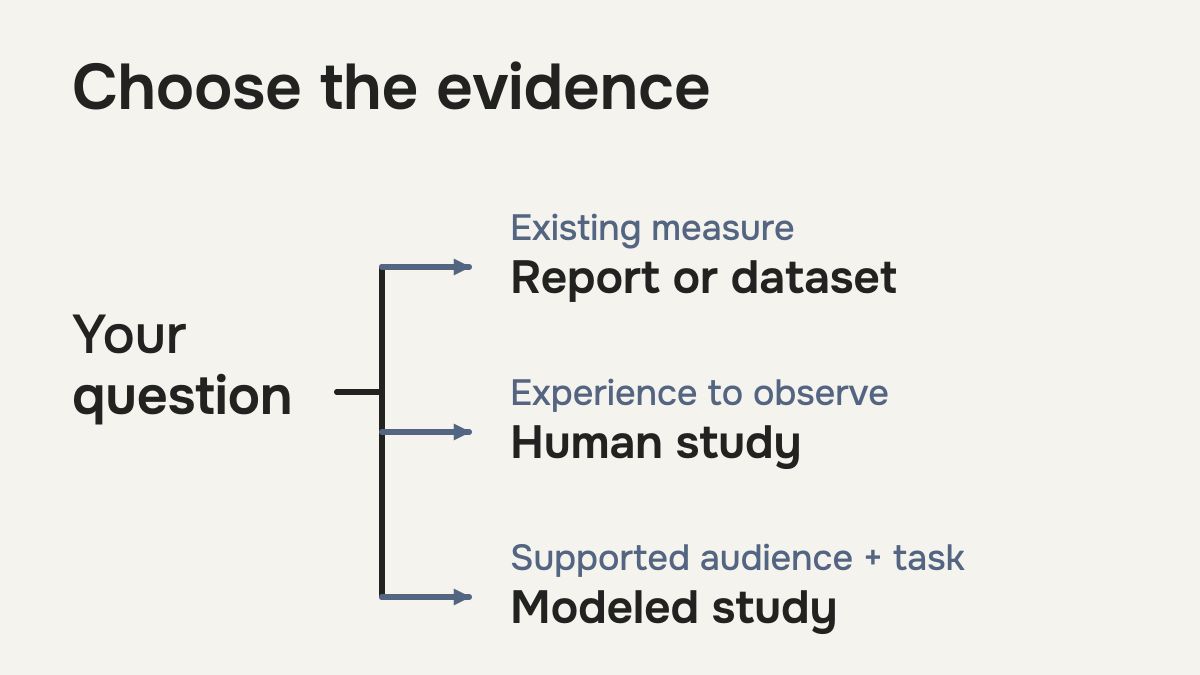
The right alternative to a syndicated market research report depends on what you need to know. For an existing market statistic or category history, compare publishers, datasets and original sources. For a question about an offer no report has studied, commission research designed around that decision. Human fieldwork and simulated research produce different evidence; neither automatically replaces a licensed market dataset.
Start by writing the decision and the evidence it requires. “What happened to the category?” and “Which of our two offers should we develop?” can appear in the same brief, but they need different purchases.
Compare the research routes
Route and examples | What you buy, when it fits and what to check |
|---|---|
Report marketplace: Research and Markets | Access to reports from multiple publishers, with custom research also offered. Useful for finding an existing report across suppliers. Identify the actual report author, method, date, covered market and license; the marketplace name does not establish how every report was researched. |
Market and industry intelligence: Mintel, Euromonitor Passport, IBISWorld | Reports, category or industry data, analyst interpretation and sometimes recurring access. Useful for market structure, category context and change over time. Compare the specific collection and geography; estimates, forecasts and observed records are different measures. |
Statistics access: Statista or an original statistical publisher | A searchable route to published statistics, source information and charts. Useful when the needed measure already exists. Inspect the underlying source, population, collection period and reuse rights before using the number. |
Public statistical sources: World Bank Open Data, OECD Data Explorer, Eurostat | Published economic, social and regional indicators, with dataset-specific metadata and access terms. Useful for an existing indicator that fits the brief. Coverage and definitions may not match a proprietary consumer category or a particular product decision. |
Consumer insight datasets: GWI, NIQ Consumer Life | Recurring survey-based audience or consumer context. Useful for attitudes, segments and media or lifestyle questions covered by the product. Check the survey population, wording, market and refresh cycle. Stated attitudes do not establish actual purchases. |
Custom human research: qualitative research partners or a survey and panel workflow | New answers from recruited people, with design and interpretation scoped to the project. Useful when the decision needs a specific audience, stimulus or lived experience absent from existing reports. Budget recruitment, fieldwork, analysis and a usable output. |
Managed simulated research: Sapien | Modeled surveys, interviews and comparisons using a data-grounded simulated audience. Useful for investigating choices and reasons under a defined study brief. Inspect audience support and task-specific validation; modeled answers are not observed category sales or new human interviews. |
For the next level of detail, our Statista alternatives guide follows a statistic to its source, while Mintel alternatives separates category intelligence from a new consumer study.
These routes can complement one another. A category report can establish context, customer interviews can explain a problem, and a simulated comparison can investigate proposed responses to it. Keep the source and limits attached to each finding when combining them.
A report marketplace and a publisher are different buying decisions
Research and Markets' terms describe distribution of third-party publisher content. Its wider offer also includes custom research. When reviewing a report listing, record the publisher of that specific title rather than treating the distributor as the research author.
Compare the report itself across purchasing routes: edition, publication date, contents, methodology, sample pages, geography, definitions and rights. Ask who answers methodological questions and who supplies any customization. Two listings with similar titles need not contain the same research.
A direct publisher relationship can matter when you need an ongoing dataset, analyst support or several countries. A marketplace can be useful when the task is locating a particular report. The better route depends on the product, service and agreement you actually receive.
Keep the existing report when it already answers the question
An existing report can be the sensible purchase when it covers the required category, geography, period and measure, and its license permits your use. It may provide history or cross-market definitions that would be difficult to recreate in one custom project.
For example, a team comparing category development across markets may need a consistent historical series and explicit definitions. A new concept survey cannot recreate past retail sales. Conversely, a category forecast does not answer how the team's particular buyers interpret a proposed subscription page.
The cost of a report is only one part of the decision. Count the internal work required to assess sources, reconcile definitions, extract relevant tables and explain what they mean for the business. A broader subscription can be useful if several decisions repeatedly need the covered content; it can be unnecessary if one report answers the brief.
Our syndicated research guide works through coverage, units and licensing using a category-research purchase. Use it to evaluate a shortlisted product before signing.
Choose a new human study when the missing evidence is experience
Commission human research when the question requires people to encounter a stimulus, describe an experience, attempt a task or report something the existing data did not collect. Define who qualifies, what they see and what the study must return.
For a proposition decision, show complete comparable offers. For usability, give people a defined task and inspect what happens. For a longitudinal question, preserve participant history and exposure. The study design should follow the decision, rather than using the same interview count for every uncertainty.
Ask whether the supplier provides sample only, software or a managed study. The research-company comparison distinguishes those responsibilities. A low recruitment price does not include study design and interpretation unless the proposal says so.
Use simulation for the decision its supporting evidence can inform
At Sapien, we build simulated audiences from purchase, behavioral and research data, with relevant customer evidence adding context. Our team develops the study, runs surveys or interviews and works through the interpretation with you. The useful output connects a comparison to the responses and reasons behind it.
That can help a team investigate proposed offers, messages or audience differences alongside existing category research. The brief should state the alternatives, the represented audience and what finding would change the next decision.
Keep measured and modeled evidence identifiable. A simulated response cannot establish a person's actual purchase, recreate missing market history or confirm that a physical product performs as claimed. Our synthetic research validation guide explains what to inspect before relying on a modeled result.
Compare three shortlisted purchases using one brief
Send each supplier the same question and ask it to explain what its offer can answer. A useful comparison needs more than a report title or a promised turnaround.
Comparison item | What the supplier should make clear |
|---|---|
Decision and measure | The business question, the returned measure and the decisions it can support. Distinguish observed values, survey answers, forecasts and modeled responses. |
Population and coverage | Relevant countries, categories, channels, people or households, exclusions and the period covered. |
Method and freshness | Sources, collection dates, estimation or forecast methods, update cycle and any breaks in the series. Publication date alone is insufficient. |
Access and rights | Users, downloads, sharing, publication, permitted analysis and any separately priced data or service. Confirm the agreement for your intended use. |
Deliverable and support | Sample tables or reports, underlying evidence available to inspect, analyst access, revisions and responsibility for interpretation. |
Total commitment | Individual report, subscription, project, sample and service charges, including internal work and any follow-up needed to finish the decision. |
If none of the options answers the brief, change the purchase rather than disguising the gap. Combine a narrower report with a new study, ask for additional coverage or postpone a decision that still lacks necessary evidence.
Questions buyers ask about report alternatives
Is free public data a substitute for a paid market report?
Sometimes. Public statistical sources can supply the exact indicator you need, with useful metadata and historical coverage. A paid product may add proprietary category estimates, consumer research, interpretation or a convenient collection. Compare the actual measure and rights; free access does not guarantee suitable coverage, and a price does not establish quality.
How should we compare a subscription with a custom project?
Specify the decisions and period each purchase must cover. A subscription can support repeated questions within its collection. A project can investigate a narrower audience or stimulus. Include internal staffing and any missing follow-up work in both budgets, then compare whether the returned evidence finishes the same decision.
Can a synthetic study replace a syndicated report?
It can answer a different or narrower question when the modeled audience and task have appropriate support. It does not automatically replace observed market statistics, historical coverage or a publisher's licensed dataset. Use it as the study route the decision requires, with its response source and validation visible.
What should we send Sapien?
Bring the decision, complete alternatives, intended audience and relevant existing research. Discuss the study your team needs, including which findings must be observed, which can be modeled and what would change your next commitment.