Primary vs secondary research: answer the gaps that matter
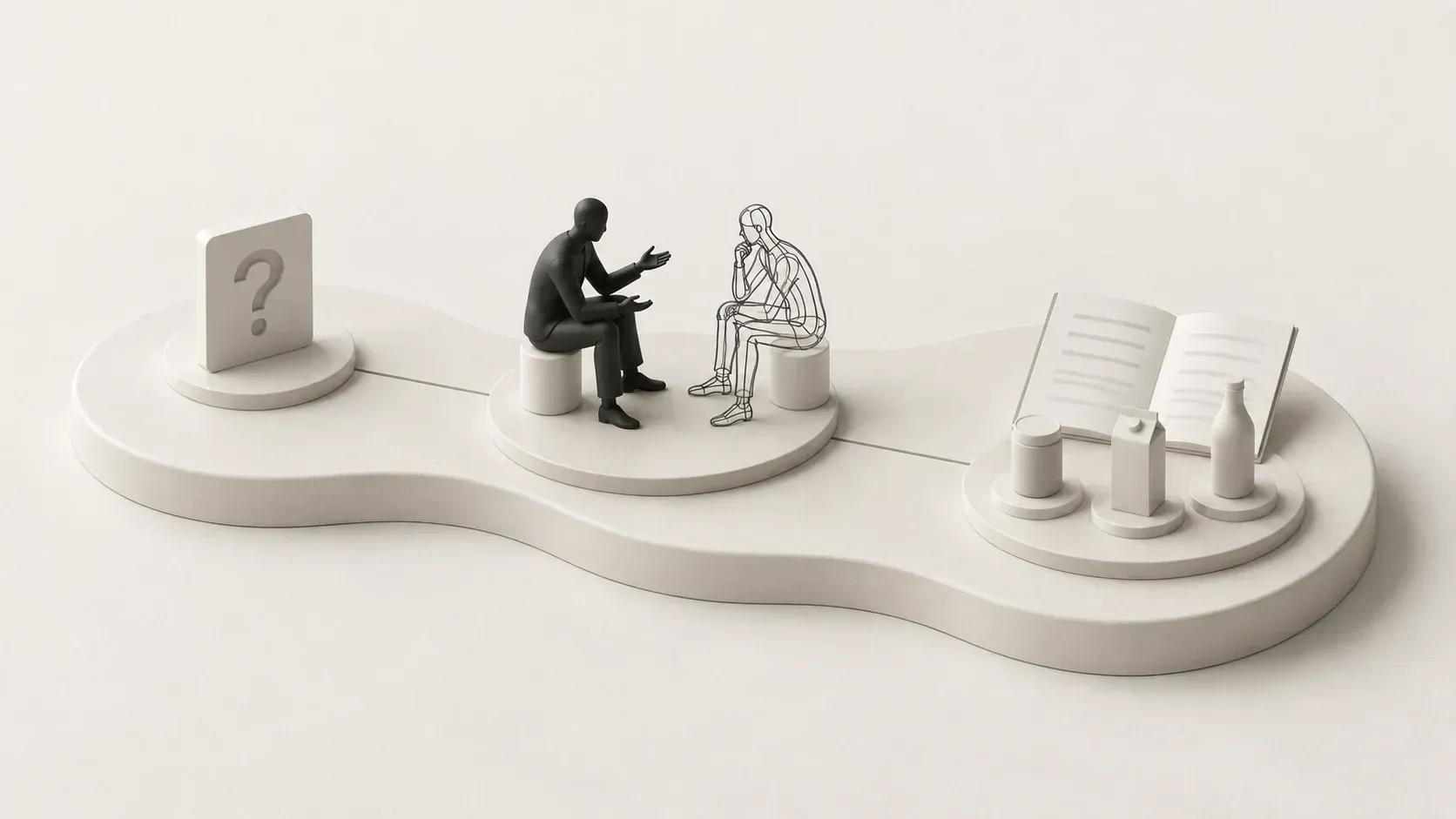
Primary research collects new evidence; secondary research uses existing evidence. Start with the sources that can answer your decision, then commission the missing input. In the repair example, existing records narrow the area and buyer episodes explain the remaining barrier.
The useful distinction is what evidence already exists for the repair-service choice and what still needs collecting. A population table can narrow the area; an inquiry log can identify recorded requests; a new recent-repair interview can explain the decision that produced them. Neither route is automatically stronger. This is a worked fictional expansion decision.
Ask both evidence routes the same market-entry question
Suppose a fictional repair service wants to open in a new city. The decision is whether to investigate a particular service area, not whether the entire city “has potential.”
What the repair decision already knows—and does not
Existing source | Answered input | New evidence to obtain |
|---|---|---|
Local demographic table | Reachable area context | Recent category need and experience |
Competitor service listing | Advertised alternatives and terms | Whether the buyer knew and could use them |
Shop inquiry register | Recorded requests and outcomes | Unrecorded refusal reasons and unseen buyers |
Worked source-fit assessment. No local market size or demand result is supplied.
Secondary route: inspect official population and business data, map existing providers, review their services and opening hours, and examine your own inquiries from the area. This can identify households, competing supply and observed requests. It cannot establish that those households need your repair service or will choose your offer.
Primary route: interview recent category buyers about the last repair they commissioned. Ask what failed, who they contacted, how long the process took and why they chose that provider. Then measure the most important unresolved issues among a defined audience if the next decision requires prevalence evidence.
The two routes meet in a narrower proposition: “Investigate convenient collection for people whose recent repair involved difficult transport.” You now have a specific hypothesis rather than a population number dressed as demand.
Each source below answers part of the repair decision. The missing category-need evidence still requires investigation.
Source | Published/collected date | Unit and geography | What it measures | Fit to our decision | Limitation |
|---|---|---|---|---|---|
Official local demographic table | Record both dates | Households in defined area | Household characteristics | Describes reachable context | No category need measured |
Competitor website | Access date | Locations and listed services | Public offer | Identifies visible alternatives | Listings may be incomplete |
Internal inquiry log | Start/end period | People who contacted us | Expressed requests | Reveals existing demand signals | Excludes people who never found us |
The Census Business Builder is one official starting point for U.S. demographic and business information. Check the underlying dataset and geography rather than treating a map as a market-size calculation.
Keep the question fixed when comparing sources. City-level households answer a context question, while recent repairs answer a category experience. A competitor listing answers what is advertised, not whether a particular buyer could use it. The business can use all three without pretending they are interchangeable demand estimates.
Collect the experience the sources never measured
For the repair example, use this interview sequence:
- Tell me about the last item you tried to have repaired.
- What made you decide to repair rather than replace it?
- Which providers did you consider, including doing nothing?
- How did you get the item to the provider?
- What happened from first contact to collection?
- Which part was most difficult? What did you do about it?
- What would have made you choose another provider?
Document eligibility, recruitment and interview dates. Compare recent successful repairs with abandoned attempts. Existing customers alone may make your current offer appear unusually attractive.
Ask about repair versus replacement, how the item moved, provider alternatives and the point where the process stopped. Then compare successful and abandoned episodes. That contrast can separate transport from repair value or unavailable service conditions.
Only after the episode should the team show a collection proposition. Otherwise the new research may merely collect reactions to the solution it already wanted to sell. Preserve the scope, window and fee when making an offer comparison.
Decide when to stop desk research
Continue desk research while a source can change the audience, feasible zone or alternatives. Stop adding context when the next decision depends on an experience none of those sources measured. A more current population table cannot answer whether the Saturday window works for recent repair buyers.
Check unit, geography, collection period, definition and coverage once and retain them with the brief. Publication date does not replace the age of an observation. A shop inquiry register excludes people who never found it. These are source-fit facts that tell the research team which missing experience to recruit.
The completed next commission is recent successful and abandoned attempts in the reachable area, with a matched collection/drop-off offer comparison. Request the actual obstacle, exceptions and a feasible candidate for a booking pilot.
Resolve the apparent contradiction before choosing a source
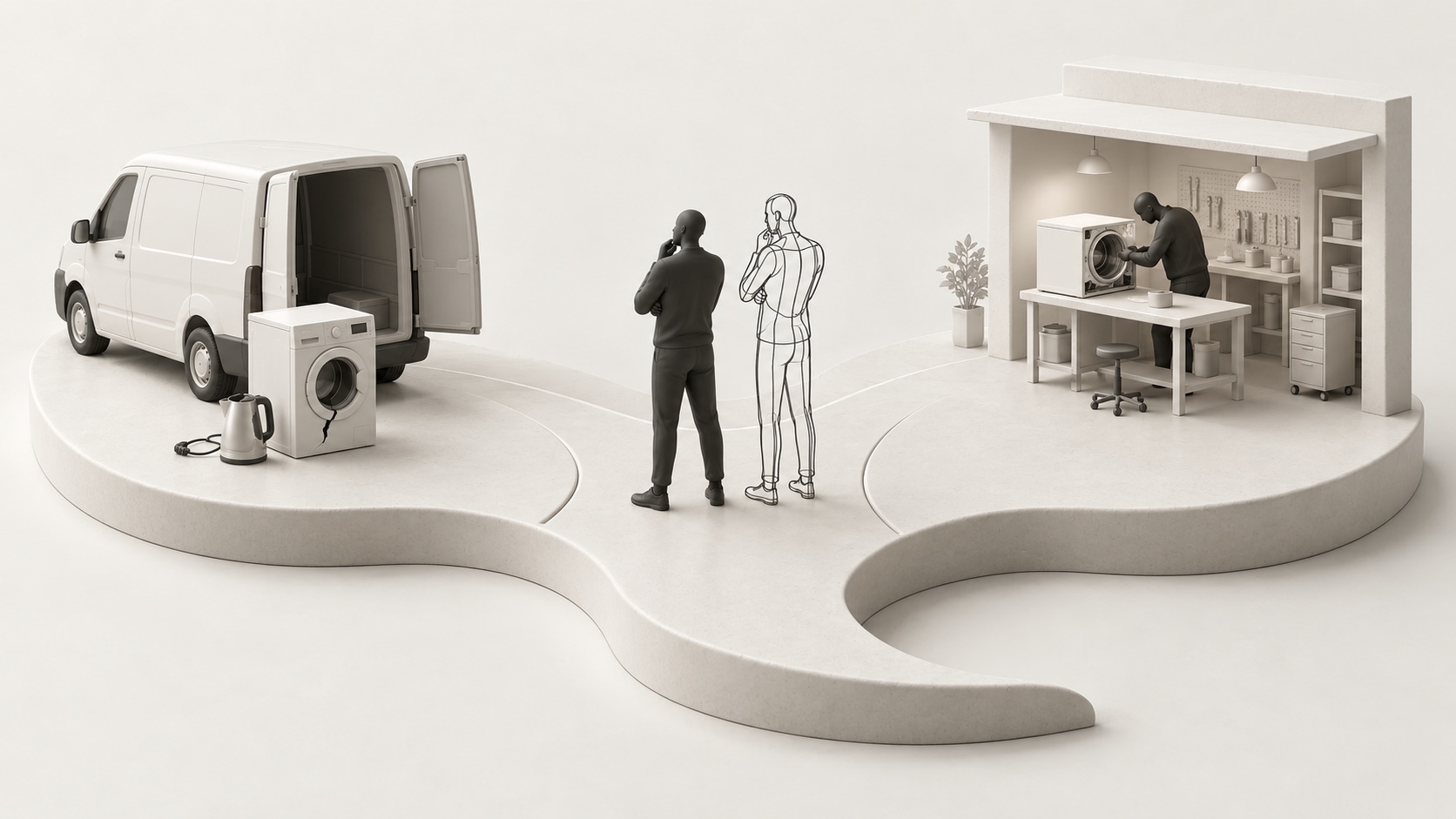
A competitor can advertise collection while a customer reports difficult transport: the customer may be outside the area, unaware of the service or unable to use its hours. Ask which explanation fits before rejecting either source. A large population and weak response to a specific offer can also coexist.
Compare definitions, dates, audience and behavior. The decision depends on usable service terms and actual bookings, so preserve those as the pilot questions rather than averaging unlike numbers.
Continue with a research plan or complete worked study. Discuss a managed comparison with Sapien to compare complete offers under suitable audience grounding and choose a proposition to take forward. Actual route cost and completed bookings need their own operational evidence.
Existing and new evidence can disagree because they describe different opportunities. A buyer may not know a listed collection service, may be outside its boundary or may be unable to use its hours. Those explanations produce a visibility, scope or scheduling test. The choice is not simply to believe official context or a vivid interview.