Can Shoppers With Low Vision Tell Your Product Variants Apart?
Give shoppers a specific variant to find and record what they actually pick. A shelf and mobile test shows which packaging cues break down.
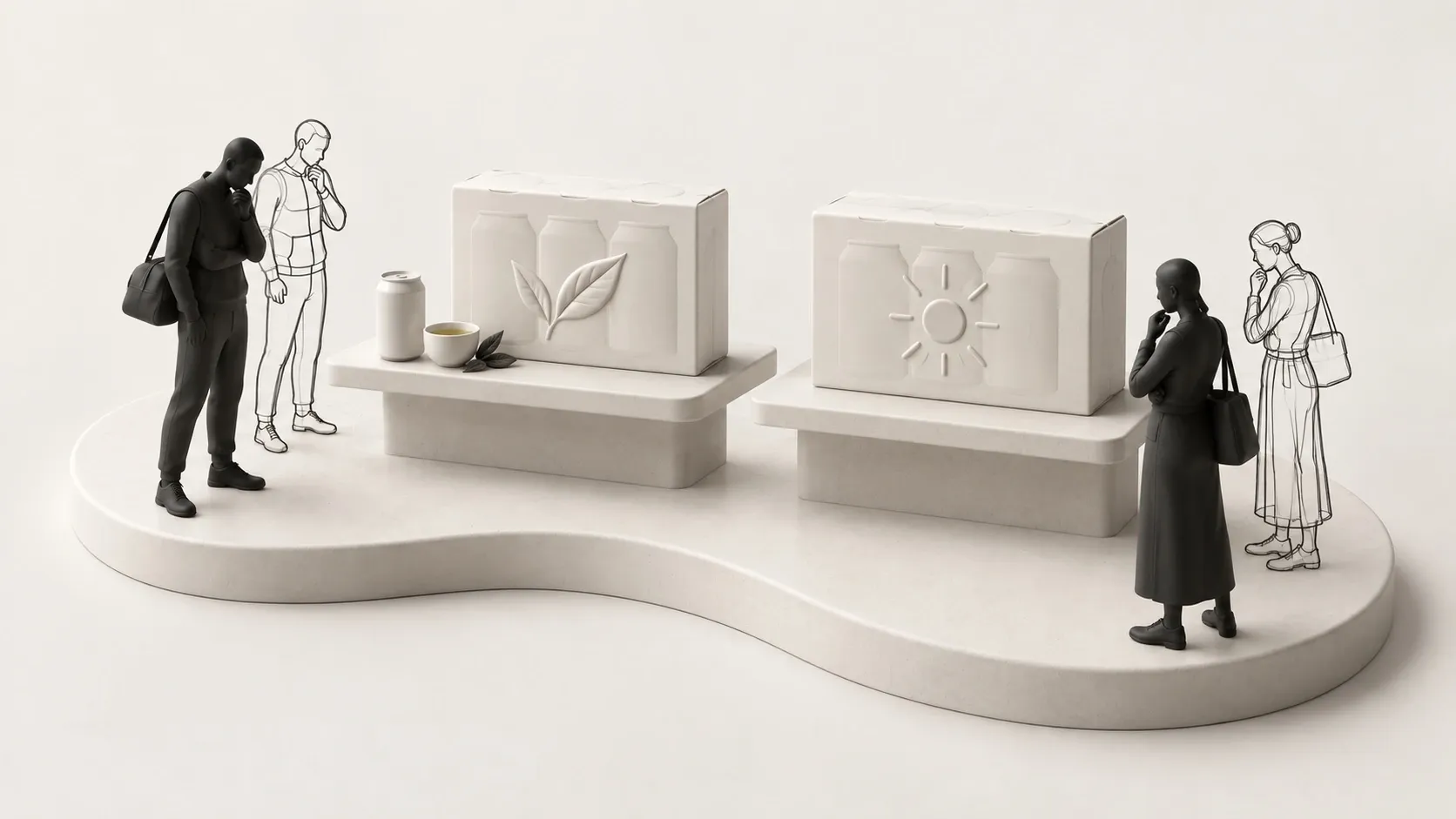
Give a shopper a variant to find and record what they actually choose. A buyer who intends to get the unsweetened carton and picks the regular one has shown you a design problem that a preference question can miss.
In a hypothetical oat-drink range, the cartons share a large brand mark and differ mainly in a blue band and a small word under it. The redesign gives each carton a larger variant label and a second visual cue in a consistent place. The study has one job. It checks whether the change makes it easier for shoppers with low vision to find the right carton in the places they shop.
Recruit for the task and let people use their usual aids
Recruit shoppers who have low vision, buy the category, and use the relevant store or online channel. Ask how they usually find the right product and what aids or settings they choose. Plan sessions with people who use different approaches, including zoom, magnification, screen readers, or help from another person where relevant. Ask participants what makes the session usable for them and collect only the information the study needs.
On a shelf, use realistic viewing distance, package size, lighting and adjacent products. On a phone, use the retailer's actual image crop, product title and purchasing path. If a shopper uses a screen reader, test the digital listing labels and controls in that mode. Digital channels should give people a way to identify a variant beyond color alone. W3C guidance on use of color
Record the first pick, then ask what happened
Show the existing or revised design first to different shoppers, or counterbalance order if you need both observations per person. Avoid telling participants which cue changed. Start with a practical request such as “Find the unsweetened oat drink you would add to your basket.” Ask the participant to commit to a choice before discussing what they saw.
Allow usual aids and log their use. Capture whether they selected the correct variant on their first attempt, corrected a wrong first choice, requested help, or abandoned the task. Record which variant was chosen in error. Record time only if the timing reflects a realistic shopping constraint.
Copy this wrong-pick scorecard
Field | Record for each trial |
|---|---|
Context | Shelf or mobile, design version, target variant, neighbors, device or lighting, and aids or settings used. |
First pick | Correct variant, named wrong variant, another brand, or no choice. Keep the number of valid task starts. |
Recovery | Self-correction, help requested, or abandoned. Record what the shopper did to recover. |
Cue | Word, position, shape, contrast, color, listing title, or other cue the participant reports using. |
Change to test | Describe the failure and one repair. Example: regular and unsweetened share an online title, so add the variant name before the size. |
Revise the cue that failed in the real encounter
If wrong picks happen on shelf when the word is hard to find, give the label a consistent position and more space on the physical pack. If wrong picks cluster on the phone, check the crop and the listing title before reopening the entire artwork. Test the revised encounter with fresh participants so familiarity with the earlier design does not do the work.
Agree beforehand how you will handle a wrong choice that carries a serious consequence. Keep individual failure patterns visible beside aggregate success. For the wider redesign decision, use Sapien's packaging design testing guide.