
Concept testing examples: three tests, three different next actions
Follow fictional concept cards and a linked published Sapien study. See how objections, audience and occasion change the decision to progress, revise or test.
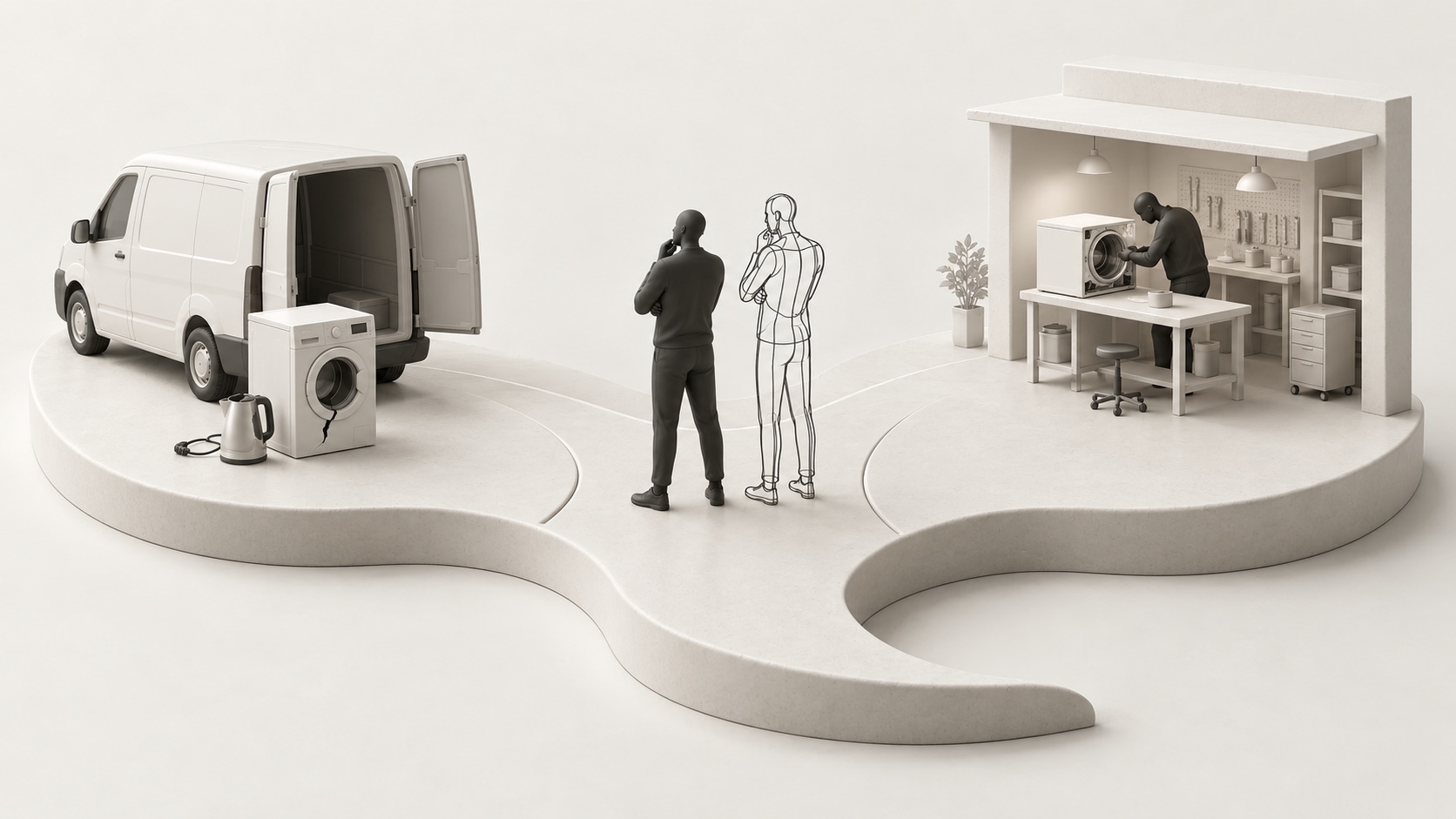
A useful concept test tells you which offer or audience to develop and what to change next. A test may identify a first paid-trial audience, reveal a fee misunderstanding or show that a message describes the wrong product. Keep those decisions distinct and use the follow-up evidence they require; a favorable concept score is rarely the whole development decision. The first case uses a published modeled Sapien study; the service, message, bottle and tea comparisons that follow are illustrative examples.
Published modeled case: choose a first trial audience
Protein habit changes the next test
Our published modeled protein study followed three unofficial formats with a 330 ml clear citrus drink, 20 g protein, 80 mg caffeine and a $3.99 price. The follow-up modeled 2,000 U.S. adults and was not commissioned by Red Bull.
Existing protein users had modeled first/regular purchase rates of 31.1%/5.2%, versus 21.5%/2.9% without a regular protein habit. First purchase meant full-price buying within eight weeks; regular buying meant at least four cans in weeks 5–8 after that purchase, across two shopping trips. Separate subgroup bases and uncertainty intervals were not supplied.
The next action is a paid product test starting with existing protein buyers and relevant caffeine routines. Taste, observed repeat and displaced purchases remain to measure. The lesson is to define the first audience and behavior, rather than treat broad concept interest as a launch forecast.
Service case: revise the fee before committing routes
MendRoute is the example appliance-collection service for households in its listed service area. It collects one eligible small appliance in a listed neighborhood, takes it to a repair partner and returns it after assessment and approved repair. Collection and return cost $12. Repair is quoted separately and may be declined; the concept guarantees neither repair nor completion date.
The $12 service fee needs an explicit boundary
Answer to investigate
“Twelve dollars fixes it and brings it back?”
Candidate card revision
$12 covers collection and return. Repair is assessed and quoted separately. You may decline that repair quote. Check the listed eligible appliances and service area before booking.
No repair outcome or completion date is guaranteed in this concept.
The answer treats the collection fee as a repair fee. Retest the revised explanation before committing routes; its effect on booking is not yet measured.
The audience is service-area households with a broken eligible appliance in the past three months. Ask what the $12 covers, what would happen next, what they would do instead and what information is missing. Those questions distinguish price misunderstanding from a lack of collection need.
The answer “Twelve dollars fixes it and brings it back?” imagines an offer the business has not made. Another answer needs appliance eligibility; a third can drop the item off themselves and sees little value in collection. These are three different reasons to hesitate, not one generic lack of appeal.
The candidate revision in the figure places collection/return beside separately quoted repair, keeps the right to decline, and makes eligibility and area visible. Retest comprehension before appealingness. If understanding clears but need stays weak, narrow the target instead of rewriting the same fee explanation indefinitely.
Progression also needs operational evidence. Map feasible collection coverage and repair-partner responsibilities before committing routes. Opinion research can refine the offer and audience; it cannot prove that the service can fulfill its promise. Your next decision is to revise the card and target first.
Message case: keep the product fixed
Weektable must sound like a planning app
Weektable is the example meal planner for household shoppers. You need its headline to communicate planning and an ingredient list rather than prepared-food delivery.
Concept | Description and mechanism |
|---|---|
A | Description: “Dinner, without the daily debate.” Intended mechanism: A weekly meal plan |
B | Description: “Pick five dinners. Get one organized grocery list.” Intended mechanism: Planning plus an ingredient list |
Some answers in the example to “Dinner, without the daily debate” imagine prepared meals delivered to the door. The more explicit alternative says to choose dinners and receive an organized grocery list. No counts or statistically established winner are supplied.
The problem is not whether emotional benefits belong in marketing. It is whether the benefit remains connected to the actual mechanism. Interest in meal delivery does not validate a planning app. Keep the product and price fixed while improving the explanation.
A candidate message is “Plan five dinners, get one grocery list, and spend less time deciding what to cook.” Retest unaided understanding before a relative headline choice. Ask what people expect to receive and do themselves. If they still imagine prepared food, revisit the presentation rather than declare the attractive phrase successful.
This is a messaging decision. A full concept test would also examine the complete planner offer, use occasion, price and alternatives. Choose the study scope around what is actually unresolved.
Two comparisons show why the base matters
Bottle performance and tea buying occasion
Desk Brew and Travel Brew are 500 ml reusable tea bottles at $25 online. Desk offers a wide opening for easy cleaning; Travel a leak-resistant commuting lid. In the example’s 100-response cells, positive relevance is 48 versus 62 and positive intent 39 versus 44: gaps of 14 and 5 points. Investigate the travel direction and physically test the lid before making a leakage claim.
The tea occasion cards describe the same lightly sweet sparkling tea, six 250 ml cans at $15 in grocery. Among 100 afternoon drinkers in the example, the afternoon direction wins 65–35. Among 100 dinner-beverage seekers, dinner wins 60–40. Equal blending gives afternoon (65+40)/200=52.5%, concealing the group fit.
The original reasons name a tea-break alternative for one group and a meal occasion without an afternoon break for the other. Choose a reachable audience before selecting its occasion message. These bottle and tea comparisons use separate audiences from the published protein study.
A relevance gap, a blended preference and a modeled repeat rate answer different questions. Use each to choose its own next test, rather than pool them into a generic success score.
Write a follow-up that resolves the named gap
MendRoute needs the revised fee and eligibility card with the same comprehension question. Weektable needs a clearer mechanism with the same product. The protein case needs a paid product trial with repeat and substitutions defined. Each next study has an input and a question that follows from the previous evidence.
State the branch before collection. Clear understanding plus weak need calls for audience work. Continued misunderstanding calls for another presentation change. Favorable opinion plus unknown performance calls for a product test. Those branches make the examples useful across categories without transferring their prices or rates.
Keep the record from stimulus to action
Retain the card, audience, exposure and response source beside the interpretation. Name the change and the remaining evidence. This lets a reviewer assess whether the recommended next step addresses what people actually saw and said.
A modeled study, a collected human opinion and an observed purchase each retain their source. The value of an example is the completed decision and reasoning chain, rather than a client endorsement or a universal benchmark.
Further reading
Bring the decision, audience and evidence needed to a scoped Sapien study discussion.


