Toluna competitors: Who will finish your next research study?
Cint, Dynata, Attest and Sapien take on different parts of a research project. A worked pack-testing brief shows how to compare the work each proposal includes.

Toluna competitors include Cint, Dynata, Attest and Sapien, with different routes to respondent access, study operations and a finished recommendation. Choose the part of the research job you need to replace before comparing the proposals.
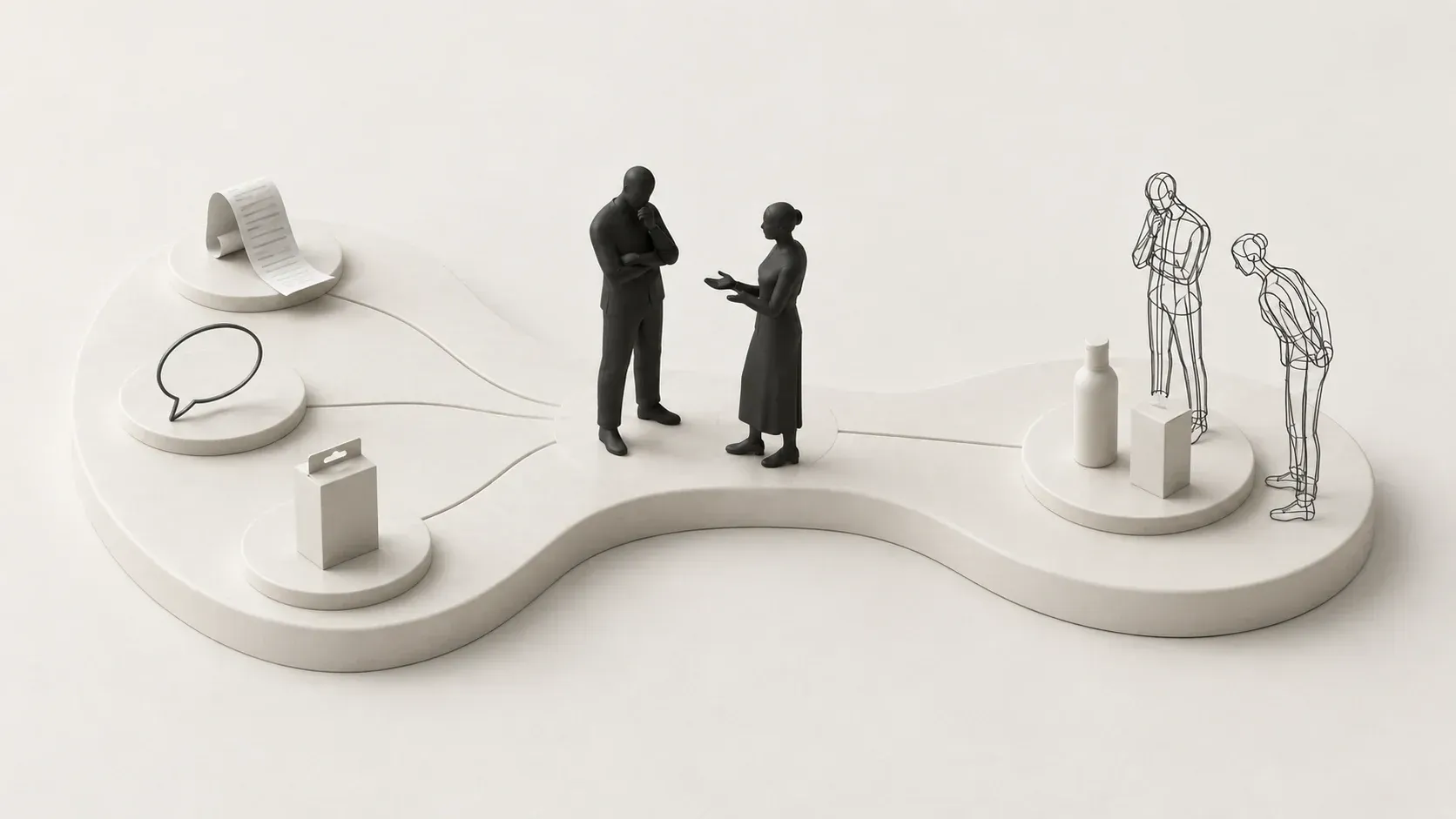
Consider an agency helping a drinks brand choose among three pack designs for the same four-pack of sparkling tea. The audience is US adults who bought canned tea in the past month. The client needs one design to advance to a shopper test before approving print. This is an illustrative buying brief, with no research results attached.
The agency has a strategist who can write questions, but nobody available to program the study, monitor responses and prepare the client readout. Access to eligible buyers solves one problem. The buying decision also needs an owner for the work between the first response and the recommendation.
The Toluna arrangement you actually have
Toluna Start combines quantitative and qualitative research tools, a global consumer panel and service options extending from self-service to end-to-end support. Its current product page also describes synthetic personas alongside panel respondents. Identify the particular product and response source in your agreement before calling the proposed replacement equivalent.
For the tea brief, the agency should establish who currently checks eligibility, prepares the pack images, programs exposure, handles unusable answers and explains the findings. A replacement panel agreement may cover fewer of those tasks than a serviced study. Equally, a full replacement may be unnecessary if the only gap is a supplier for programming.
Keep the existing study specification when you request quotes. Our concept-testing brief helps turn the decision, audience and required output into a common assignment. Each supplier can recommend improvements, but should identify where its proposal changes the question.
Cint for sourcing people into a defined study
Cint Exchange connects surveys with respondents through a network of sample suppliers. It offers audience targeting, feasibility and fielding workflows, with self-service, API and managed routes.
This is a relevant option when the agency already has a workable questionnaire and a place to run it, and needs eligible people to answer. Request feasibility for recent canned-tea buyers, including the groups the client needs to examine separately. General reach doesn't establish that a particular purchase behavior can be recruited at the required base.
Ask which operational and reporting tasks are included in the quote. A managed fielding arrangement and a strategist's client recommendation are different deliverables. If the agency still owns programming, open-answer interpretation and the final meeting, those hours remain part of this route's cost and schedule.
Dynata for fieldwork with operational support
Dynata's managed services include sample management, survey programming, data processing and reporting or visualization. Its programming scope can include questionnaire review, fielding and soft-launch monitoring; other services, such as freeform response coding, appear as add-ons.
For the agency, that makes a proposal covering the middle of the workflow worth examining. Give Dynata the actual screener and pack files, then request named responsibility for launch checks, quota monitoring, rejected responses and the final dataset. Confirm separately whether the engagement includes interpreting the artwork decision and presenting it to the client.
A clean dashboard is useful, but the agency's unresolved task is choosing which design to develop and why. Specify that readout if you want to buy it. Otherwise, leave enough strategist time to connect the response patterns to a concrete artwork recommendation.
Attest for a consumer-survey workflow
Attest's platform connects quantitative research through Measure with AI-moderated interviews through Explore, using real consumers. Its getting-started documentation describes analysis by groups, shareable Boards, exports and support from a Customer Research Team.
Evaluate this route when the agency wants a continuing place to run consumer research, rather than respondent supply for an existing survey system. Demonstrate the three tea designs and the report the client expects. Establish which design and interpretation work the team will do itself and which assistance is included.
The interviews could be relevant if shoppers misunderstand a pack cue and the team needs to probe their interpretation. Confirm how interviewees would be selected and how that follow-up relates to the survey. AI moderation describes how a conversation is conducted; the respondents here are people.
Sapien for a managed modeled comparison
At Sapien, we build simulated audiences, run comparisons and help interpret findings in an interactive report. Our managed research solutions cover product, pack, message and price decisions, with responsibilities agreed around the particular study.
For the tea project, a modeled comparison could help the agency explore how buyers interpret each design and identify revisions before the shopper test. Supply the complete artwork, pack quantity, price, channel and relevant past evidence. The proposed audience needs to reflect the buying situation as well as demographic labels.
This route changes the source of the answers. Keep modeled interpretations identified in the client readout, with a clear account of what supports the audience. Use actual shoppers and the intended shelf or listing encounter for the later recognition and choice checks. A simulation doesn't record someone finding the new pack in a store.
A worksheet for comparing the tea proposals
Send this same worksheet with the pack files. Have each supplier identify its deliverable, owner, fee and exclusions for every row.
Brief requirement | Tea study specification and answer required |
|---|---|
Decision | Recommend one pack for the shopper test, identify revisions, or retain more than one if the evidence cannot separate them. |
Complete alternatives | Three artwork versions for the same tea, quantity, price and channel; consistent image size and finish. |
Eligible buyers | US adults who bought canned tea in the past month; show how eligibility will be checked. |
Response source | Identify human recruitment or simulation for every study component. |
Exposure | Explain what each respondent sees before answering and how order or assignment is handled. |
Audience feasibility | Quote the usable base overall and for each required buyer group; state any unsupported group. |
Study operations | Name who programs, previews, checks the launch, monitors fieldwork or runs the model, and resolves failures. |
Analysis | Return rows by pack, buyer group, question and answer, with response count, valid base, percentage, response source and the artwork issue. |
Recommendation | Identify the design to progress, the artwork to change and the evidence behind that call. |
Handoff | Include the agreed response access, files, readout, revision round and access period. |
Full scope | Separate respondent or modeling costs, platform access, services and work the agency must still supply. |
The exposure row matters. A direct comparison asks which of the displayed designs someone prefers. Independent exposure asks how each works before the alternatives teach respondents what to notice. Agree the design for the client's question; don't accept a different question just because it is easier to launch.
The first delivery should resolve the ownership gap
Before moving the next live brief, ask the shortlisted supplier to walk through one pack study from materials to readout. Include an ineligible respondent, a missing answer and an unclear interpretation in that walkthrough. Establish how each would appear in the delivered records and who would resolve it.
For this agency, the useful comparison ends with a staffed path to the client meeting. If a proposal supplies excellent audience access but leaves the recommendation unowned, add that work or choose a broader scope. If the current Toluna arrangement already completes the job, a narrower addition may be enough. The right purchase leaves the strategist with a defensible pack recommendation and the client with a defined shopper test to run next.