
Sapien vs PickFu: Human Feedback or Modeled Choices?
An image-reading problem and a pack-price decision need different evidence. Compare the response source, workflow and cost before choosing a tool.
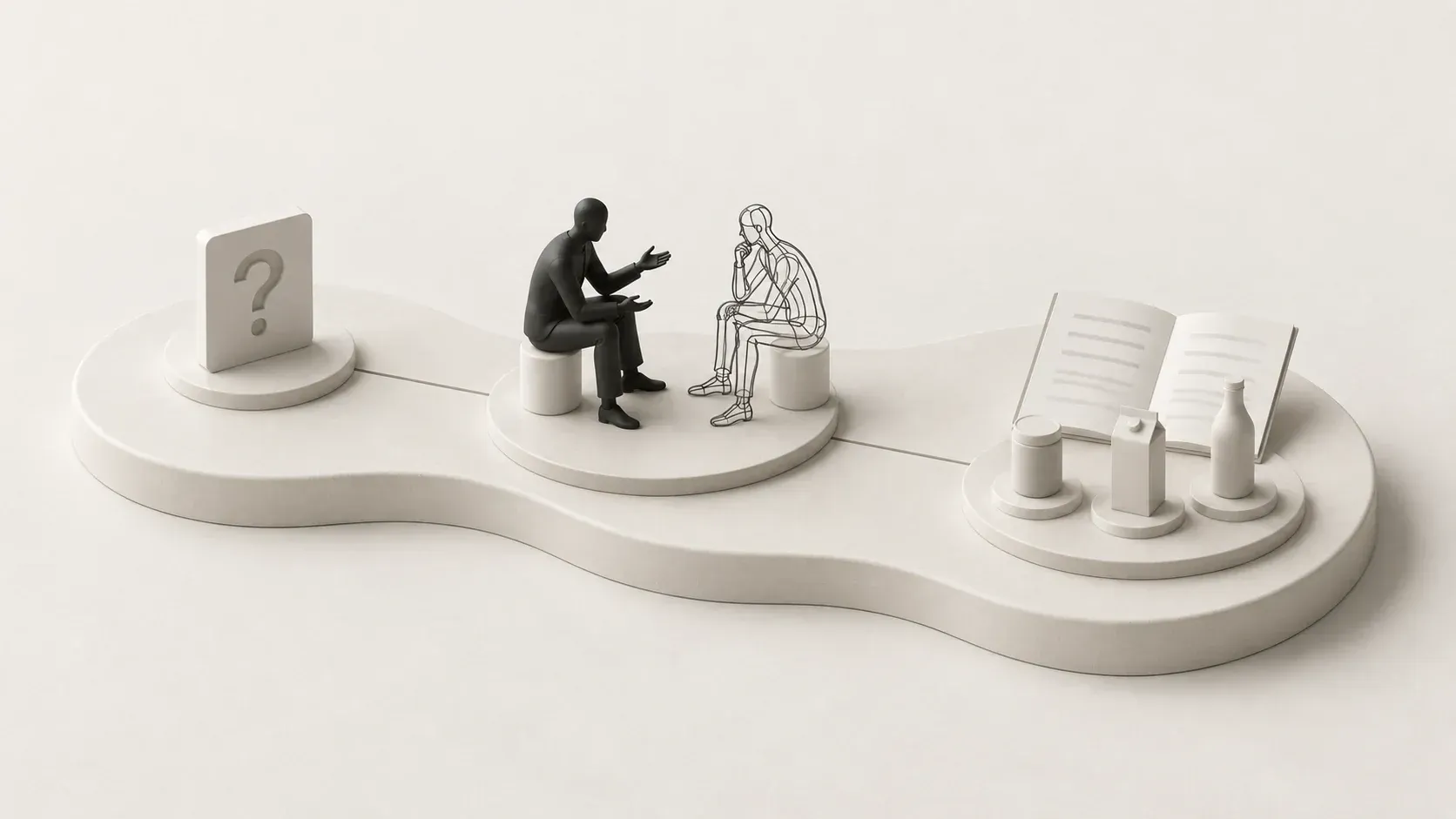
PickFu is the more direct route when you want recruited people to react to a product image, package or piece of copy. Sapien is worth evaluating when the assignment is to explore buyer choices with a modeled audience and research support. The first question is whose responses your decision needs.
A shopper explaining why a label is hard to read supplies a human response to that label. A synthetic audience comparing complete offers supplies modeled evidence. Both can inform a packaging decision, but they answer different parts of it and need different checks.
For a team shortlisting Sapien and PickFu, that distinction matters more than whether both products use AI somewhere in the workflow.
PickFu's AI tools analyze human feedback
PickFu's product guide describes a self-serve survey workflow with quantitative responses and written explanations from real people. Its AI features summarize and analyze that feedback. They don't make the panel synthetic. Audience targeting, question type and survey complexity shape the study you can buy.
Sapien's workflow uses synthetic populations for surveys, interviews and comparisons, with our team handling the audience and study. The proposal should connect that method to your particular product decision.
Dimension | Comparison |
|---|---|
Research method | PickFu: Polls and surveys with written feedback Sapien: Surveys, interviews and comparisons |
Response source | PickFu: Recruited human panel; own-audience option Sapien: Modeled audience responses |
Operating model | PickFu: Your team builds and launches the survey Sapien: Team-run study scoped to the decision |
Speed | PickFu: Vendor says most tests finish the same day Sapien: Agree timing for the study and revisions |
Public price | PickFu: Surveys start at $1 per response Sapien: Ask for scoped project pricing |
Fit to investigate | PickFu: Direct feedback on a defined creative or product question Sapien: Comparing offers and exploring buyer differences |
PickFu's pricing page, checked October 24, 2026, says the final survey price depends on complexity, targeting and sample size. It offers pay as you go, PickFu+ subscriptions and custom Enterprise pricing. The starting response price isn't a quote for every audience or question.
A product-image test and an offer test aren't interchangeable
Imagine an online seller preparing a main image for a dishwasher-cleaning tablet. This is an illustrative decision, not a completed test. Two images show the same product, pack size and price; one emphasizes the tablet and the other the instructions. The seller wants to learn whether shoppers understand what the product does.
A human feedback study is a sensible way to investigate that immediate reading task. Show the images under comparable conditions, ask what the product is and inspect the explanations. A preference vote alone could hide that respondents liked an attractive image while misunderstanding the product.
Now change the business question. The seller is considering a smaller pack at a lower price versus a larger pack with a lower cost per use. The team needs to understand which households would choose each, what they would buy instead and why someone might buy neither. That calls for complete offers and an explicit choice task. An image poll doesn't become a demand study just because the question says “Which would you buy?”
Ask both suppliers how they'd handle the second decision. With PickFu, examine whether available targeting and survey design fit the buyers and comparison. With Sapien, ask which evidence supports the modeled audience and how the study would distinguish pack preference from price response. Choose the method after the task is clear.
A small pilot should expose the reason for the decision
The pilot report should preserve the exact product materials, audience definition, questions and response source. Separate comments about legibility from comments about value. Those suggest different changes: larger instructions may improve comprehension, while a different pack may change the economics.
Human feedback still has boundaries. Recruited panelists responding to a survey haven't necessarily bought the product or used it in a kitchen. A modeled respondent hasn't done either. Neither source can verify cleaning performance or actual repeat purchasing from a concept card.
For synthetic work, look for evidence that matches the intended population and task, plus sensitivity to reasonable changes in the brief. For human work, inspect who qualified, how many answered each question and whether the conditions resemble the choice you intend to make. Our packaging design testing guide develops the distinction between understanding a pack and choosing the offer it contains.
The next test should close the remaining gap
PickFu can put a precise question in front of people without an annual subscription. That is useful when direct human reactions are the missing evidence. Sapien belongs in the shortlist when a modeled offer comparison would help you decide what to change or investigate next, and the proposed evidence fits that purpose.
If your packaging debate has become a pack-size and price decision, discuss that comparison with Sapien. We can scope the offers and buyer groups together, with a clear account of what a modeled result would support before you spend on the next production run.