
Concept Testing vs Product Testing: Which Study Do You Need?
A complete desk-fan example shows when to test the offer, when buyers need a prototype and how to carry findings into the next product decision.
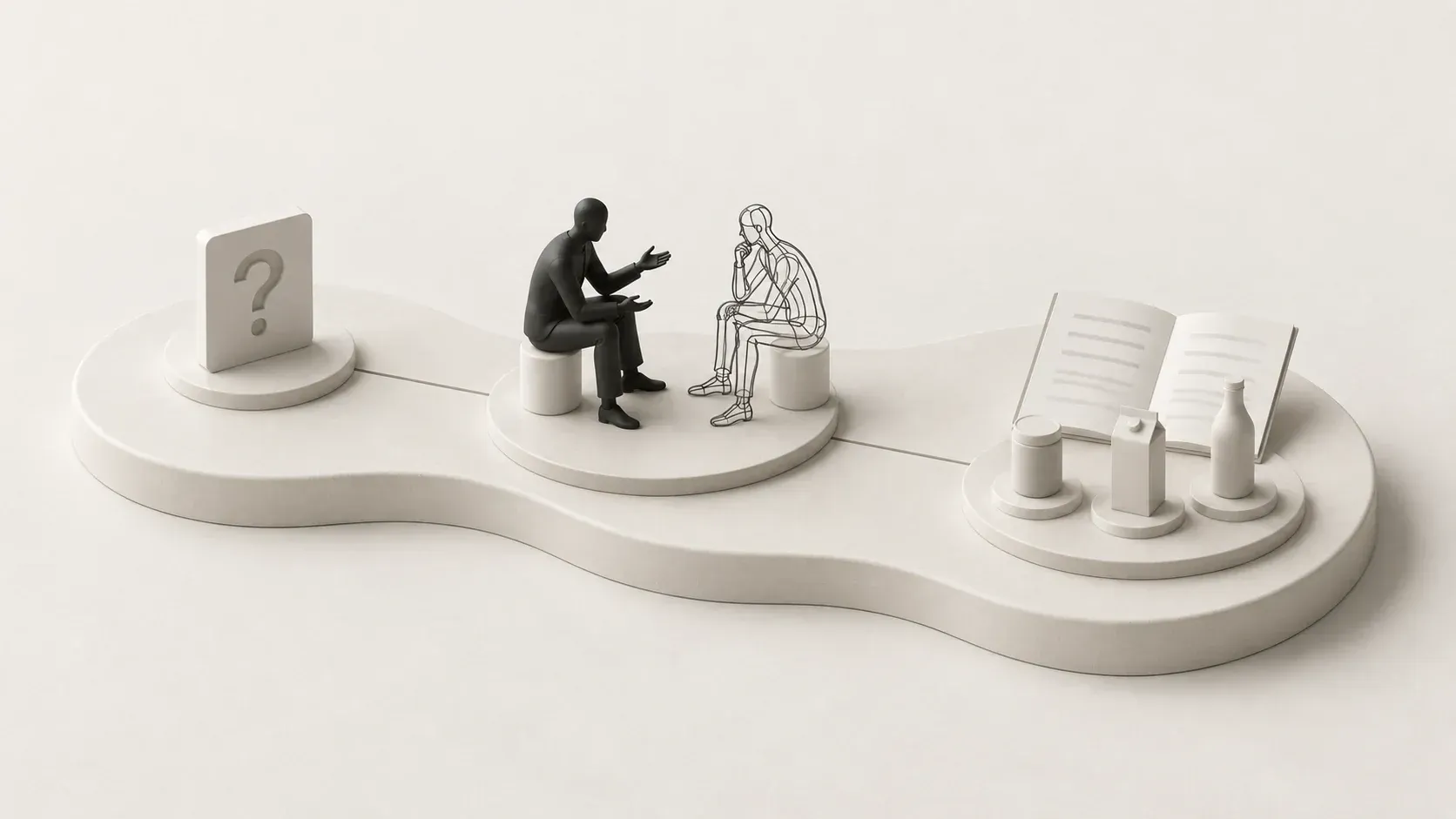
Concept testing examines an offer people can consider; product testing examines something they can actually use. Choose between them by asking what could block the next investment. If buyers misunderstand the offer, improve and test the explanation. If the open question is whether the product works in their hands, they need access to the product.
Consider FoldFlat, a hypothetical $34 rechargeable desk fan for people who work in shared spaces. It folds into a bag, has a removable stand and is intended to run without a power cable. The team wants to approve tooling. It hasn't yet confirmed how buyers interpret the offer or how a prototype behaves on a crowded desk. The product, price and proposed checks here are illustrative; no study has been run.
A favorable concept score could justify making a prototype. It wouldn't settle whether that prototype stays upright, is comfortable to carry or lasts through the intended use. Buying another appeal survey would leave those questions open.
The unfinished decision determines the study
The material you show changes what someone can tell you. A drawing can communicate the fan's size and folding mechanism. It doesn't let a person attach the stand or discover that the controls are awkward to reach. A working prototype exposes those issues, but it may be too expensive to make for every early idea.
What the team needs to decide | Evidence to seek next |
|---|---|
Do buyers understand what the $34 offer includes? | A complete concept card and an unaided explanation from intended buyers |
Which complete fan offer is worth prototyping? | A matched concept comparison, with the current alternative and a way to decline |
Can someone unfold, position and operate the fan? | Tasks with a usable prototype and a record of assistance or failure |
Does it perform acceptably in the intended setting? | Product use under specified conditions, with relevant performance checks |
Will people pay and keep using it? | An appropriate paid trial and follow-up, alongside actual costs |
The rows can form a development sequence, but they aren't five mandatory purchases. A team with a clear, understood offer and a working prototype can start with the unresolved use question. A team with three unfinished ideas may need a smaller concept screen first. Our concept-testing methods guide explains the exposure choices for that earlier comparison.
A concept card makes a promise the prototype must keep
For FoldFlat, show the intended dimensions, weight, included stand and charging equipment, controls, price and proposed selling channel. Explain what “rechargeable” means for use. If runtime isn't confirmed, don't write a finished runtime promise simply to make the card more attractive. Either test reactions to clearly proposed specifications or resolve the engineering uncertainty first.
Ask buyers what they would receive and how they expect to use it before asking about appeal. A buyer who thinks the fan clips to a monitor is evaluating a different arrangement from the removable desk stand. A buyer who assumes a wall charger is included may see different value at $34.
The response should change the next task. Confusion about the stand calls for a clearer card. A well-understood objection to carrying another device could change the product direction. Enthusiasm about working without a cable makes battery performance an important condition to verify, rather than a reason to skip it.
Keep the card version with the prototype brief. Otherwise the development team may test a device that no longer matches the offer buyers considered. Our product concept statement guide shows how to put a complete offer on the page before collecting reactions.
Product testing needs an encounter, not another description
Give testers something that can support the task you want to observe. A nonworking appearance model can reveal handling or size concerns. It cannot demonstrate airflow or battery duration. A prototype plugged into an external supply cannot establish the promised cable-free experience.
Ask the product team which properties of the prototype match the proposed production version. Record material differences beside the findings. A heavier enclosure, unfinished hinge or substitute battery could change the interpretation. Some tasks may be useful now, while others should wait for a more representative build.
Qualtrics' product-testing documentation separates optional pre-use reactions, activity logs during use and an optional post-test readout. That distinction is useful even without buying its program: expected experience, recorded use and overall recollection are different evidence. Preserve the time and task behind each answer.
For FoldFlat, a useful session might ask someone to unpack the fan, set it up on their usual desk, choose a setting, move it and pack it away. Record what happens, where help is needed and what the person expected. Don't turn the task into a demonstration by explaining every control before the first attempt.
The setting changes what the product test can show
A controlled session can make it easier to compare the same setup across prototypes. It may miss a crowded desk, a noisy room or a bag packed with other items. An in-home or workplace study introduces those conditions, but the team must know which prototype, setting and usage episode produced each observation.
NIQ BASES describes both central-location and in-home approaches in its product-testing offer. The choice for this brief follows the uncertainty: consistent setup helps compare operation; use in the intended environment helps investigate how the device fits a routine. A supplier's method label doesn't settle the details.
Separate consumer experience from technical verification. Someone saying the fan “lasted all afternoon” doesn't provide a controlled battery-duration measurement. Agree which performance tests engineering owns and which usage questions the research team owns. Neither an appeal rating nor a few successful sessions replaces the product's required technical and safety work.
A handoff brief keeps the two studies connected
The most useful output of concept research is often a specific condition for the next prototype. For FoldFlat, the handoff could look like this:
Handoff field | Proposed requirement |
|---|---|
Offer carried forward | The $34 folding fan, with the exact stand and charging contents shown on the saved card |
People and setting | Intended shared-space users, at desks that reflect the planned use |
Open question | Whether cable-free convenience survives setup, positioning, operation and packing away |
Product record | Prototype version and the differences from the planned production build |
Returned evidence | Task completion, assistance, problems, expectations and usage context, with each record linked to its task |
Next commitment | Revise the product or progress to a bounded paid trial after the agreed product and cost checks |
Size and recruit the real study around its purpose and important user differences. Don't reuse a concept-survey sample merely because those people are convenient: prior exposure may have taught them how the product is supposed to work. Decide whether you need first use by fresh people or follow-up on the same people, and keep those groups identifiable.
The report should explain a failure before declaring the concept wrong. If buyers understand and value portability but the stand slips during use, the immediate problem is the implementation. If the product works and the intended buyers still prefer their existing desk fan, a better instruction card may not repair the commercial offer.
Progress depends on both the promise and the experience
Sapien can help compare complete concepts with simulated audiences and investigate how buyers interpret the proposed trade-offs. For FoldFlat, that work could clarify which portability benefit deserves a prototype and what objections the team should investigate. Our worked concept-test report shows how a finding becomes a bounded development call.
The physical experience still needs the appropriate product evidence. A promising concept whose prototype fails should return to development. A functioning product with an unclear offer needs a better explanation. A product that works and is understood can move toward an appropriately scoped commercial test, where actual buying and costs help settle the larger investment.
If you're choosing between another concept survey and a prototype study, discuss the unresolved product decision with Sapien. The useful starting point is the promise you need buyers to understand and the experience you still need to verify.