Apparel research to choose what reaches the sample room
Compare garment concepts, audiences, and complete offers before sample development, with clear questions for physical fit and wear checks.
The drawing that wins a style discussion isn't yet a garment your brand should order. Your first useful decision may be smaller: which direction deserves a physical sample, for which wearing situation, and what must that sample prove?
We help apparel teams make that choice with a managed study of garment concepts and complete offers. Sapien builds a data-grounded simulated audience, compares the candidates, and helps interpret the preferences and objections. You get a development direction your designers and merchandisers can examine, with the physical questions still attached. The same approach can compare prices or messages for an existing range when the garments, audience, and commercial terms are defined.
Compare the garment your buyer would actually consider
For a proposed outerwear study, a brand might compare two silhouettes for cycling and public-transit commutes. The relevant audience includes the routine, climate, current garment, and buying situation. A broad interest in fashion would leave the product's job too vague.
Your team supplies comparable front, back, and side views, intended material, features, colors, size description, and complete price. We agree what changes between candidates. If silhouette, fabric, price, and image quality all differ, the result concerns those whole offers. A controlled silhouette comparison needs the other terms matched.
We can explore first impressions and intended use before a later comparison. That keeps what a concept communicates on its own visible when the team also wants a relative choice. The same simulated audience can answer follow-up questions about an important doubt or difference.
The output belongs beside the sample brief
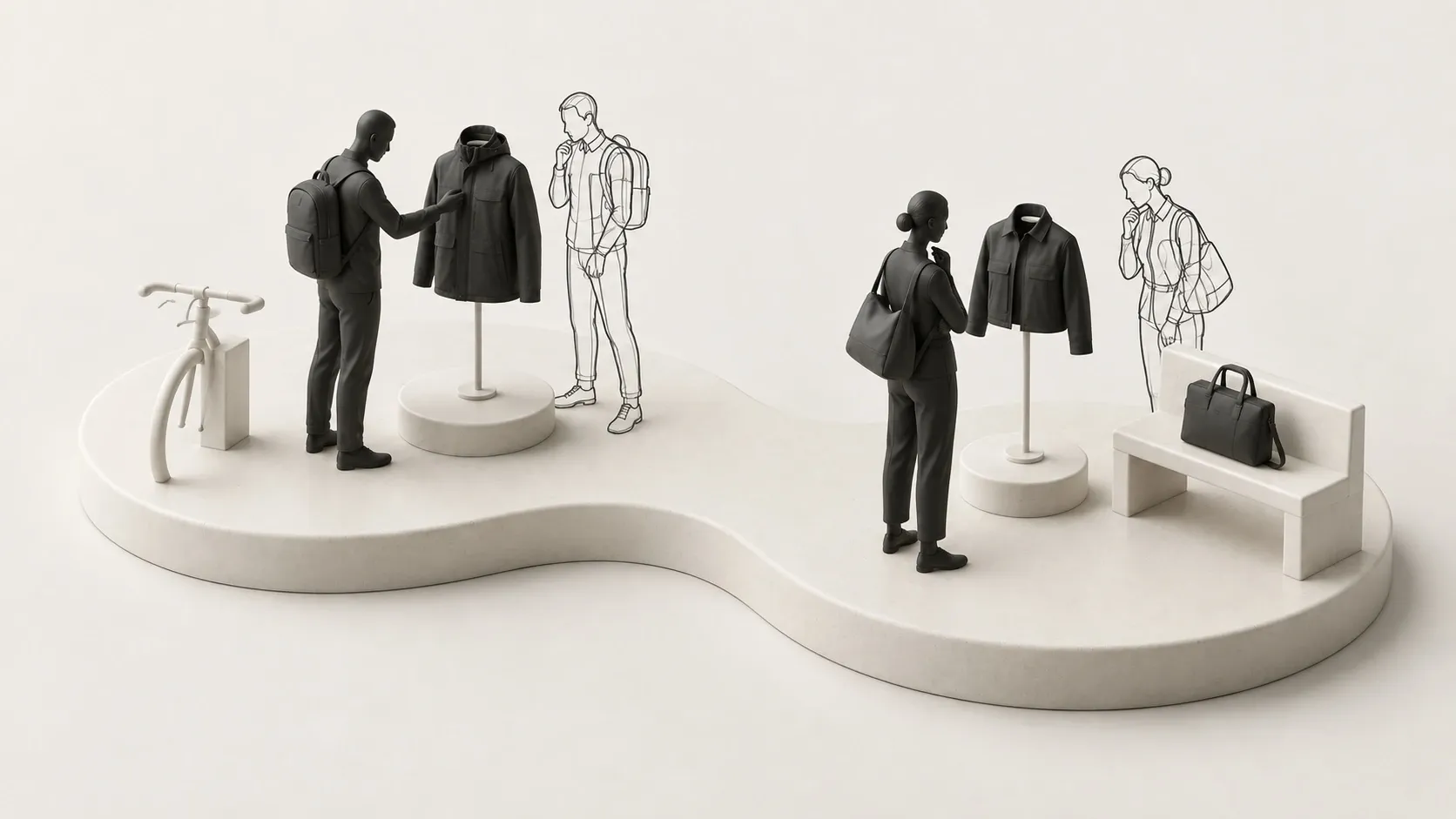
Our clothing-brand research guide uses an illustrative commuter jacket to connect concept preference with the next physical task. A sleeve concern at the handlebars is different from a cropped hem under a shoulder bag. Neither is resolved by liking a drawing.
We organize the recommendation as a sample-development handoff. It identifies the garment version, intended wearer, use situation, and direction to develop. The feature, image, or description requiring a change stays beside the supporting simulated responses, including reasons to keep the current alternative or choose neither.
Design also receives the physical questions the concept raises: sleeve movement, hem position, fabric expectations, or another task specific to your garment. Those questions become requirements for the sample brief. The report makes the concept choice and the next physical task visible together.
An overall close result may still support a clear first sample for your intended launch audience. If the audience you can reach values a different use situation, the recommendation should reflect it. The report is there to help choose that commitment, not create an artificial winner across everyone.
Concept interest and an opening buy are different decisions
Physical samples and appropriate human wear checks establish fit, comfort, fabric feel, construction, and performance in use. The concept study can tell your team which expectations to investigate. It can't supply those physical experiences.
Merchandising also needs actual commercial terms, orders, return evidence, and size-specific information before deciding quantities. We won't turn a stated preference into a size curve or multiply concept interest by a guessed sales conversion factor. Keep the supplier's minimums, costs, and replenishment terms in the inventory decision.
The value of the first study is a better-directed sample and a clearer conversation between design, brand, and merchandising. You can retain a second concept for a different audience without funding both merely because the team couldn't choose.
If your next meeting needs a decision on a garment direction, show us the candidate cards and the occasion the garment must serve. We'll discuss the audience support, comparison, and returned evidence that would make the sample brief useful.