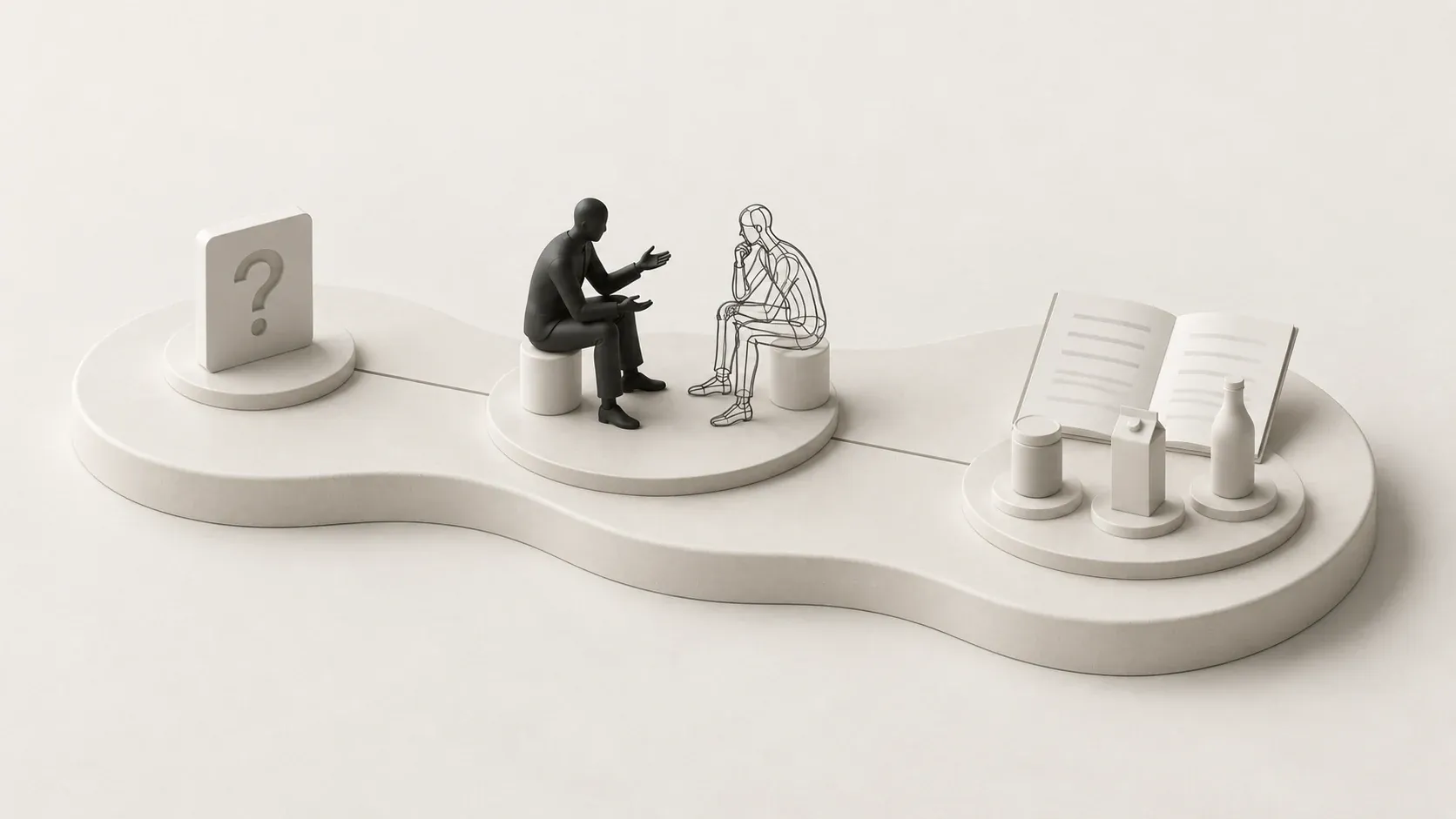
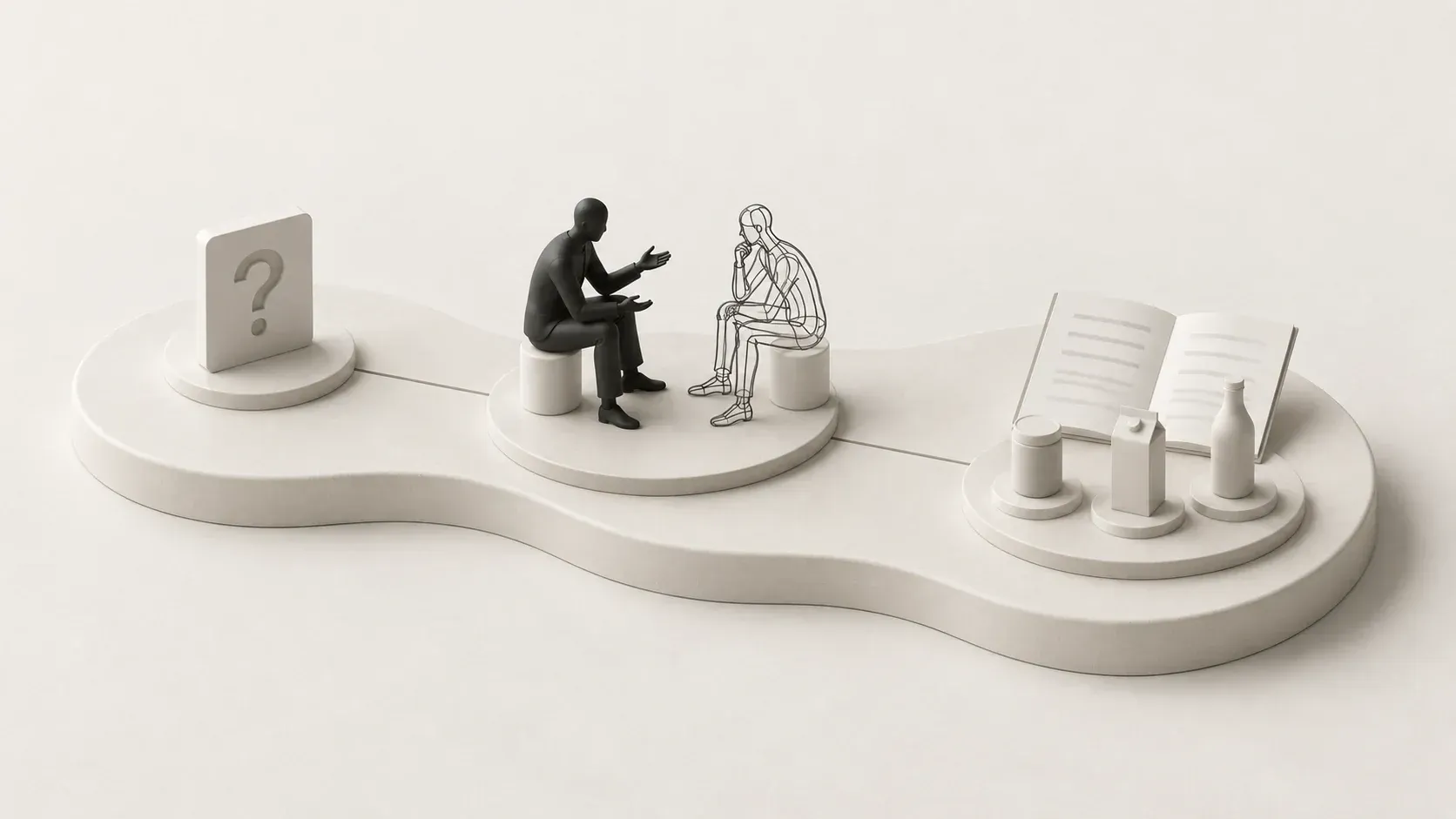
Branded vs Unbranded Concept Testing: Which to Use
Choose when to show the brand in a concept test, design a fair masked comparison and read familiarity separately from product understanding.

Branded concept testing shows the intended brand with an idea; unbranded testing removes selected brand cues to examine the offer under different information. Choose the exposure around the decision: whether an idea has appeal without the brand, whether buyers accept it from that brand, or how the complete launch offer is understood.
Those are different questions. A familiar name can supply expectations that the description never states. Removing the name also removes information buyers may have when they encounter the product, so an unbranded score shouldn't automatically become the launch forecast.
Imagine a coffee roaster considering a ready-to-drink cold brew can. It wants to know whether its reputation helps the new format and whether category buyers who don't use its beans find the offer relevant. This is an illustrative case, with no measured preference or sales results.
The brand is part of the offer buyers interpret
For the roaster, a branded card answers a practical question: what do buyers expect from this cold brew when they know who's making it? Existing customers may bring expectations about flavor, quality or price. Category buyers unfamiliar with the roaster have less of that context.
An unbranded card can help investigate what the stated product proposition communicates on its own. It doesn't remove every association. A distinctive can, color combination or product name may reveal the source even after the logo disappears. A generic-looking card can also create its own expectations.
Relevant Insights includes brand presence among the standards to decide for a concept test, alongside price, copy and visual presentation. Treat the choice as part of the study specification, rather than an artwork edit made immediately before launch.
If the roaster has already decided to launch under its existing name, the final evaluation needs that name and the complete offer. An earlier unbranded comparison can diagnose the proposition; the branded version checks the information buyers will actually receive.
A comparison that can separate brand information
Suppose the planned offer is one 250 ml cold brew can for US$3.49, sold chilled in grocery stores. The example's recipe description, size, price and channel stay the same in both conditions.
Condition | Information and purpose |
|---|---|
Branded | The complete card with the roaster's name and approved identity. How is the intended branded offer understood and considered? |
Masked brand | The same offer with the specified identifying cues removed. How does the offer perform with that brand information withheld? |
Save the exact cards and list every difference. If the masked version also loses the product description, uses rougher artwork or hides the price, the contrast includes those changes. A score difference won't identify the effect of the name alone.
Use independent, randomly assigned groups for a clean first-exposure comparison with human respondents. Balance the buyer groups that matter to the decision, and ask the supplier to plan the sample around the difference and precision you need. Report the assignment and any exclusions.
Showing both cards to the same person answers another question. Once the roaster is revealed, that person can't return to an uninformed first impression. A reveal can be useful in a qualitative interview about what changed their interpretation, but the later answer isn't an independent unbranded response. Our monadic testing guide explains the exposure trade-off in more detail.
Familiarity and concept understanding need separate measures
Define existing roaster customers from relevant prior purchase, rather than dividing people afterward according to whether they liked the concept. Keep category buyers who don't purchase from the roaster as a separate group. The distinction could change the recommendation: a line extension for loyal customers and a product intended to recruit new buyers have different jobs.
The timing of familiarity questions also matters. Asking everyone about the roaster immediately before the supposedly unbranded card may give away the source. Where suitable prior profile information exists, use it consistently. Otherwise, have the researcher place the relevant questions so they don't disclose the brand before the intended first exposure, and record the trade-off.
After the core interpretation and consideration questions, ask masked-condition respondents whether they think they recognize the brand and why. Keep their responses in the assigned comparison, then show a clearly labeled sensitivity view if recognition complicates interpretation. Removing people after seeing their answers can create a new selection problem.
Start the product questions with what buyers believe the can contains, who it's for and what the stated price buys. Then ask about relevance, credibility, consideration and objections using the same questions in both conditions. Pew Research Center's questionnaire guidance explains how wording and earlier questions can change later responses; consistent questions help keep this comparison interpretable.
Four findings that would lead to different next steps
The study isn't finished when one condition has the higher average. Look for an explanation that connects the brand information to the business decision.
If both conditions are understood but considered irrelevant, the roaster has a product or audience problem to investigate. Increasing logo prominence won't answer why people don't want cold brew in that situation.
If the masked offer is understood but the branded offer creates a specific wrong expectation, the identity or copy may need revision. For example, buyers might infer that a familiar bean blend guarantees an unstated flavor or caffeine level. Check those expectations against product evidence before adding a promise to the can.
If interest appears mainly among existing customers, decide whether that audience can support the intended launch. The research doesn't establish category-wide demand merely because the current customer group responds well.
If brand information improves stated consideration in both groups, keep the complete branded offer in the next test. That finding would support a proposition about this concept under these conditions. It wouldn't establish that the brand increases purchases by the same amount, or that every product extension benefits equally.
Our concept testing results guide shows how to connect a readout to a go, revise or stop decision without turning a preference measure into sales.
The report must preserve the comparison
Ask for one view per exposure condition and buyer group, with the exact card version, question, response distribution, valid base and missing answers. Show the difference between conditions with its uncertainty where the human study design supports it. Keep the brand-recognition check separate from product comprehension.
If a supplier uses simulated respondents, label the source and explain how brand familiarity was represented and checked. A generated profile saying it recognizes the roaster isn't an observed recognition result from a shopper. Increasing the generated response count doesn't establish how many real buyers know the brand.
Sapien can compare modeled interpretations of the branded and masked offers across defined buyer groups, helping the roaster identify expectations worth checking. When actual brand recognition is central to the decision, include appropriate human evidence. Our blind-pilot guide explains how to assess a modeled result against a held-back reference relevant to the task.
The useful choice is the exposure that matches the next commitment. Investigate the proposition with brand information withheld when that answers a real uncertainty; evaluate the complete branded offer before relying on a launch decision that includes the brand.