Water utility research for service plans and bill communication
Explore understanding and tradeoffs in complete service-and-bill packages, keeping plan acceptance separate from household payment difficulty.
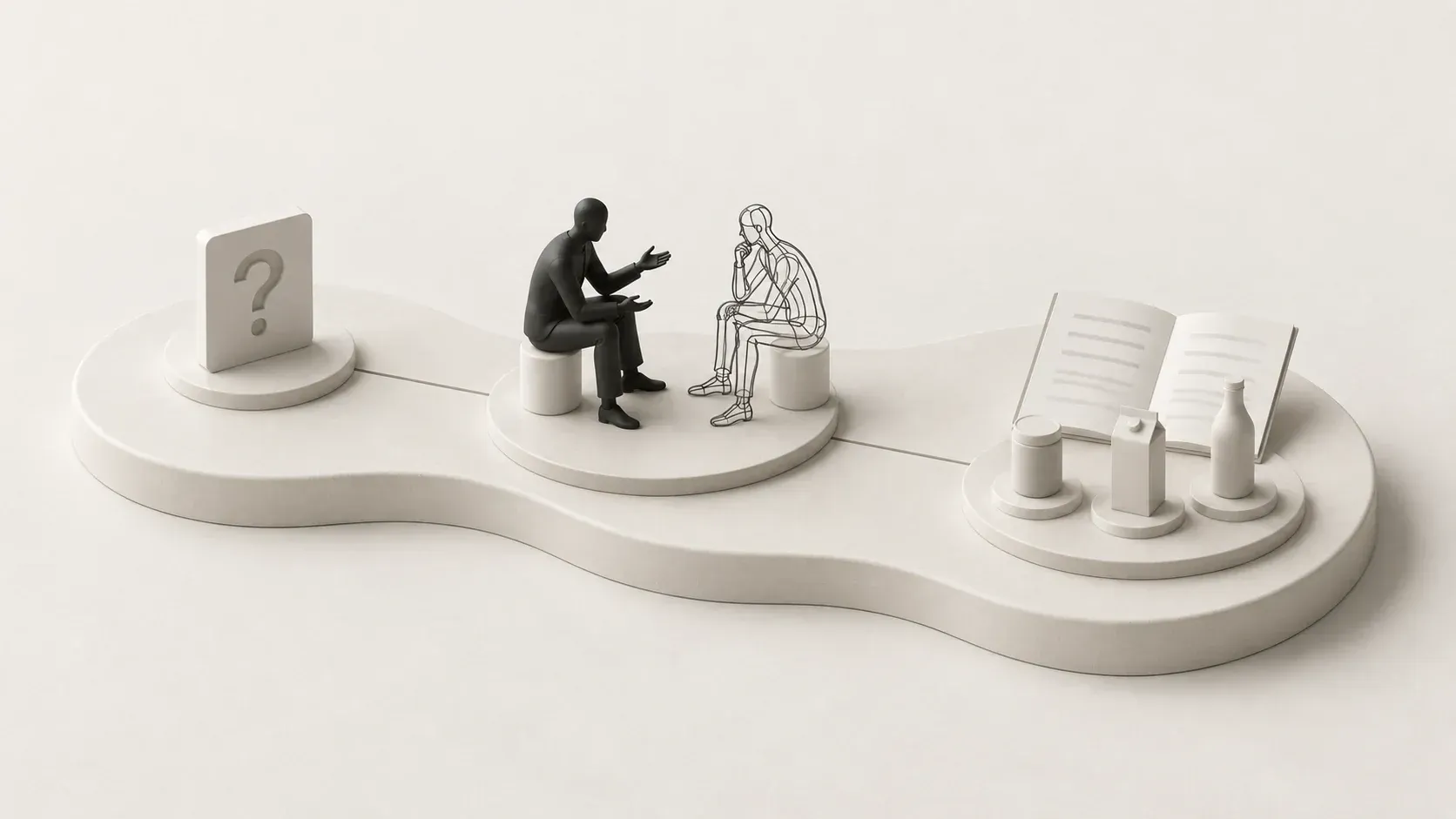
A service improvement and its bill belong in the same research comparison. Customers may value a plan and still struggle with the payment. Others may expect to manage the bill while disagreeing with the priorities. Your team needs those separate answers to choose useful next work.
Sapien can help water utilities explore complete, feasible service-and-bill packages and their explanations with a supported simulated audience. We build the audience, run the study, and help interpret understanding, tradeoffs, and relevant household differences. Existing customer evidence and previous research can add context.
The choices the plan can still change
We begin with the planning decision. It may concern the sequence of additional improvements, a feasible support arrangement, or the explanation of a fixed plan. Mandatory baseline work stays visible. A research exercise shouldn't invite a choice the utility can't honor.
For a proposed study, the team might compare earlier interruption improvements with earlier sewer-overflow work. Your qualified technical and policy owners supply the actual service changes, timing, uncertainty, and household bill paths. The alternatives also need a truthful account of the current position and what happens if neither additional package proceeds.
We can examine what each package means to the audience before asking about acceptance. Does a displayed amount mean the total bill, an annual increase, or a one-time charge? If that interpretation is wrong, an appealing answer doesn't yet describe the intended package.
Keep the burden beside the benefit
The comparison can explore support for the service plan separately from expected difficulty managing its bill. We keep those modeled answers connected, so the report can distinguish a priority objection from a payment concern or a combination of both.
The audience definition may need to reflect current service experience, who receives and pays the bill, and relevant household constraints. We assess the available support for those distinctions. A detailed profile alone doesn't establish that the study represents every vulnerable or hard-to-reach household.
Our water-utilities research guide develops an illustrative planning brief around this problem. It explains why support for an improvement isn't evidence that a household can afford the associated bill. Your comparison would use the options and bill information your team can verify.
A readout for planning and customer teams
We agree the readout around the decision owner, with the complete package and information version retained behind each response:
Open decision | Return from the comparison |
|---|---|
Which feasible package needs further development? | Connected acceptance and expected-payment-difficulty responses, relevant audience differences, and reasons affecting priorities. |
How should a fixed plan be explained? | Understanding of the service change, timing, uncertainty, and bill, with the interpretation the next message should address. |
What support question remains? | The burden or requirement to investigate, with actual eligibility and affordability evidence still to obtain. |
Your team can inspect the simulated responses behind the findings and ask the same population follow-up questions. If an audience values reliability but questions the distribution of benefits, planning needs that reasoning. If the bill is misunderstood, communications needs the exact interpretation to repair.
Exploration supports the next customer question
Modeled responses don't measure what real households can pay, establish support eligibility, approve a plan, or prove an engineering outcome. Any required human engagement, population estimates, and actual household affordability evidence need their appropriate design and sources. We discuss those requirements before agreeing where the simulated comparison fits.
If the response depends on assistance, the next comparison needs a verified support offer with its relevant conditions. An unspecified promise of help would leave the planning team unsure whether the package addresses the concern. We keep that dependency with the recommendation.
Start with the choice your team can still make and the verified bill information attached to it. We can discuss audience support and a comparison that helps planning and communications decide what to develop next.