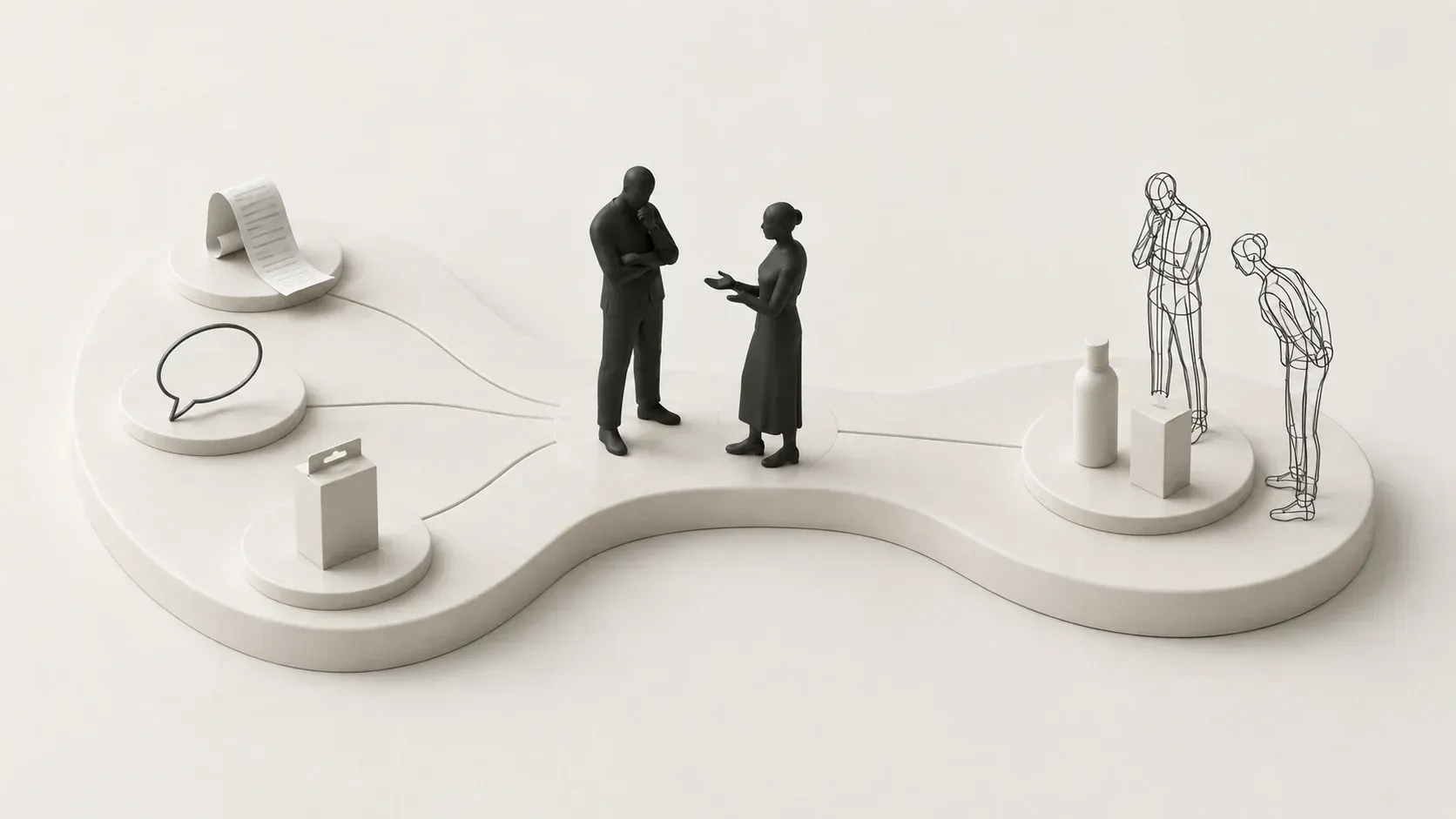
Retail research for the next store, service, or format decision
Compare feasible retail networks and service offers by the shopping trips they serve, move, or leave unanswered.

A successful new shop may draw customers from the store you already run. A relocation may attract a new audience while leaving some existing trips without a usable route. Your retail decision needs to compare the whole offer customers would face, including the options that stay open and those that close.
We help retail teams explore feasible format, service, and network choices with a grounded simulated audience. Sapien's team builds the audience, runs the comparison, and helps interpret which shopping situations each alternative serves. Existing customer research and purchase evidence can add context to that study.
Scope the comparison around a shopping job
For a proposed estate study, the alternatives might be the current network, an added station shop, and a neighborhood replacement for an existing store. We would keep the locations, ranges, hours, prices, delivery conditions, and closure consequences together. Comparing only the two new shops would leave out the current arrangement the retailer is considering changing.
The audience needs more than home location. A lunchtime top-up, an after-work purchase, and a weekly household basket have different access and range requirements. We discuss which situations matter and whether the source evidence supports the local or category detail needed for the comparison.
Your team supplies the feasible options and relevant existing evidence. If the current-store trips or closure alternatives are unknown, that gap comes before a confident format recommendation. A simulated population doesn't collect the actual local histories the brief lacks.
A report that keeps transfers visible
Once the comparison has adequate support, we can explore understanding, fit, stated choice, and reasons for using or rejecting each option. The current competitor, remaining store, online route, or decision to shop elsewhere should remain available where relevant.
For this engagement, the agreed return could show:
- Which complete shopping occasions each offer could serve under its stated conditions.
- Existing trips that might move within the retailer and competitor trips the offer could contest.
- Range, timing, access, or service constraints that change the recommendation.
- The format or service revision worth developing, with important unknowns left visible.
The interactive findings allow the team to inspect responses and investigate a group difference with follow-up questions. An appealing station format for lunch doesn't make it a replacement for a full weekly basket. Those are different conclusions for commercial and estate planning.
Our retail research guide uses an illustrative store addition and relocation to show why a lost shopping route changes the first study. Your comparison would retain your actual network and the choices the business can make.
Customer evidence joins the business case
The study can help choose which feasible offer to develop and what customer question to investigate next. Site suitability, operating capacity, investment costs, and sales potential need the appropriate location, operational, and financial evidence. Stated preferences aren't a store-revenue forecast.
When you evaluate the later change, look across the retailer's relevant stores and channels. A purchase transferred from another outlet and a genuinely new purchase have different implications. Keep actual transactions, contribution, and access evidence separate from the modeled comparison that helped shape the offer.
We can start with one bounded change rather than a broad data-integration program. Tell us which estate or commercial choice is open, what customer evidence already exists, and which team will act on the answer. That lets us assess the audience support and agree a return that fits the next meeting.